

Root-maggot Flies (Family Anthomyiidae)
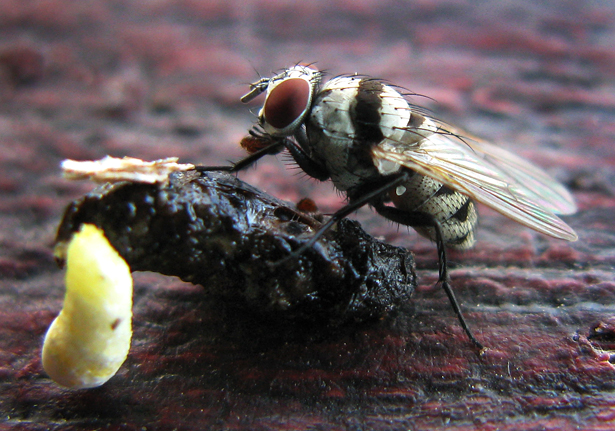
Anthomyiidae, commonly known as root-maggot flies, is a family within the superfamily Muscoidea (Order Diptera). Members of this family are distributed worldwide and are especially common in temperate regions. They are typically found in agricultural areas, gardens, forests, and grasslands, often in close association with plants.
Anthomyiid flies are generally small to medium-sized and often resemble house flies in appearance. They typically have a gray or dull-colored body with longitudinal stripes on the thorax. The head is large with well-developed compound eyes and short antennae bearing an arista. As calyptrate flies, they possess well-developed calypters at the base of the wings.
The life cycle involves complete metamorphosis. A defining feature of many Anthomyiidae is their larval feeding habits. Larvae (maggots) are commonly associated with plants and often develop in roots, stems, or leaves. Many species are phytophagous and feed internally on plant tissues, particularly roots, which can cause significant damage to crops.
Females typically lay eggs in soil near host plants or directly on plant surfaces. After hatching, larvae burrow into plant tissues, where they feed and develop before pupating in the soil.
The family includes several economically important genera, such as Delia, which contains species like the cabbage root fly (Delia radicum) and onion fly (Delia antiqua). These species are well-known agricultural pests.
Ecologically, Anthomyiidae play a role in plant–insect interactions and nutrient cycling. While many species are considered pests due to their impact on crops, others may contribute to decomposition or serve as part of natural food webs. Their economic importance makes them a key focus in agricultural pest management.