Bali Wildlife
Every Spices Matter


Anthomyiidae, commonly known as root-maggot flies, is a family within the superfamily Muscoidea (Order Diptera). Members of this family are distributed worldwide, with greatest diversity in temperate regions. They are commonly found in agricultural fields, gardens, grasslands, and forest edges, often closely associated with plants and soil.
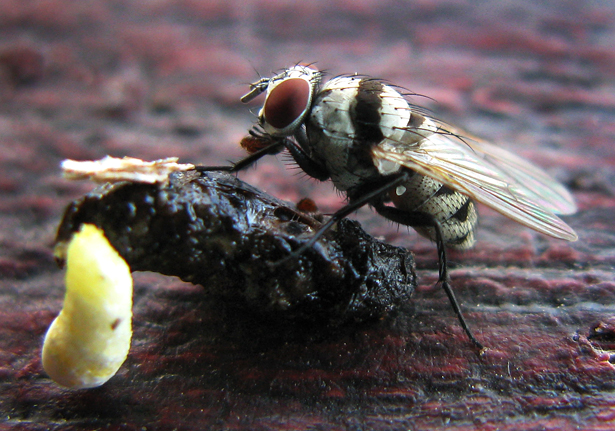
Anthomyiid flies are generally small to medium-sized and often resemble house flies in overall appearance. They typically have a gray or brown body with distinct longitudinal stripes on the thorax. The head is relatively large, with well-developed compound eyes and short antennae bearing an arista. As calyptrate flies, they possess well-developed calypters at the base of the wings, and the thorax often bears characteristic bristle patterns useful for identification.
The life cycle involves complete metamorphosis. Females usually lay eggs in soil or on host plants. After hatching, larvae (maggots) often burrow into plant tissues, particularly roots, stems, bulbs, or leaves. Many species are phytophagous and can cause significant damage to crops by feeding internally. Pupation typically occurs in the soil.
The family includes several economically important genera, such as Delia, which contains well-known pest species like the cabbage root fly (Delia radicum) and onion fly (Delia antiqua). Other species may develop in decaying organic matter, fungi, or dung.
Ecologically, Anthomyiidae play a dual role. While many species are agricultural pests that affect vegetable and field crops, others contribute to decomposition and nutrient cycling. They are also part of food webs, serving as prey for predators and parasitoids. Their impact on agriculture makes them an important focus of pest management and ecological research.