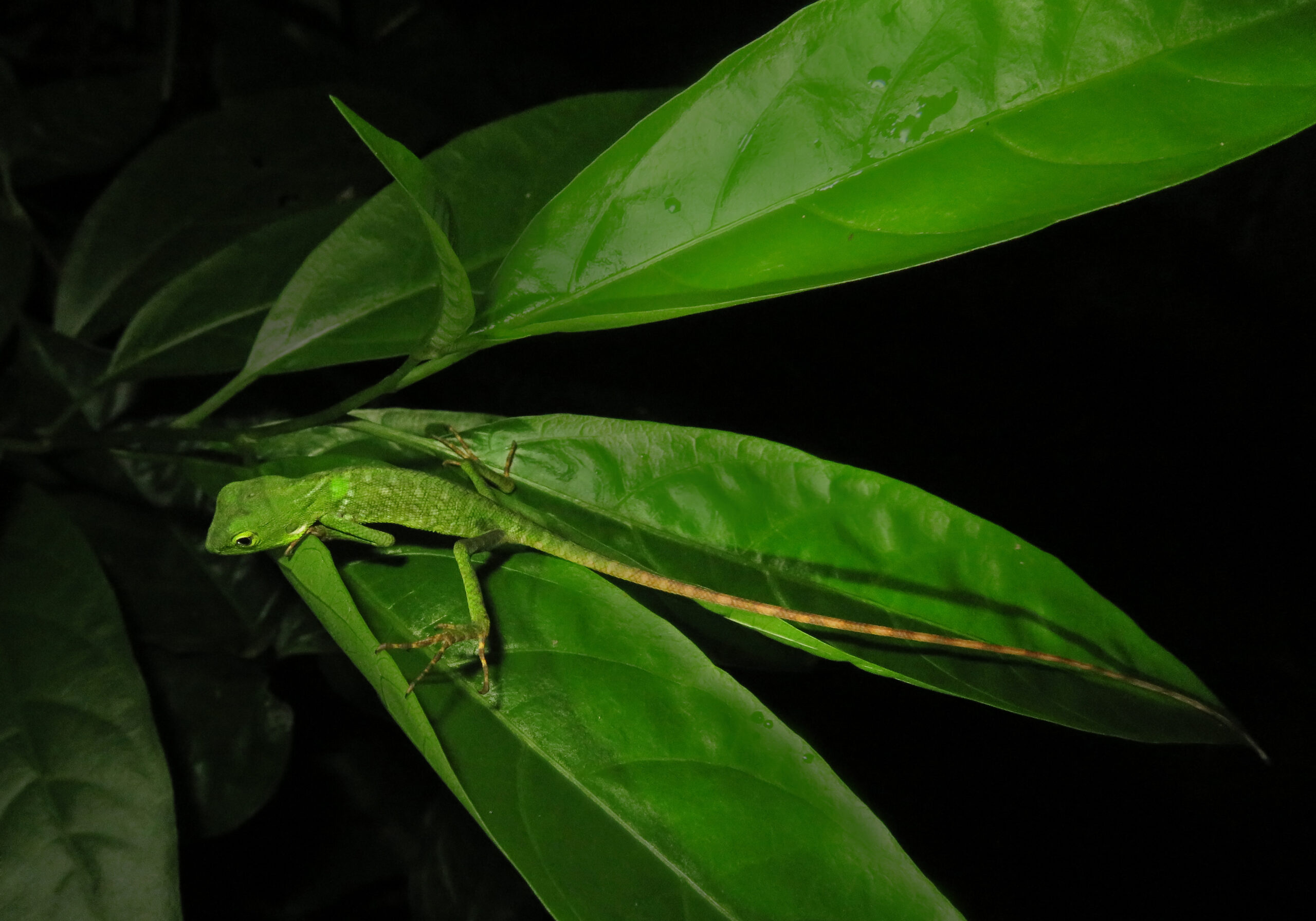
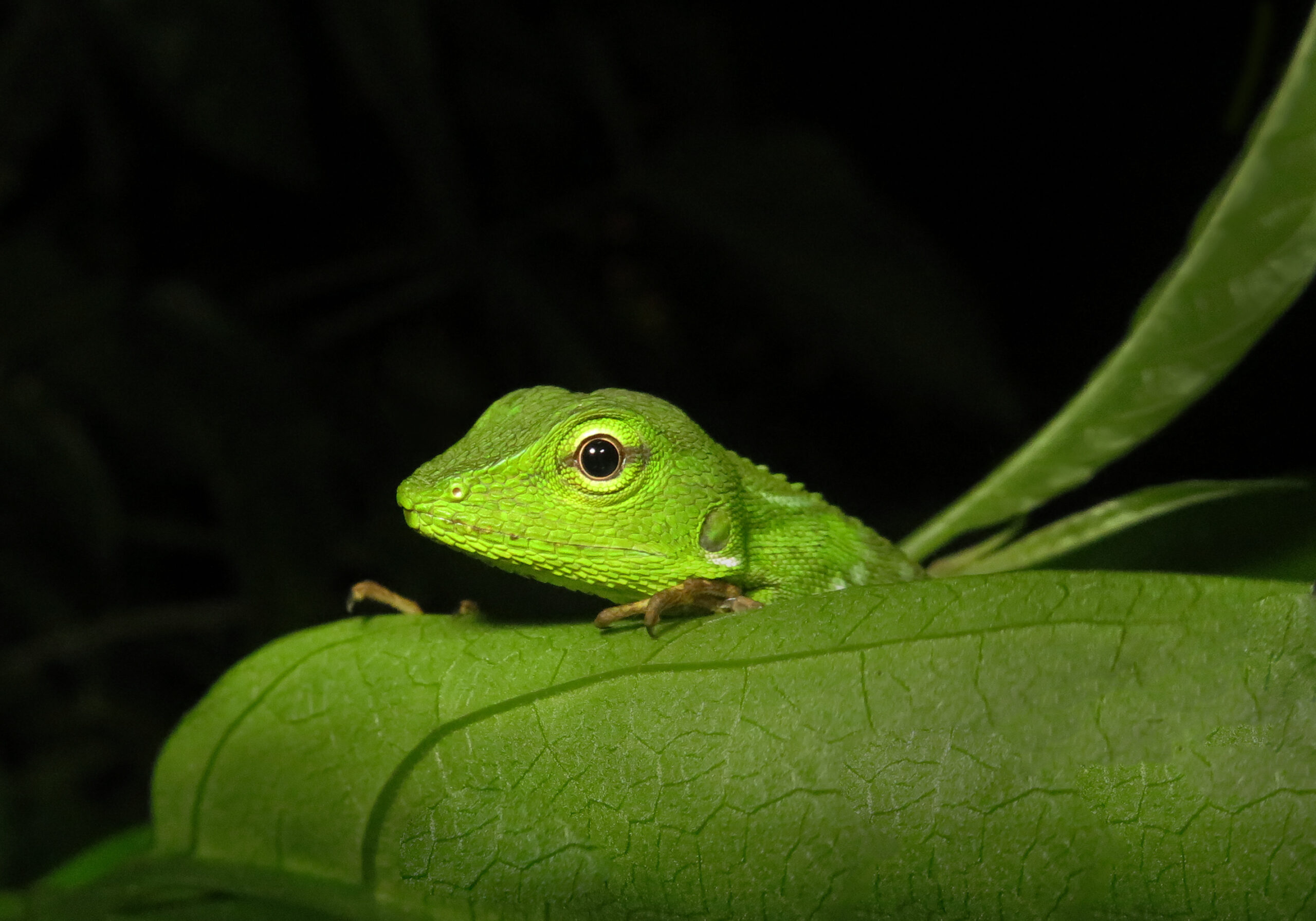
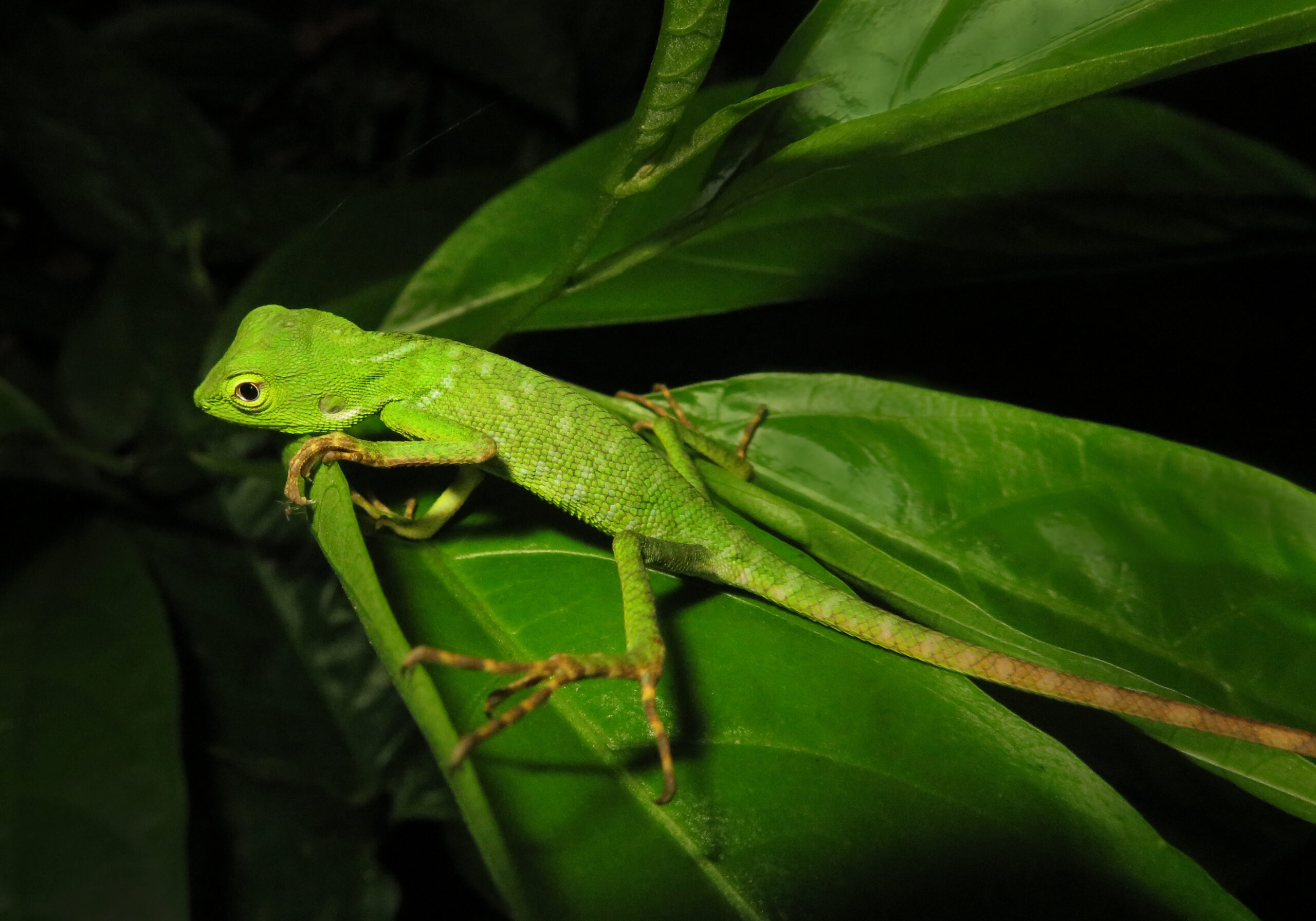
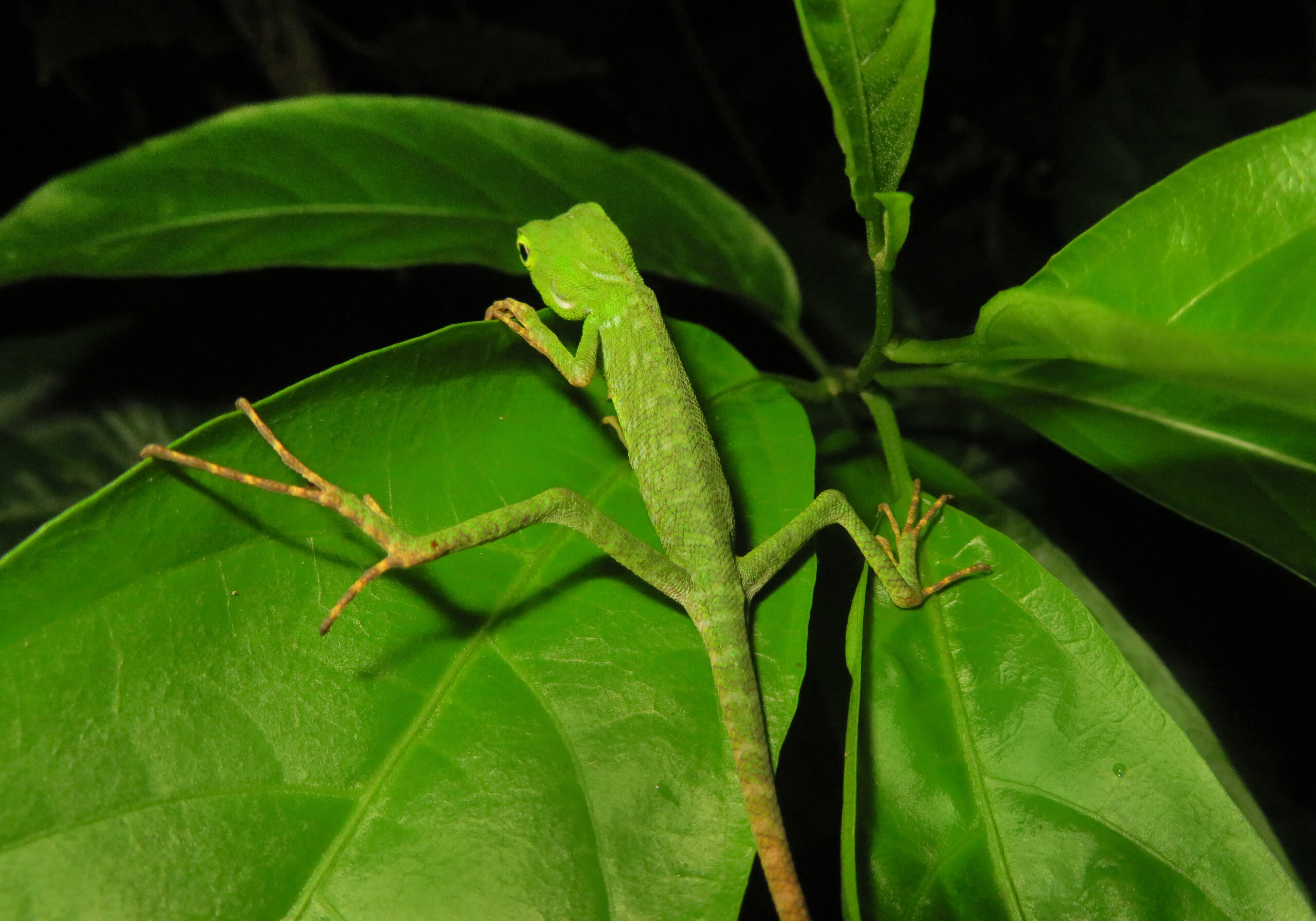
Bronchocela is a genus of arboreal dragon lizards within the subfamily Draconinae (Family Agamidae, Order Squamata). Commonly known as green crested lizards or green tree agamas, members of this genus are distributed throughout South and Southeast Asia, including India, Sri Lanka, Myanmar, Thailand, Malaysia, Singapore, Indonesia, and the Philippines. They are primarily associated with tropical rainforests, secondary forests, plantations, gardens, and other habitats with dense vegetation.
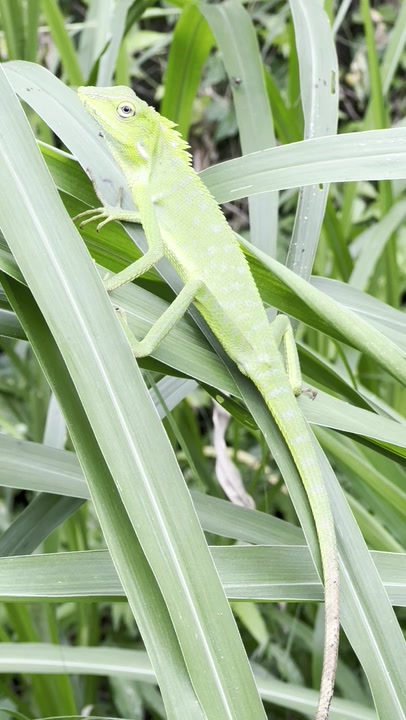
Lizards of the genus Bronchocela are slender, medium-sized, and highly adapted to an arboreal lifestyle. They possess a laterally compressed body, an exceptionally long tail, long limbs, and elongated fingers and toes with sharp claws that provide excellent grip on branches and twigs. The head is relatively narrow, and many species have a low crest extending along the neck and back, which is usually more pronounced in males.
The body is predominantly bright green, allowing these lizards to blend effectively with surrounding foliage. Depending on the species and environmental conditions, individuals may display shades of yellowish-green, turquoise, or brownish tones. Some species can undergo limited color changes in response to temperature, stress, or social interactions.
Bronchocela species are diurnal and rely heavily on their excellent eyesight to detect prey and predators. They are agile climbers and often remain motionless among leaves before making rapid movements to capture prey or escape danger.
Their diet is primarily insectivorous, consisting of ants, beetles, grasshoppers, flies, caterpillars, spiders, and other small arthropods. They occasionally consume other small invertebrates encountered while foraging.
Reproduction is oviparous. Females lay small clutches of eggs in shallow burrows or concealed locations within soil or leaf litter. Hatchlings emerge fully independent and begin feeding on small insects shortly after hatching.
The genus includes several species, such as Bronchocela cristatella, Bronchocela jubata, and Bronchocela burmana, each adapted to different forest habitats across Asia.
Ecologically, Bronchocela lizards are important predators of arboreal insects, helping regulate arthropod populations in forest ecosystems. They also serve as prey for birds, snakes, mammals, and larger reptiles. Their close association with healthy forest vegetation makes them valuable indicators of habitat quality and an important component of tropical biodiversity.


 ▶
▶