

Subtribe Spilosomina
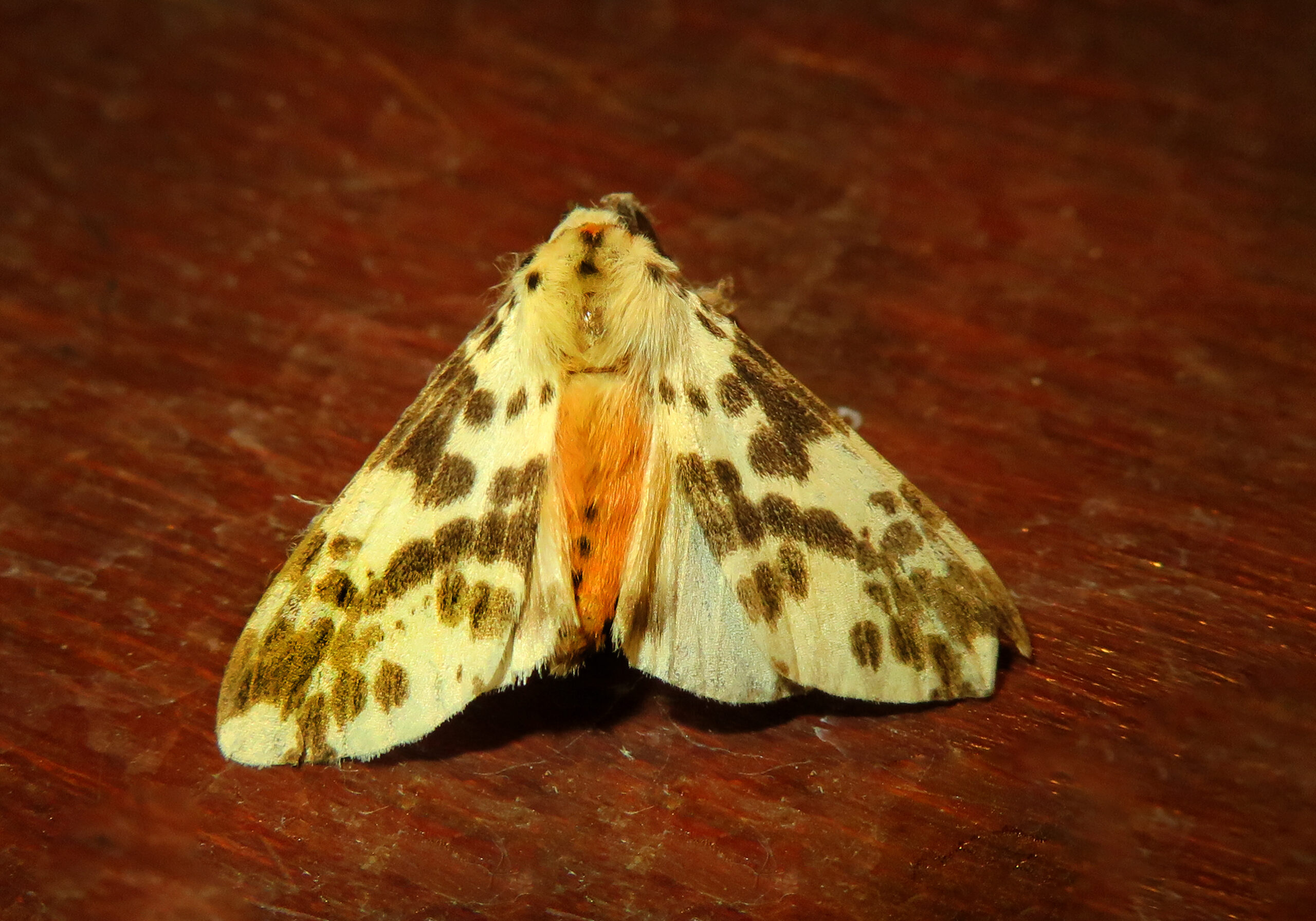
Spilosomina is a subtribe of tiger moths within the tribe Arctiini (Subfamily Arctiinae, Family Erebidae, Superfamily Noctuoidea, Order Lepidoptera). The subtribe comprises numerous genera and several hundred described species distributed worldwide, with the greatest diversity occurring in tropical and subtropical regions. Members inhabit tropical rainforests, temperate forests, grasslands, shrublands, wetlands, alpine meadows, agricultural fields, plantations, parks, and gardens, where suitable larval host plants are abundant.
Moths of the subtribe Spilosomina are generally small to medium-sized, with wingspans ranging from approximately 30–70 mm. They possess a moderately robust, densely hairy body and broad, scale-covered wings. Wing coloration is highly variable among species, ranging from pure white, cream, yellow, and orange to brown, gray, or black. Many species bear conspicuous black, brown, or reddish spots, streaks, or bands on the forewings and hindwings, while others are nearly unmarked. In several species, the bright coloration serves as aposematic (warning) coloration, advertising chemical defenses acquired during the larval stage.
Adults are primarily nocturnal, although some species are active during dusk or occasionally by day. They readily visit artificial lights and often rest on vegetation, tree trunks, or rocks during daylight hours. Most adults possess a well-developed coiled proboscis and feed on nectar, tree sap, honeydew, or other sugar-rich plant exudates, while some species feed very little or not at all during their relatively short adult lifespan.
The life cycle involves complete metamorphosis, consisting of egg, larva (caterpillar), pupa, and adult stages. Females lay eggs in clusters or batches on the leaves of suitable host plants. Caterpillars are densely clothed with long hairs or bristles, giving them the characteristic woolly bear appearance. Most species are highly polyphagous, feeding on a wide variety of herbaceous plants, shrubs, and trees belonging to families such as Asteraceae, Fabaceae, Plantaginaceae, Rosaceae, Urticaceae, Euphorbiaceae, and many others. Pupation occurs within a loose silken cocoon that often incorporates larval hairs, providing additional protection from predators and parasitoids.
The subtribe includes numerous well-known genera, including Spilosoma, Spilarctia, Creatonotos, Aloa, Lemyra, Amsacta, and related taxa. Several species are recognized agricultural pests because their caterpillars feed on economically important crops, while others are valued for their striking appearance and ecological significance.
Ecologically, Spilosomina moths are important components of terrestrial ecosystems. Their caterpillars contribute to plant–herbivore interactions and nutrient cycling, while adults may assist in the nocturnal pollination of flowering plants. Both larvae and adults serve as prey for birds, bats, reptiles, amphibians, spiders, predatory insects, and parasitoids, although their hairs and chemical defenses reduce predation by many vertebrates. Because many species respond to habitat disturbance, pesticide use, and changes in vegetation, Spilosomina moths are valuable indicators of ecosystem health, habitat quality, and biodiversity.