Bali Wildlife
Every Spices Matter


Eristalinus is a genus of hoverflies within the subtribe Eristalina (Tribe Eristalini, Subfamily Eristalinae, Family Syrphidae, Order Diptera). The genus is widely distributed across the Old World, particularly in Africa, Europe, Asia, and Australia, with many species occurring in tropical and subtropical regions. These flies are commonly found in wetlands, gardens, agricultural areas, forest edges, and other habitats rich in flowering plants and organic matter.
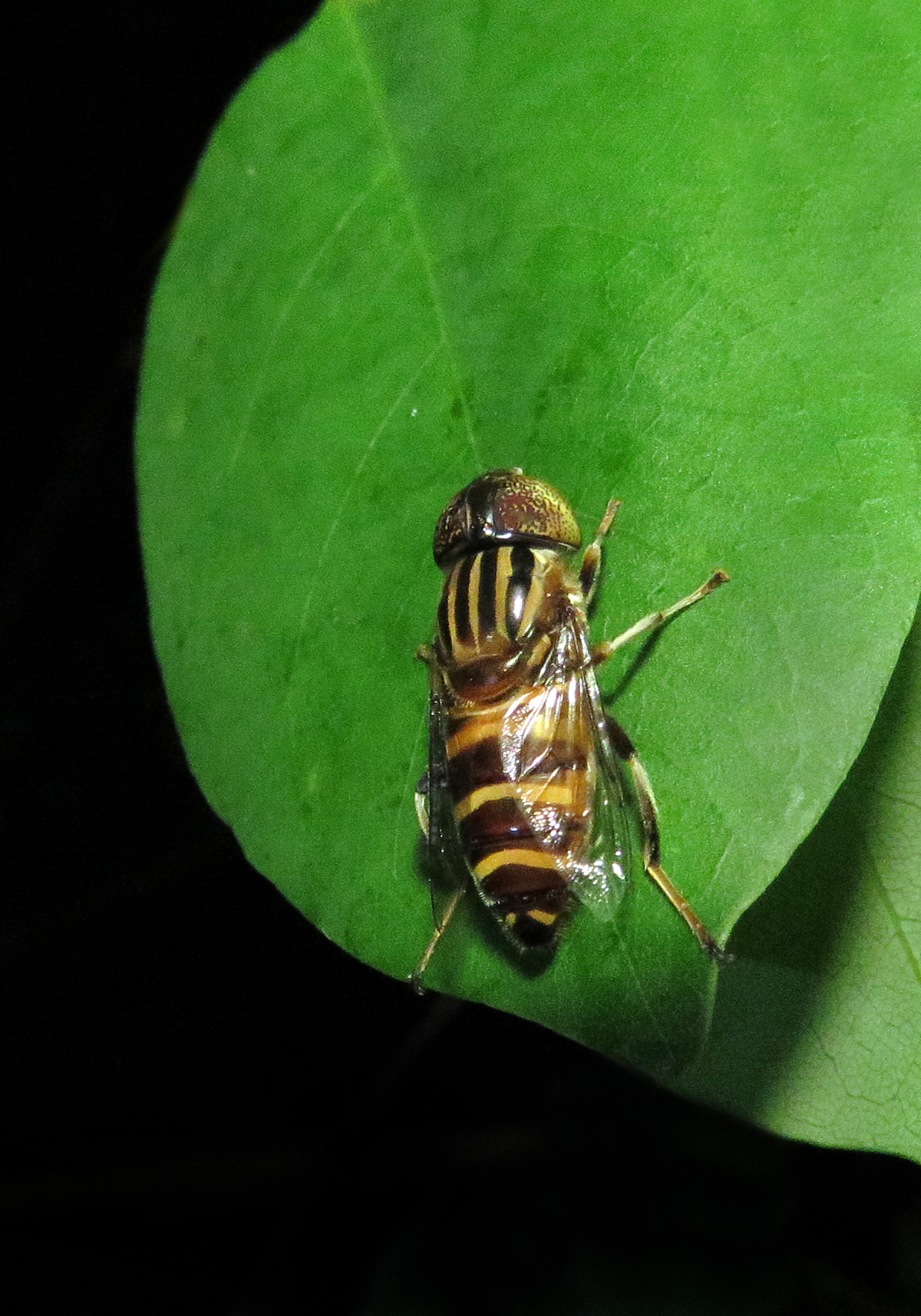
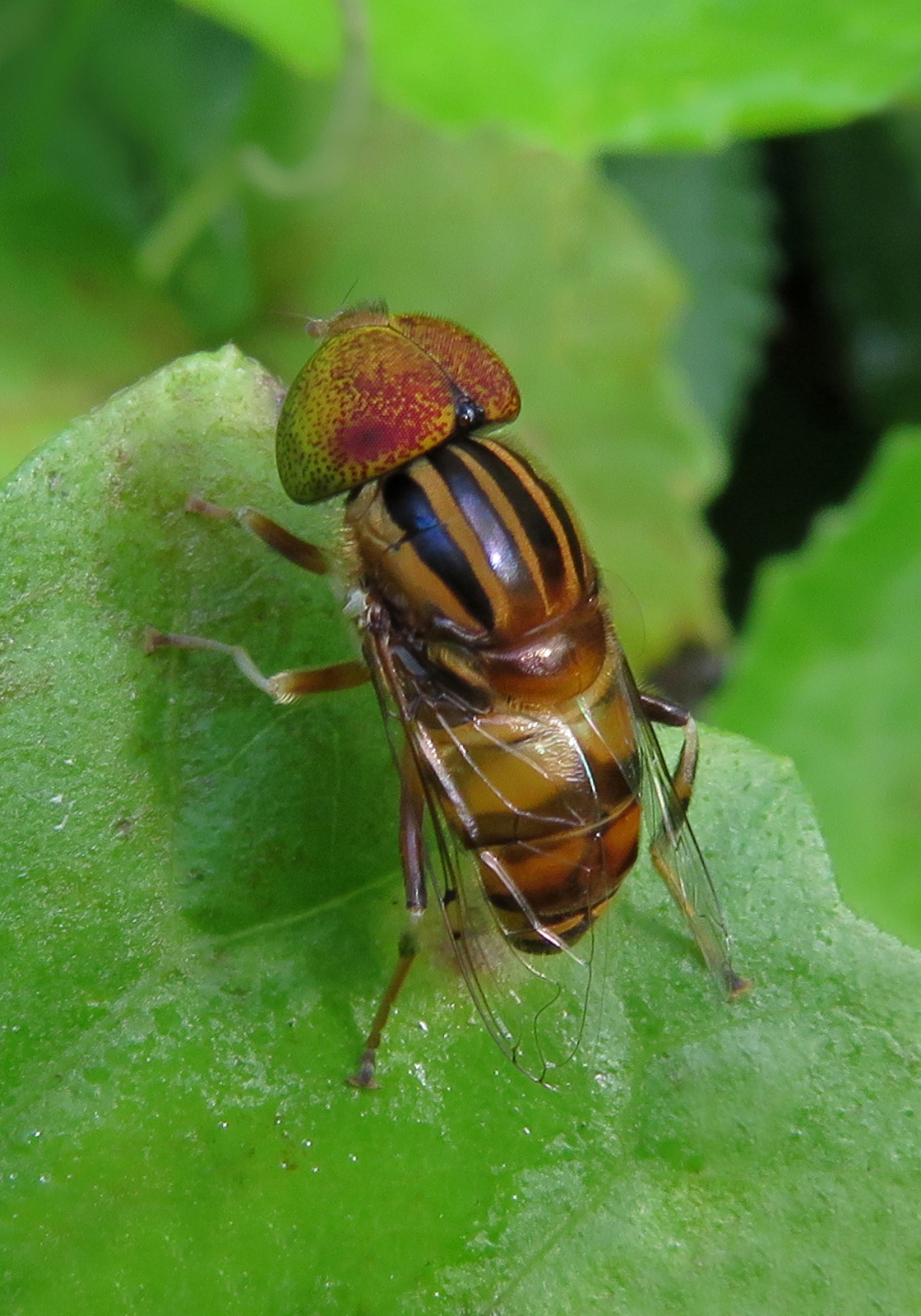
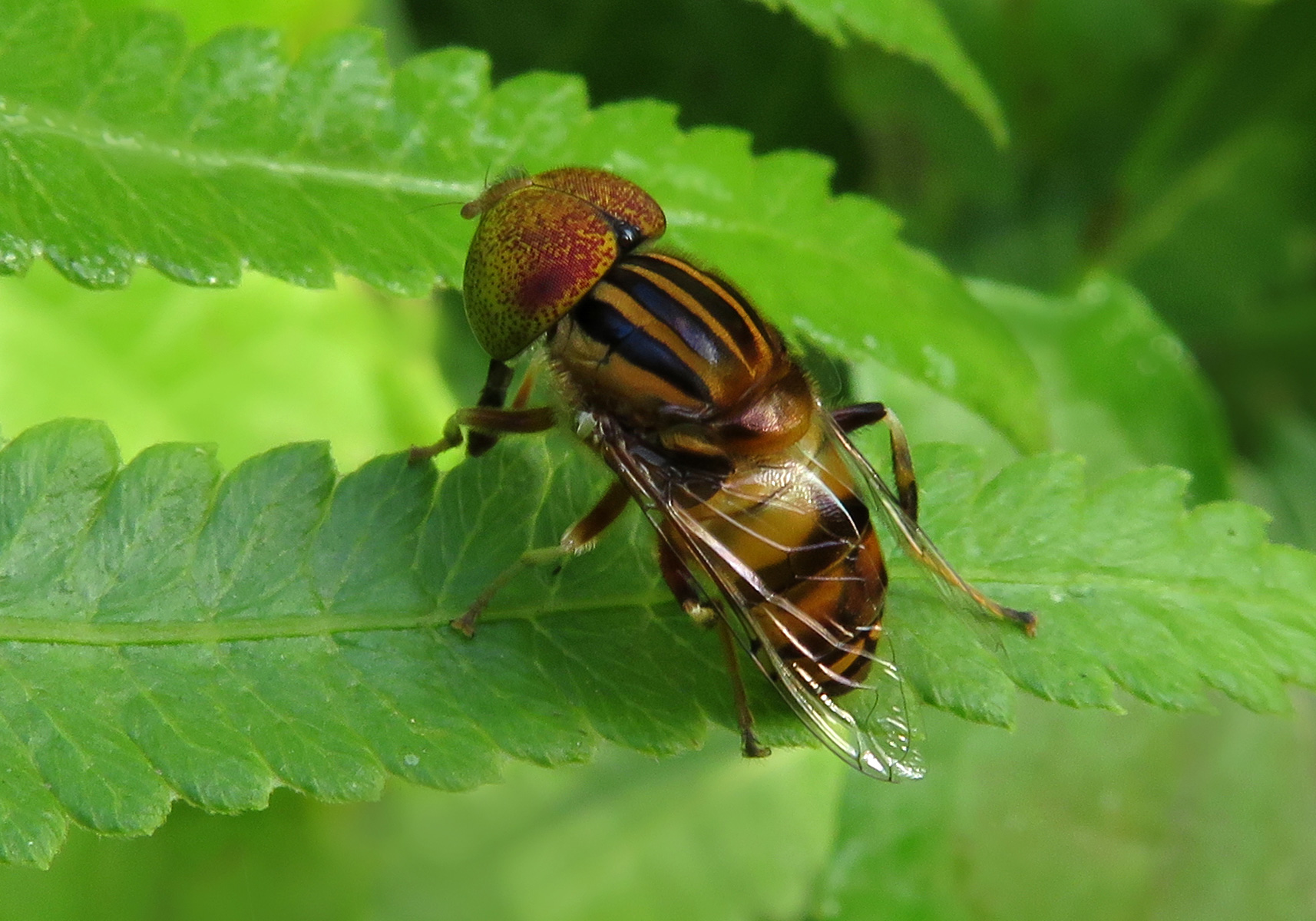
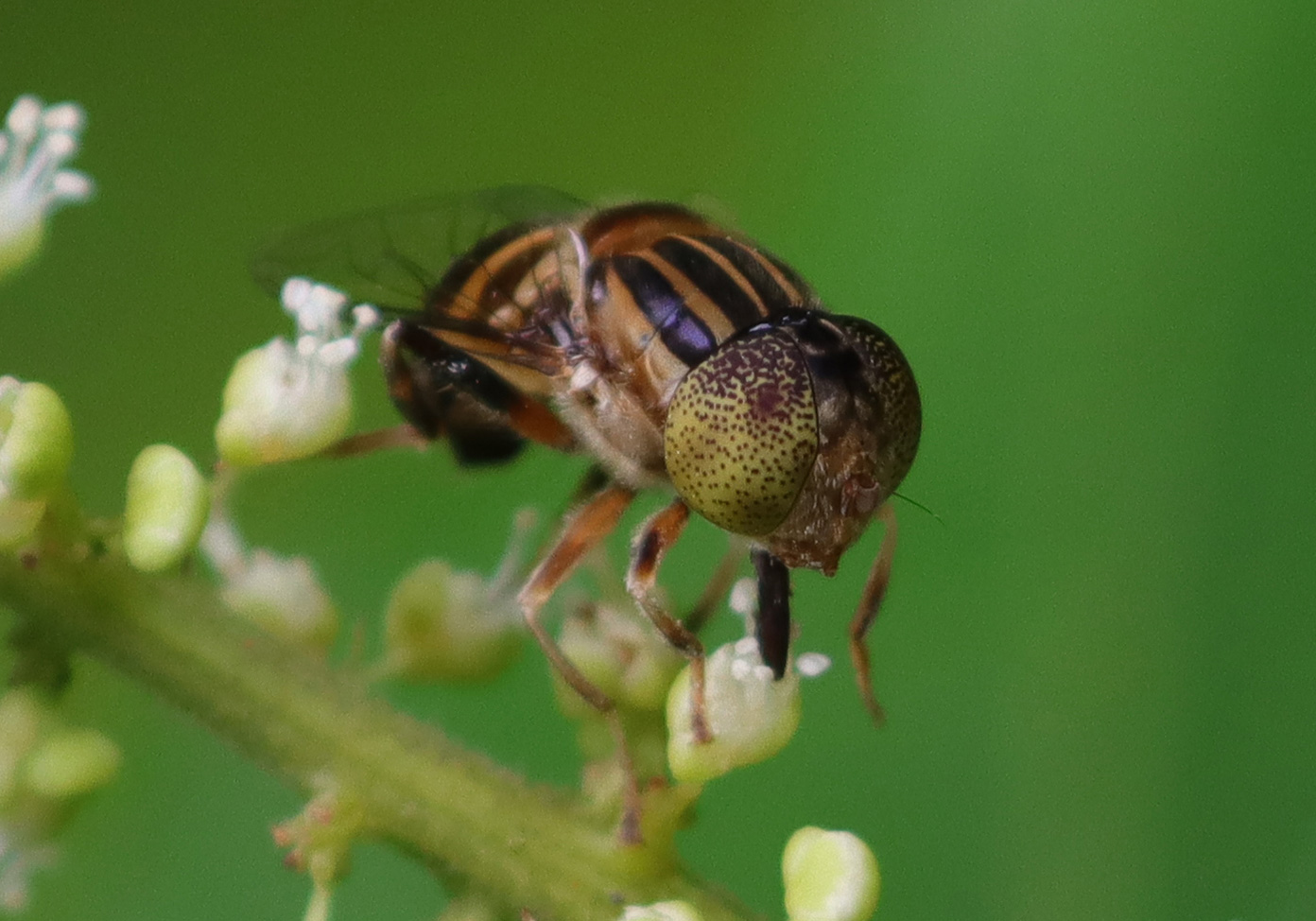
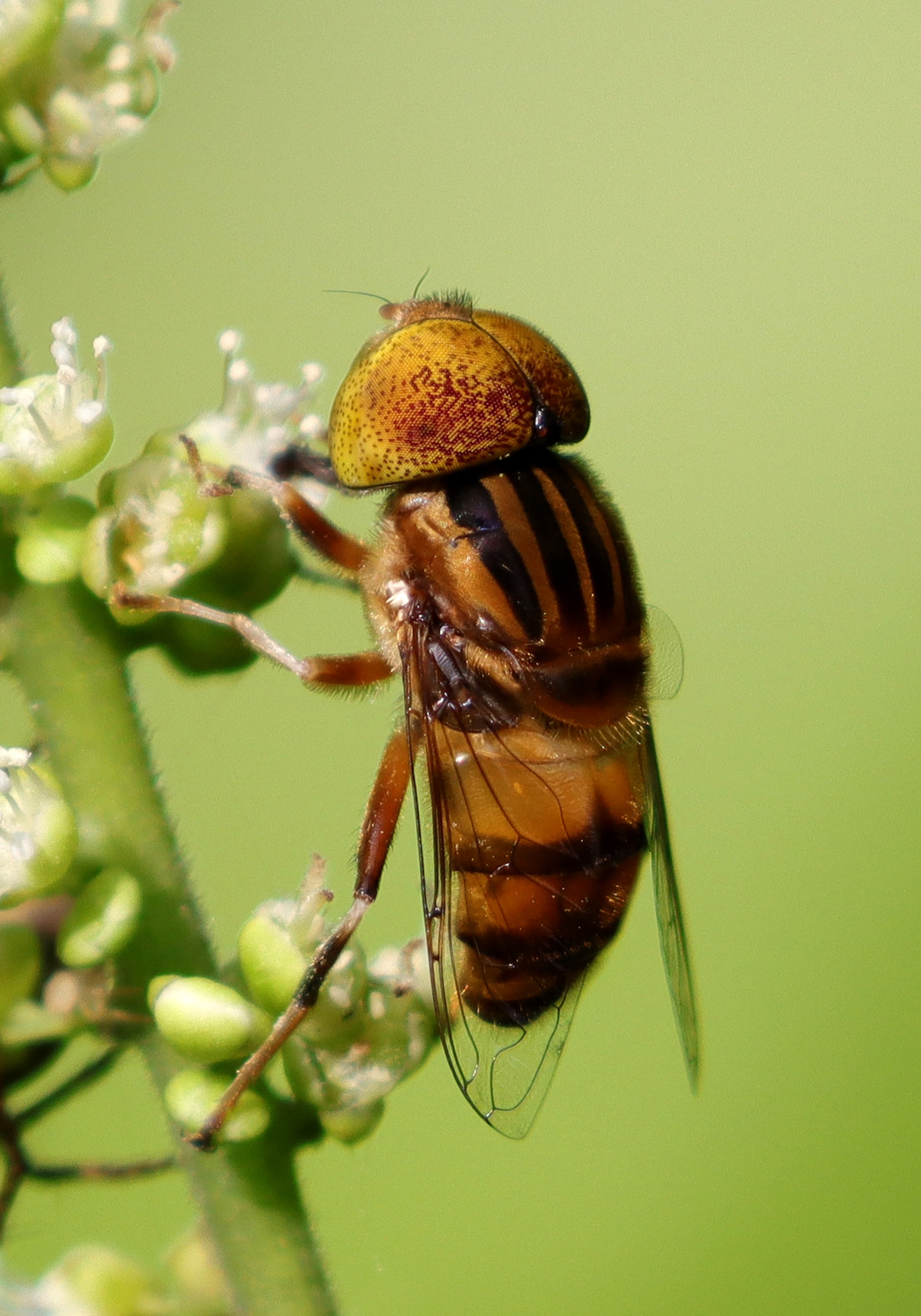
Members of the genus Eristalinus are medium to large hoverflies with a robust, often hairy body. Many species resemble bees, displaying yellow, brown, and black coloration that provides effective protective mimicry. A distinctive feature of several Eristalinus species is their patterned compound eyes, which may exhibit spots or bands—an unusual trait among flies that aids in identification.
The head is large with well-developed compound eyes, and the antennae are short with a characteristic arista. Wings are clear, and adults are strong fliers capable of hovering in place. They are frequently observed visiting flowers, where they feed on nectar and pollen, making them important pollinators.
The life cycle involves complete metamorphosis. Larvae are typically aquatic or semi-aquatic and are known as “rat-tailed maggots.” They possess a long, telescopic breathing tube that allows them to survive in low-oxygen environments such as stagnant water, ditches, manure pits, and decaying organic liquids. Larvae feed on microorganisms and organic matter, contributing to decomposition.
Ecologically, Eristalinus species play a dual role. Adults are effective pollinators, supporting plant reproduction in both natural and agricultural ecosystems, while larvae contribute to nutrient cycling by breaking down organic material in aquatic habitats. Their adaptability and distinctive morphology make Eristalinus an important and recognizable genus within the hoverflies.