Bali Wildlife
Every Spices Matter


Eristalinae is a large and diverse subfamily within the family Syrphidae (Order Diptera), comprising a wide variety of hoverflies commonly associated with both natural and human-modified environments. Members of this subfamily are distributed worldwide and are especially abundant in tropical and temperate regions, inhabiting wetlands, forests, grasslands, agricultural areas, and gardens.
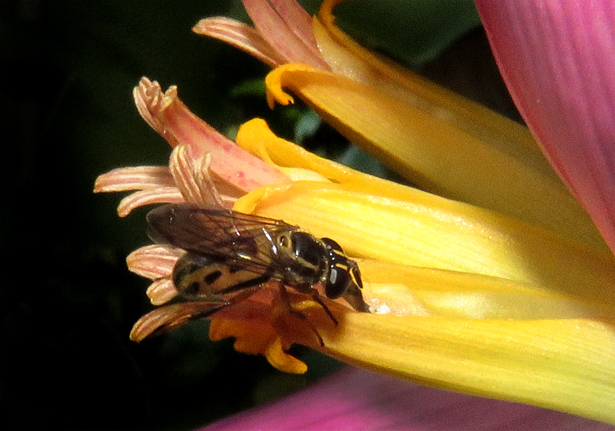
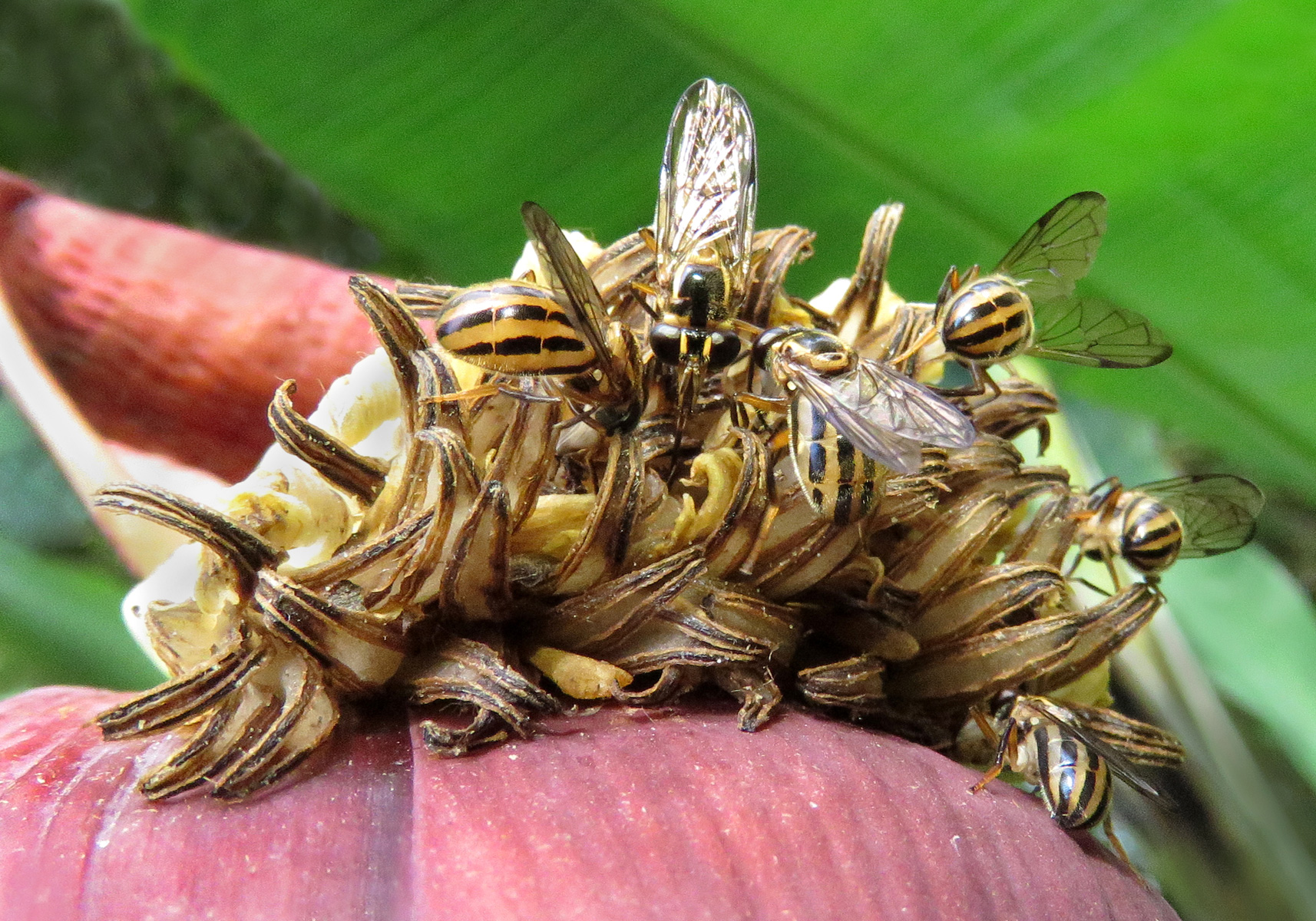
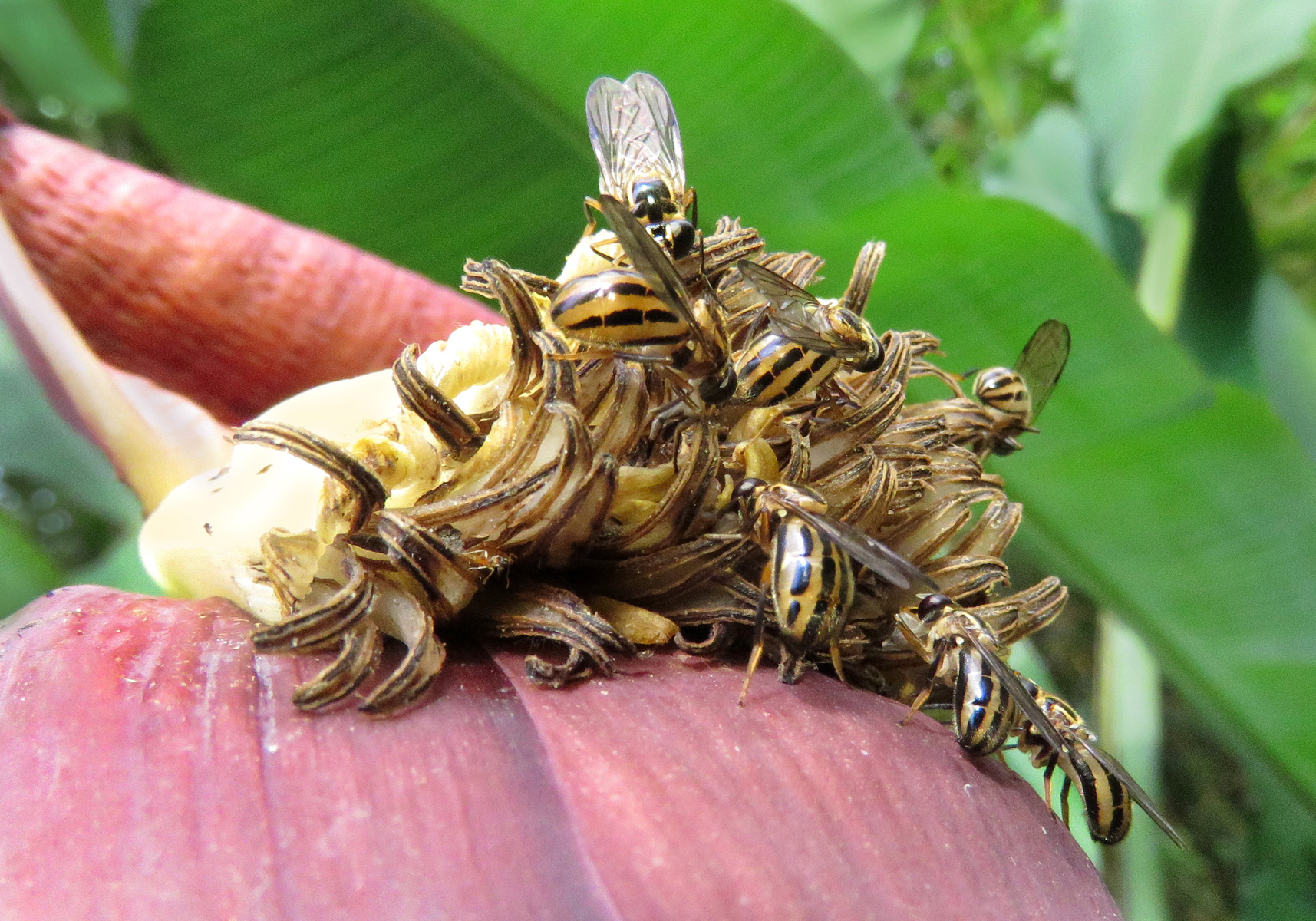
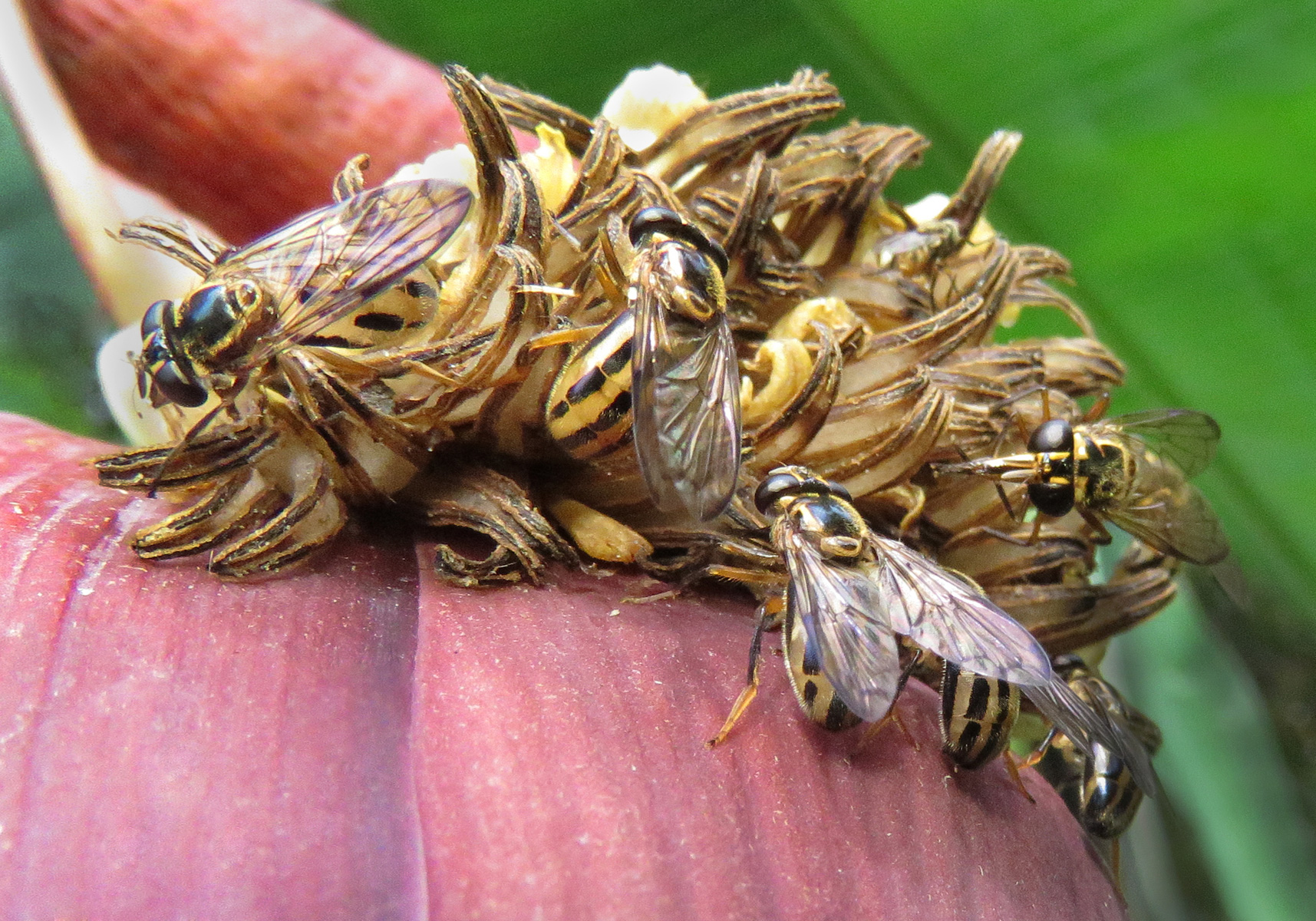
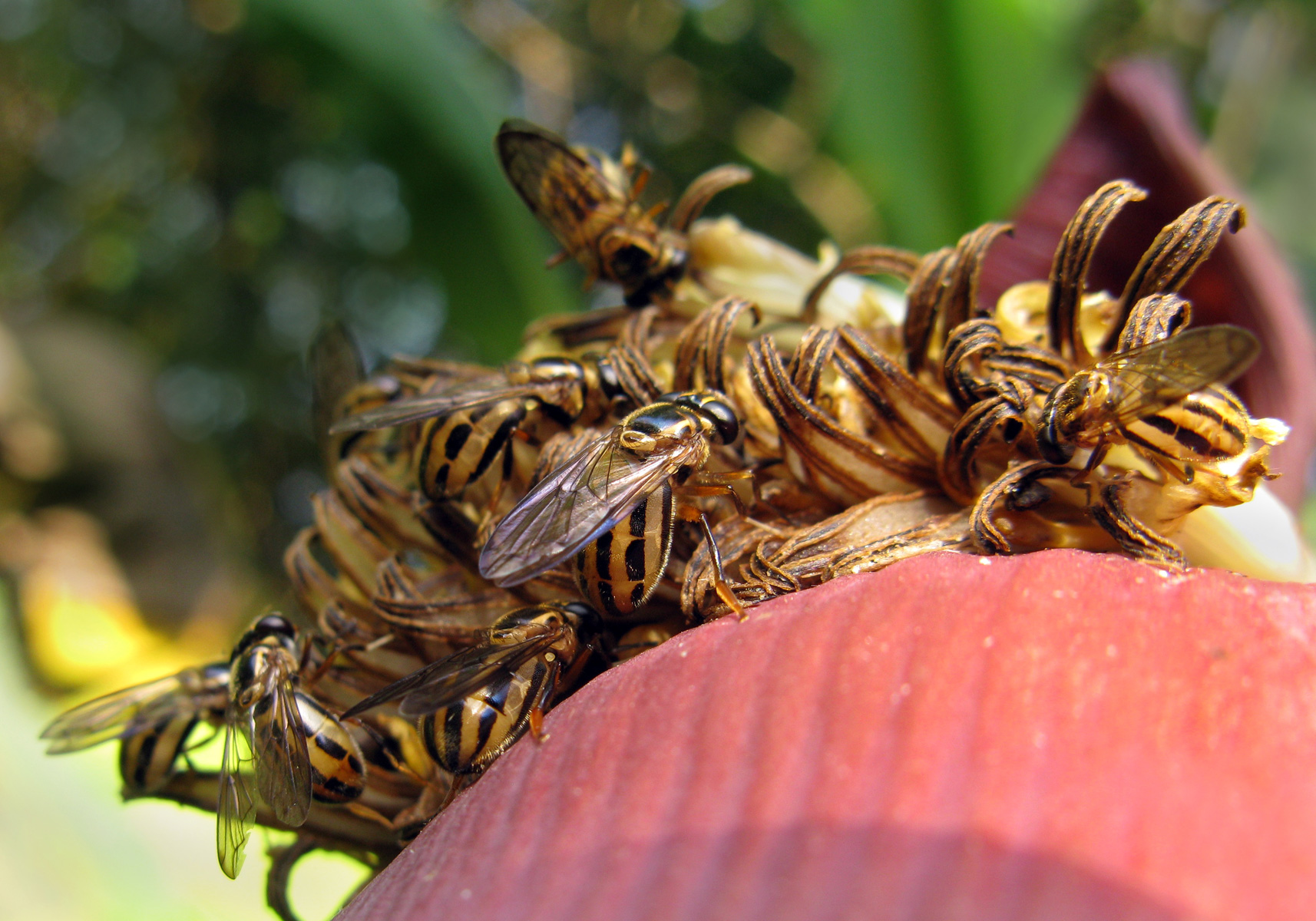
Adult Eristalinae are typically medium to large hoverflies and are often robust in body form. Many species closely resemble bees, particularly honeybees, with dense body hairs and yellow-and-brown or black banding. This mimicry provides protection from predators. Like other hoverflies, they are capable of precise hovering flight and are commonly observed visiting flowers.
The head is large with well-developed compound eyes, and the antennae are short with an arista. Wings are clear, and flight is strong and stable. Adults feed mainly on nectar and pollen and are important pollinators of many plant species.
The life cycle involves complete metamorphosis. Larvae of Eristalinae are diverse in form and habitat. One of the most well-known larval types is the “rat-tailed maggot,” found in genera such as Eristalis. These larvae possess an elongated breathing tube that allows them to live in stagnant, low-oxygen water such as ponds, ditches, or organic-rich liquids. Other larvae may develop in decaying plant material, wood, or soil.
Eristalinae includes numerous genera, such as Eristalis, Helophilus, Volucella, and Mallota. These genera exhibit a wide range of ecological adaptations, from aquatic larvae to species associated with bee nests or decaying organic matter.
Ecologically, Eristalinae plays an important role in ecosystems. Adults contribute significantly to pollination, while larvae participate in decomposition and nutrient recycling in aquatic and terrestrial environments. Their adaptability to various habitats and their ecological functions make them a key component of biodiversity and ecosystem health.