

Tribe Polyzosteriini
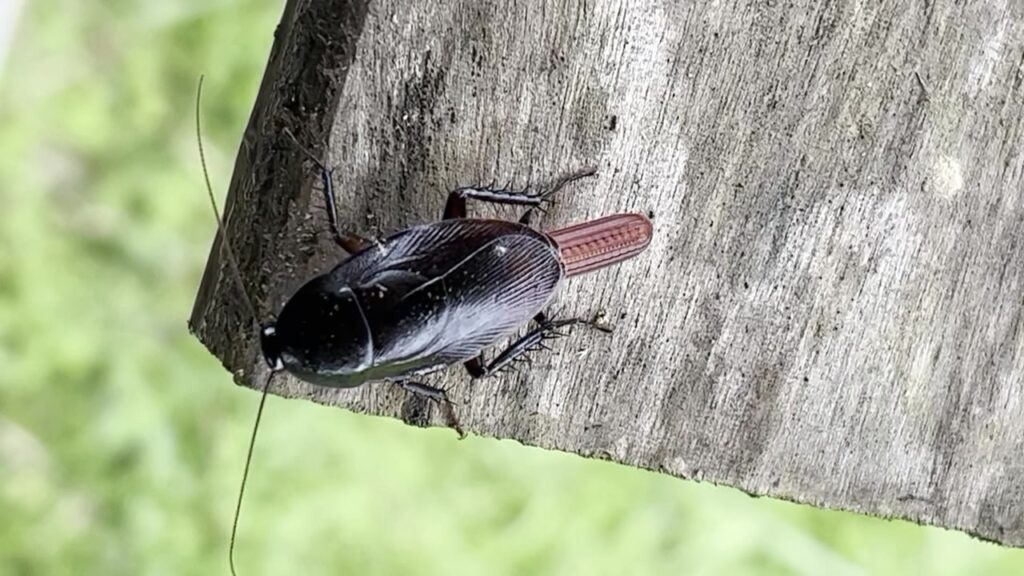
Polyzosteriini is a tribe of cockroaches within the subfamily Polyzosteriinae, family Blattidae, and order Blattodea. The tribe represents a distinctive group of predominantly Australian terrestrial cockroaches, many of which are commonly associated with leaf litter, bark, woodland, and forest-floor habitats. They are generally non-synanthropic and are better regarded as native components of natural ecosystems than as household pests.
Members of Polyzosteriini are generally medium-sized, compact, and strongly flattened cockroaches. Their bodies are commonly oval or broadly elongate, with a prominent shield-like pronotum that partly conceals the head. Coloration is frequently dark brown, reddish brown, black, or nearly black, sometimes accompanied by contrasting yellow, orange, or pale markings along the margins or abdominal segments.
A characteristic feature of the tribe is the reduction of the wings, with many species being wingless or having greatly reduced wings. This condition is associated with a primarily ground-dwelling lifestyle. Rather than relying on flight, these cockroaches navigate through leaf litter, beneath bark, and among soil and vegetation using their relatively powerful running legs.
The body is well suited to life in narrow terrestrial shelters. The flattened form allows individuals to move beneath loose bark, stones, fallen leaves, and woody debris. The broad pronotum provides additional protection to the anterior body, while the hardened abdominal surface helps protect the animal as it moves through rough substrates.
Polyzosteriini species are principally nocturnal, becoming active after sunset. During the day they remain concealed in protected microhabitats where temperature and humidity are more stable. At night they emerge to forage, explore their surroundings, and locate mates. Activity patterns can vary according to local temperature, rainfall, and seasonal conditions.
Feeding is largely detritivorous and omnivorous. Members consume dead and decomposing plant material, fallen leaves, fungi, fruits, seeds, and other organic debris. Their broad feeding habits make them important consumers within the litter layer, where they help fragment organic matter and contribute to nutrient turnover.
The tribe’s reproductive biology follows the general cockroach pattern. Females produce oothecae, protective cases containing multiple eggs, which are deposited in sheltered locations. Nymphs hatch from the ootheca and resemble miniature adults, gradually developing through successive molts. Growth and reproduction are often synchronized with favorable seasonal conditions.
Polyzosteriini is strongly associated with Australia, where its members occur across diverse environments. Species can be encountered in eucalypt woodland, temperate forest, dry woodland, shrubland, coastal vegetation, and other habitats containing suitable ground cover. Their distributions are frequently shaped by local vegetation, soil conditions, rainfall, and the availability of shelter.
The principal genus is Polyzosteria, a diverse group of Australian cockroaches that gives the tribe its name. Species of Polyzosteria display considerable variation in body size and coloration while retaining the characteristic compact, flattened form and terrestrial habits of the group. Other genera associated with the broader Polyzosteriinae lineage may be treated differently depending on the taxonomic classification being followed.
Unlike several globally distributed cockroach pests, Polyzosteriini is not primarily associated with human buildings. Its members generally remain in natural or semi-natural habitats and play ecological rather than pest-related roles. Occasional encounters in gardens or disturbed areas do not alter their fundamentally terrestrial and non-synanthropic ecology.
Ecologically, these cockroaches are important detritivores and prey organisms. By feeding on fallen vegetation and other organic material, they contribute to decomposition and nutrient cycling. At the same time, they provide food for insectivorous birds, reptiles, amphibians, spiders, predatory insects, and small mammals, linking the decomposer pathway to higher trophic levels.
Their relatively limited dispersal ability, particularly in wing-reduced species, can also contribute to geographic differentiation and localized distributions. Populations separated by unsuitable habitat or geographic barriers may become isolated over evolutionary time, potentially contributing to the diversity of Australian terrestrial cockroaches.
From a taxonomic standpoint, Polyzosteriini belongs to the distinctive Australian Polyzosteriinae radiation within Blattidae. Cockroach classification has undergone substantial revision with the increasing use of molecular phylogenetics, and the exact boundaries of tribes and genera may differ among taxonomic authorities.
Overall, Polyzosteriini is a distinctive tribe of predominantly Australian, ground-dwelling cockroaches characterized by flattened bodies, frequent wing reduction, cryptic coloration, and strong associations with leaf litter and woody habitats. Their roles as detritivores and prey organisms make them valuable components of Australia’s terrestrial food webs, while their unusual body forms and limited reliance on flight reflect a highly specialized adaptation to life on the forest and woodland floor.