

Asian Mabuyas (Genus Eutropis)
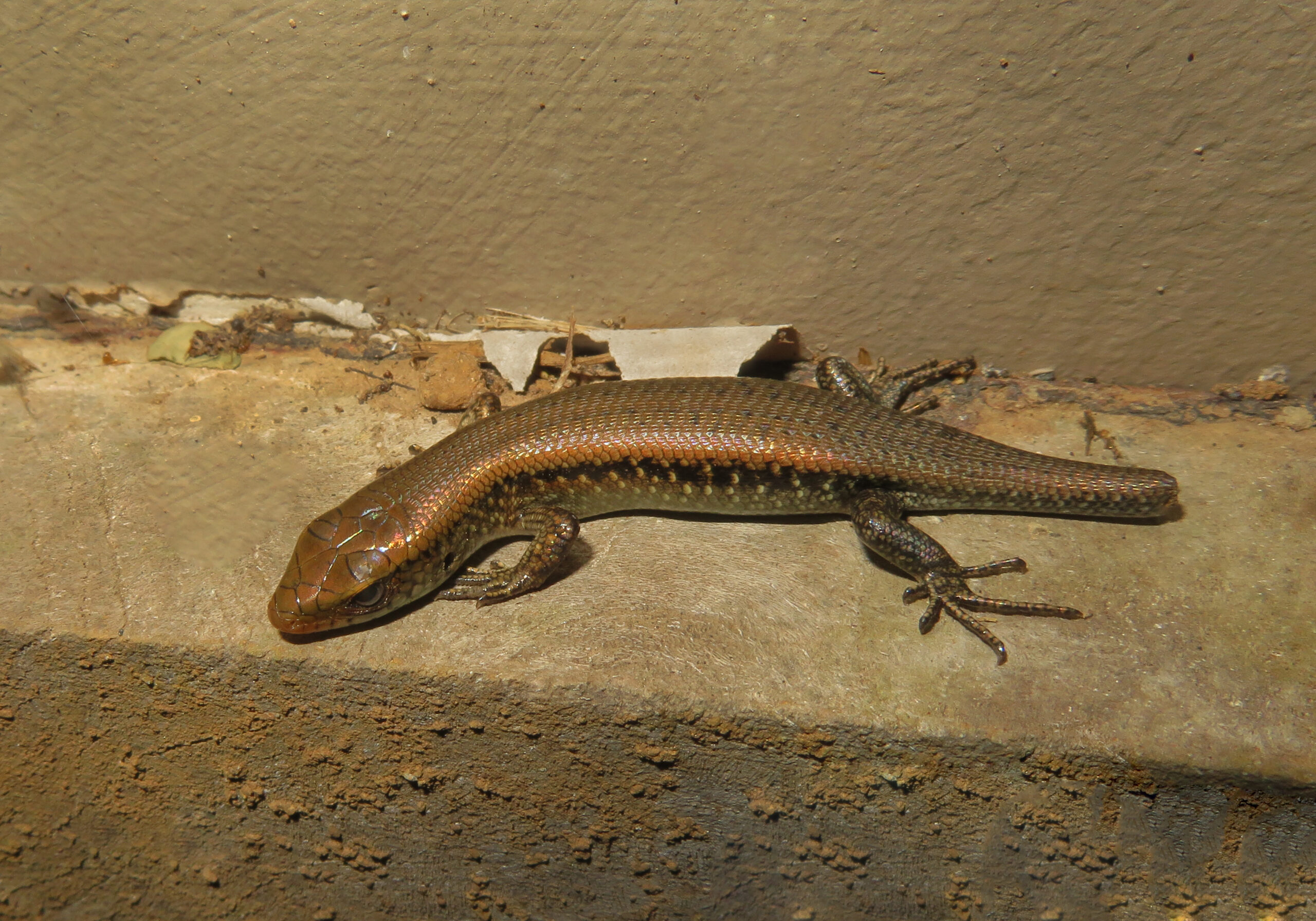
Eutropis is a genus of skinks within the subfamily Mabuyinae (Family Scincidae, Infraorder Scincomorpha, Order Squamata, Class Reptilia). The genus comprises more than 30 described species distributed throughout South Asia, Southeast Asia, southern China, Taiwan, the Philippines, and parts of Indonesia. Members inhabit a wide variety of environments, including tropical rainforests, secondary forests, grasslands, plantations, agricultural fields, mangroves, parks, gardens, and urban areas, where they are commonly found among leaf litter, rocks, logs, and low vegetation.
Skinks of the genus Eutropis are generally small to medium-sized lizards characterized by a slender, elongated body covered with smooth, glossy, overlapping scales that give them a polished appearance. They possess a distinct head, well-developed limbs with five toes, and a long tail that usually exceeds the length of the body. Body coloration commonly includes shades of bronze, olive, brown, gray, or black, often with pale longitudinal stripes, dark lateral bands, or rows of spots that provide effective camouflage among leaf litter and vegetation.
Most Eutropis species are diurnal and spend the morning basking in sunlight before actively searching for food. They are agile runners capable of rapid bursts of speed and readily seek shelter beneath rocks, logs, bark, or within dense vegetation when disturbed. Like many skinks, they can perform caudal autotomy, voluntarily shedding the tail to escape predators. The tail later regenerates, although the replacement differs structurally from the original.
Members of the genus are primarily insectivorous, feeding on ants, termites, beetles, grasshoppers, caterpillars, spiders, earthworms, and other small invertebrates. Larger individuals may occasionally consume small vertebrates, fallen fruits, or other plant material, making them opportunistic feeders.
Reproduction varies among species, with both oviparous and viviparous reproductive strategies occurring within the genus. Oviparous species lay eggs in concealed sites beneath logs, stones, or within soil cavities, whereas viviparous species give birth to fully developed live young. Hatchlings and juveniles are independent immediately after birth or hatching.
The genus includes numerous well-known species, such as Eutropis multifasciata (Common Sun Skink), Eutropis carinata (Common Indian Skink), Eutropis macularia (Spotted Grass Skink), and Eutropis rugifera. Many species are abundant in both natural habitats and human-modified landscapes due to their adaptability.
Ecologically, Eutropis skinks are important predators of insects and other small invertebrates, contributing to the natural regulation of arthropod populations in forests, agricultural lands, and urban ecosystems. They also serve as prey for snakes, birds, mammals, and larger reptiles, making them essential components of terrestrial food webs. Their widespread distribution, ecological adaptability, and sensitivity to environmental changes make them valuable indicators of habitat quality and biodiversity.