

Skinks and Allies (Infraorder Scincomorpha)

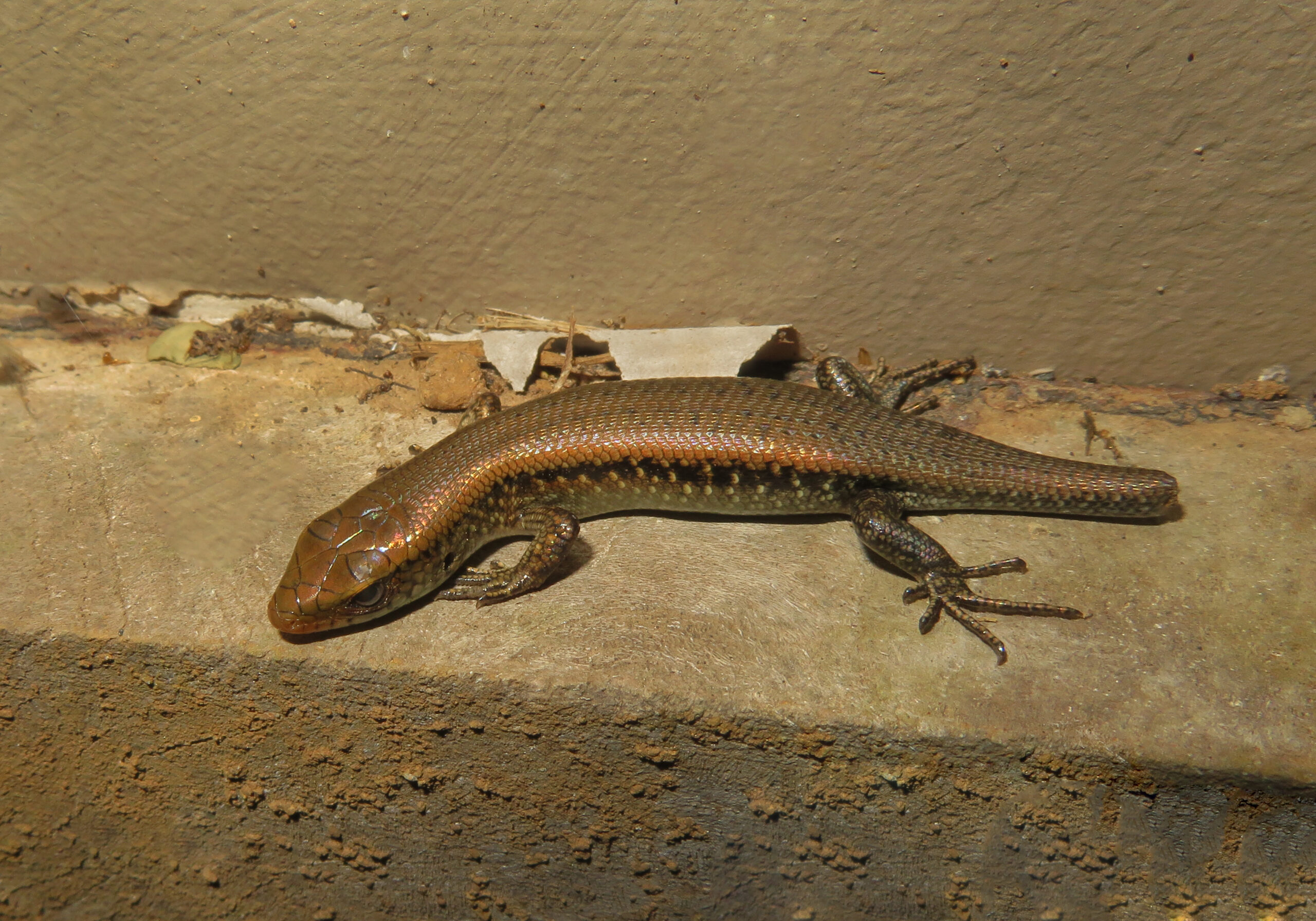
Scincomorpha is a diverse infraorder of lizards within the order Squamata (Class Reptilia). It comprises several families, including skinks, girdled lizards, plated lizards, night lizards, and wall lizards, representing more than 2,000 described species. Members are distributed across Africa, Europe, Asia, Australia, and the Americas, occupying an extensive range of habitats such as tropical rainforests, temperate woodlands, grasslands, deserts, rocky outcrops, wetlands, coastal dunes, and mountainous regions.
Lizards of the infraorder Scincomorpha exhibit considerable diversity in body form, although many possess an elongated body, well-developed limbs, smooth or keeled scales, and a long tail. Body size ranges from only a few centimeters in small skinks to more than half a meter in the largest plated lizards. Coloration varies from cryptic shades of brown, gray, olive, and black to vivid patterns of blue, green, yellow, orange, or metallic hues, often providing camouflage or functioning in communication.
Most scincomorph lizards are diurnal, relying on keen vision to locate prey and avoid predators. They are agile runners and climbers, while some species are highly specialized for burrowing through soil or leaf litter. Many species are capable of caudal autotomy, voluntarily shedding the tail to escape predators. The detached tail continues to wriggle, distracting the attacker while the lizard escapes. In most species, the tail is regenerated, although the replacement differs structurally from the original.
Scincomorph lizards are primarily insectivorous, feeding on ants, termites, beetles, grasshoppers, spiders, caterpillars, and other invertebrates. Larger species may also consume small vertebrates, eggs, fruits, flowers, or other plant material, making some members omnivorous.
Reproduction varies among species. Many are oviparous, laying eggs in sheltered sites such as beneath rocks, logs, or within burrows, while others are viviparous, giving birth to live young, particularly in cooler climates or high-altitude habitats. Several species exhibit parental care, with females guarding eggs until hatching.
The infraorder includes several well-known families, such as Scincidae (skinks), Cordylidae (girdled lizards), Gerrhosauridae (plated lizards), Lacertidae (wall and true lizards), and Xantusiidae (night lizards). These families display a remarkable range of ecological and morphological adaptations, from fossorial skinks to rock-dwelling girdled lizards.
Ecologically, Scincomorpha lizards are important predators of insects and other small invertebrates, helping regulate arthropod populations in a wide variety of ecosystems. They also serve as prey for snakes, birds, mammals, and larger reptiles, making them essential components of terrestrial food webs. Their sensitivity to habitat disturbance, climate change, and environmental degradation makes many species valuable indicators of ecosystem health and biodiversity.