

Skinks (Family Scincidae)

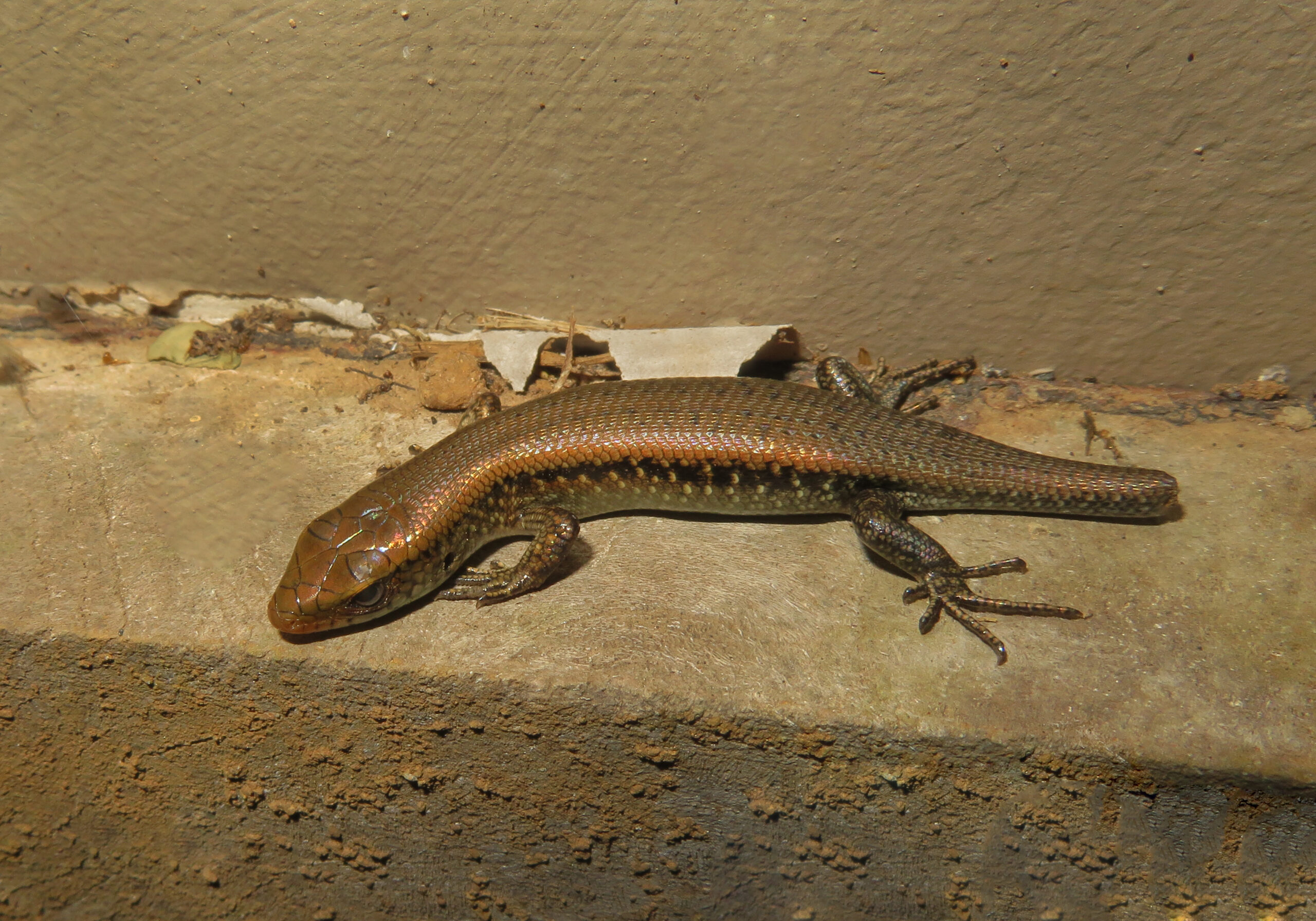
Scincidae is the largest family of lizards within the infraorder Scincomorpha (Order Squamata, Class Reptilia), commonly known as skinks. The family comprises more than 1,800 described species, making it one of the most diverse groups of reptiles in the world. Skinks are distributed across Africa, Asia, Europe, Australia, and the Americas, with the greatest diversity occurring in tropical and subtropical regions. They occupy an exceptionally wide range of habitats, including tropical rainforests, temperate forests, grasslands, savannas, deserts, coastal dunes, wetlands, rocky hillsides, alpine regions, agricultural landscapes, and urban gardens.
Skinks are generally small to medium-sized lizards characterized by their smooth, shiny, overlapping scales, streamlined body, and relatively small head with a pointed snout. Most species possess well-developed limbs, although limb size varies considerably, and several burrowing species exhibit reduced limbs or complete limblessness. Their long, cylindrical body and glossy scales reduce friction, enabling efficient movement through leaf litter, soil, sand, or dense vegetation.
Body coloration varies widely among species and includes shades of brown, gray, olive, black, bronze, green, blue, and reddish hues. Many species display stripes, bands, spots, or metallic iridescence that provide camouflage or aid in species recognition. Juveniles of several species possess brightly colored blue or red tails that may divert predator attacks away from the body.
Most skinks are diurnal, spending much of the day basking to regulate body temperature before actively searching for food. They are agile runners and effective burrowers, while some species are accomplished climbers or swimmers. Like many lizards, skinks are capable of caudal autotomy, voluntarily shedding the tail when threatened. The detached tail continues to move, distracting predators while the skink escapes. Although the tail usually regenerates, the replacement differs structurally from the original.
Skinks are primarily insectivorous, feeding on ants, termites, beetles, grasshoppers, caterpillars, spiders, and other invertebrates. Larger species may also consume small vertebrates, eggs, fruits, flowers, seeds, or fungi, making some members omnivorous.
Reproduction is diverse within the family. Many species are oviparous, laying eggs beneath rocks, logs, or within burrows, whereas others are viviparous, giving birth to live young. In several species, females exhibit parental care by guarding the eggs until hatching, a behavior that is relatively uncommon among reptiles.
The family includes numerous well-known genera, such as Eutropis, Sphenomorphus, Scincella, Plestiodon, Trachylepis, Cryptoblepharus, Emoia, and Tiliqua. Members of these genera exhibit a remarkable range of ecological adaptations, from arboreal and terrestrial species to fossorial and semi-aquatic forms.
Ecologically, Scincidae species are important predators of insects and other small invertebrates, contributing to the natural regulation of arthropod populations in terrestrial ecosystems. They also serve as prey for snakes, birds, mammals, and larger reptiles, making them integral components of food webs. Their adaptability, ecological diversity, and sensitivity to habitat alteration make skinks valuable indicators of ecosystem health and biodiversity.