Bali Wildlife
Every Spices Matter


Tenoderini is a tribe of praying mantises within the subfamily Tenoderinae (Family Mantidae, Superfamily Mantoidea, Order Mantodea). Members of this tribe are primarily distributed throughout Asia, with some species extending into neighboring regions. They inhabit forests, grasslands, agricultural fields, wetlands, shrublands, and gardens, where they are commonly associated with tall vegetation and dense foliage.
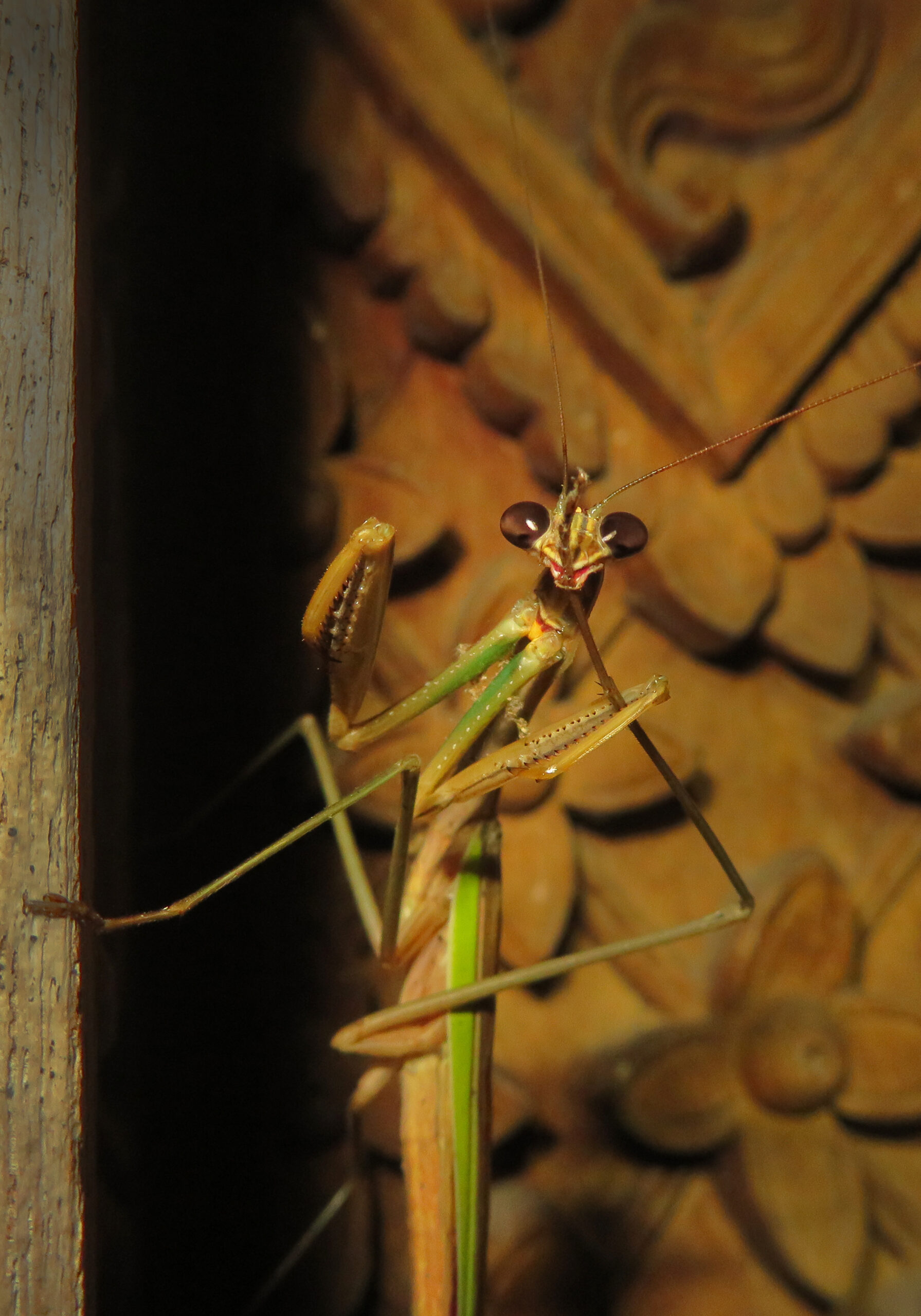
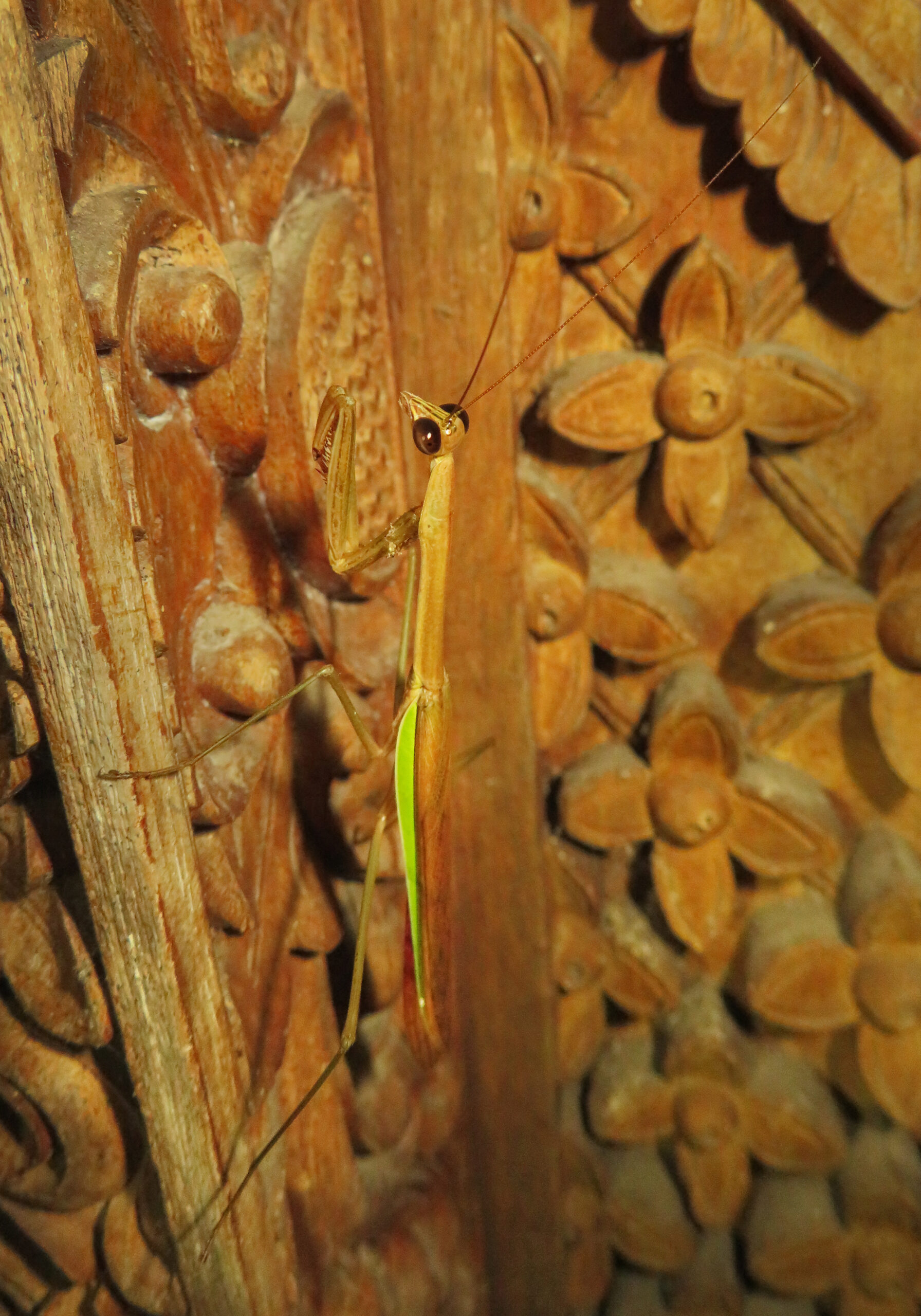
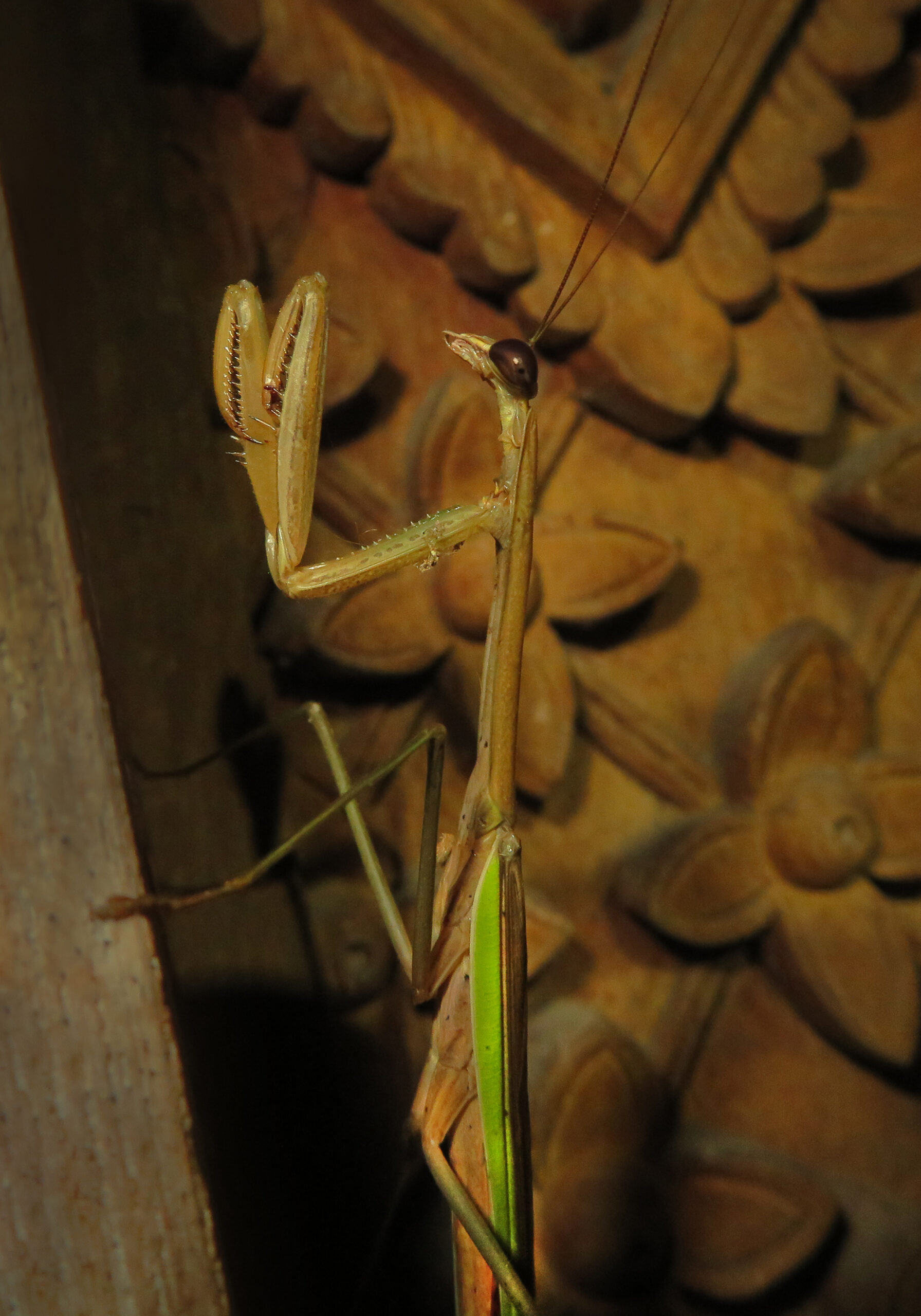
Mantises of the tribe Tenoderini are generally medium to large-sized insects with a slender, elongated body and a long prothorax. Their coloration is usually green, brown, or yellowish, allowing them to blend effectively with grasses, leaves, and stems. Many species possess fully developed wings and are capable of strong flight, particularly males.
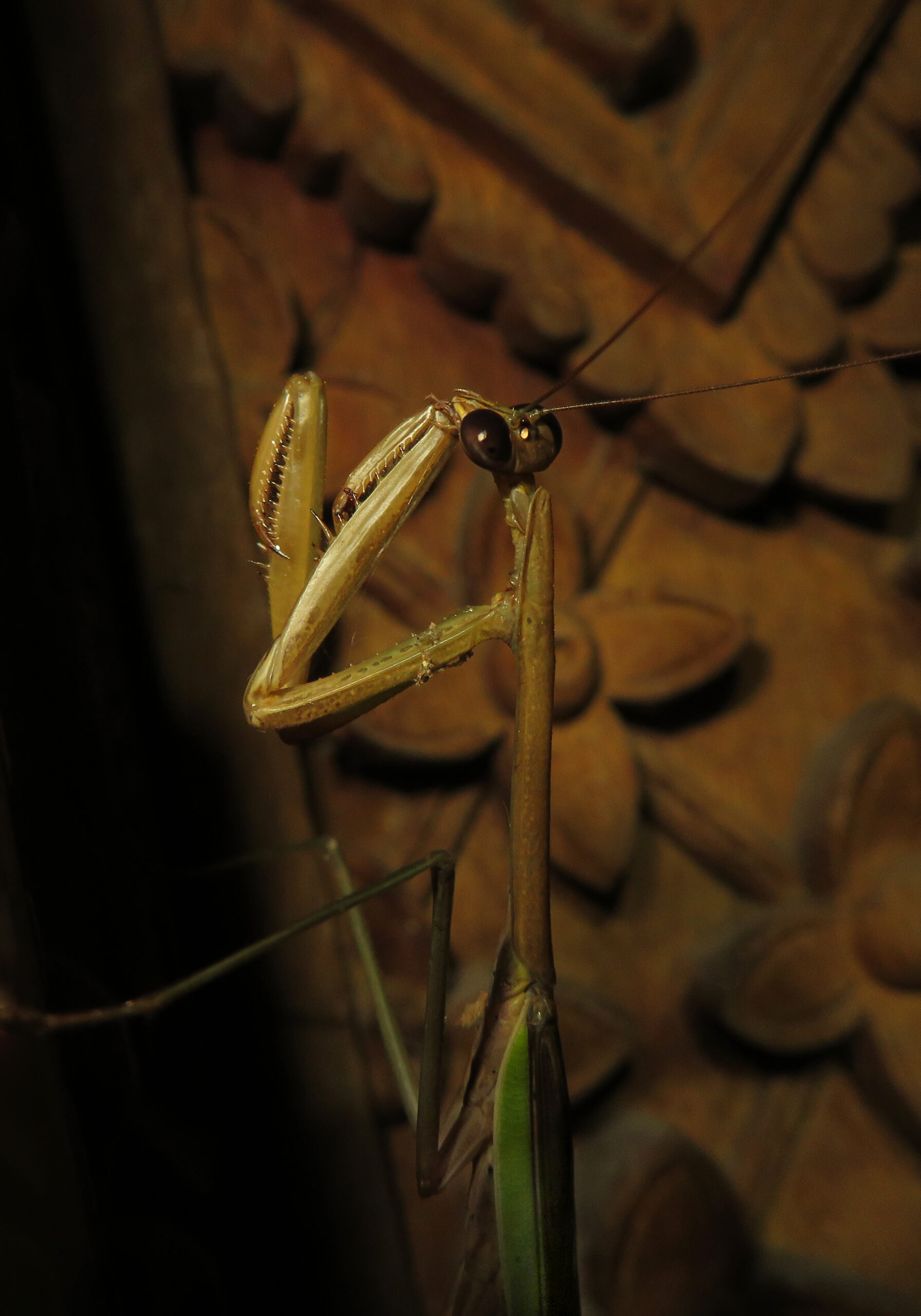
Like other mantises, members of Tenoderini have a highly mobile triangular head equipped with large compound eyes that provide excellent vision. Their spined raptorial forelegs are specialized for capturing prey and can strike with remarkable speed and accuracy.
These mantises are primarily ambush predators. They remain motionless among vegetation, relying on camouflage and patience until prey approaches. Their diet consists mainly of insects such as flies, moths, butterflies, grasshoppers, beetles, and other arthropods. Larger individuals may occasionally capture small vertebrates.
The life cycle involves incomplete metamorphosis with egg, nymph, and adult stages. Females produce an ootheca, a protective egg case attached to vegetation or other surfaces. Nymphs resemble miniature adults and gradually develop through a series of molts before reaching maturity.
The tribe includes well-known genera such as Tenodera and related forms, several of which are among the largest and most familiar praying mantises in Asia.
Ecologically, Tenoderini species play an important role as predators that help regulate populations of insects and other small arthropods. They contribute to ecosystem balance and are often considered beneficial in agricultural settings due to their consumption of pest species. Their size, camouflage, and efficient hunting behavior make them prominent members of terrestrial predator communities.