Bali Wildlife
Every Spices Matter


Mantodea is an order of predatory insects commonly known as mantises or praying mantises. Comprising more than 2,500 described species worldwide, members of this order are distributed across tropical, subtropical, and temperate regions, with the greatest diversity occurring in warm climates. They inhabit forests, grasslands, shrublands, agricultural fields, gardens, and a variety of other terrestrial habitats.
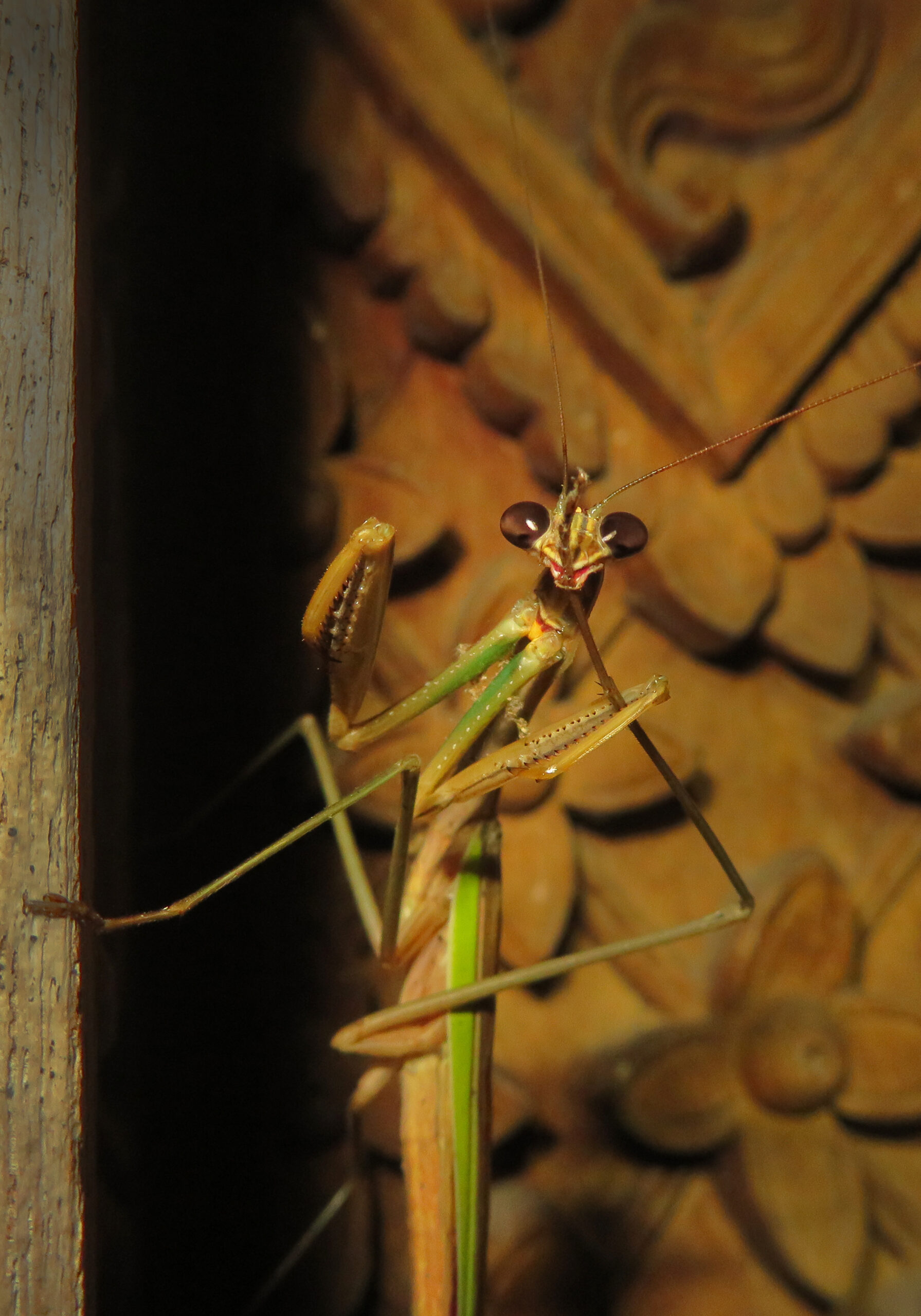
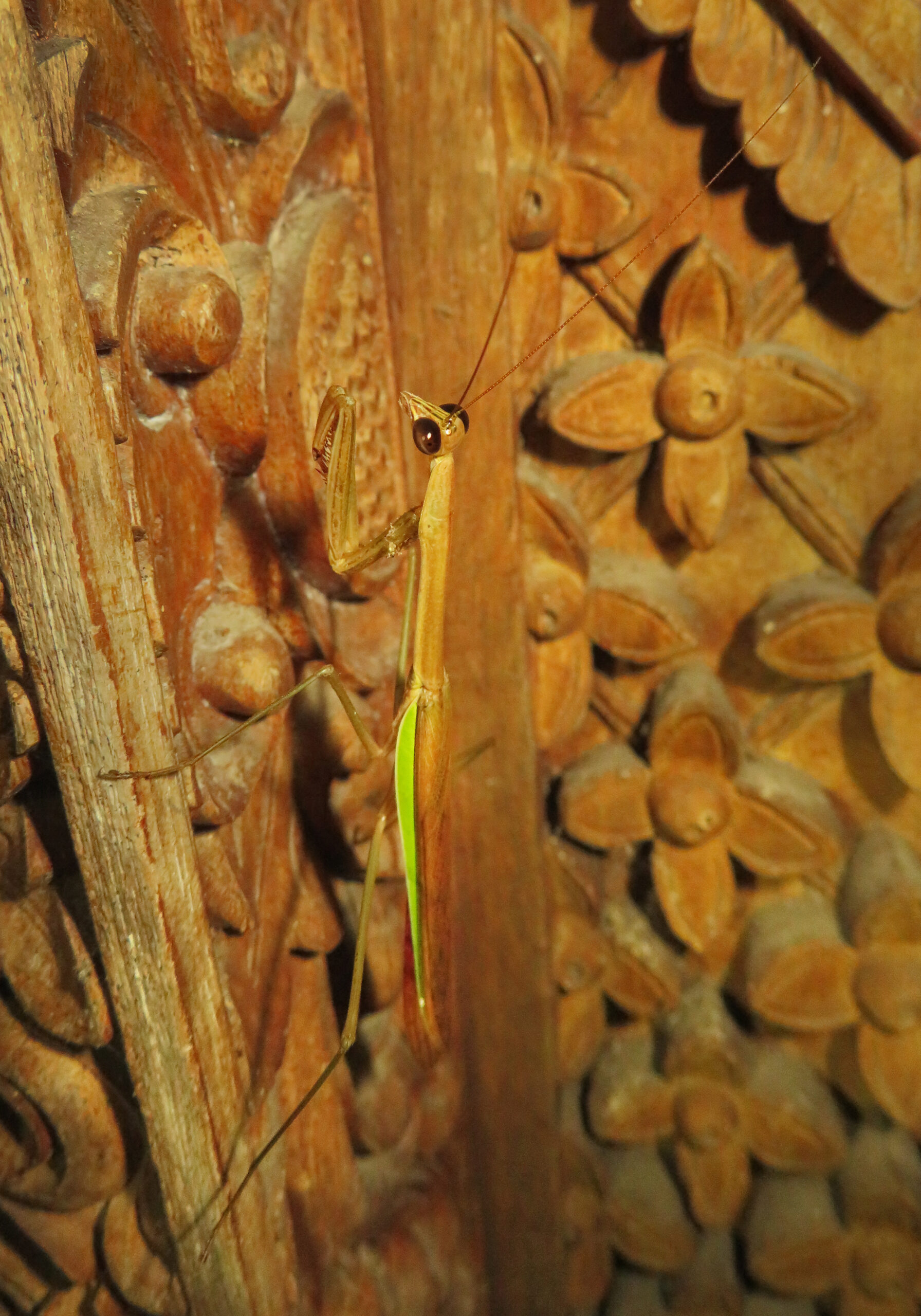
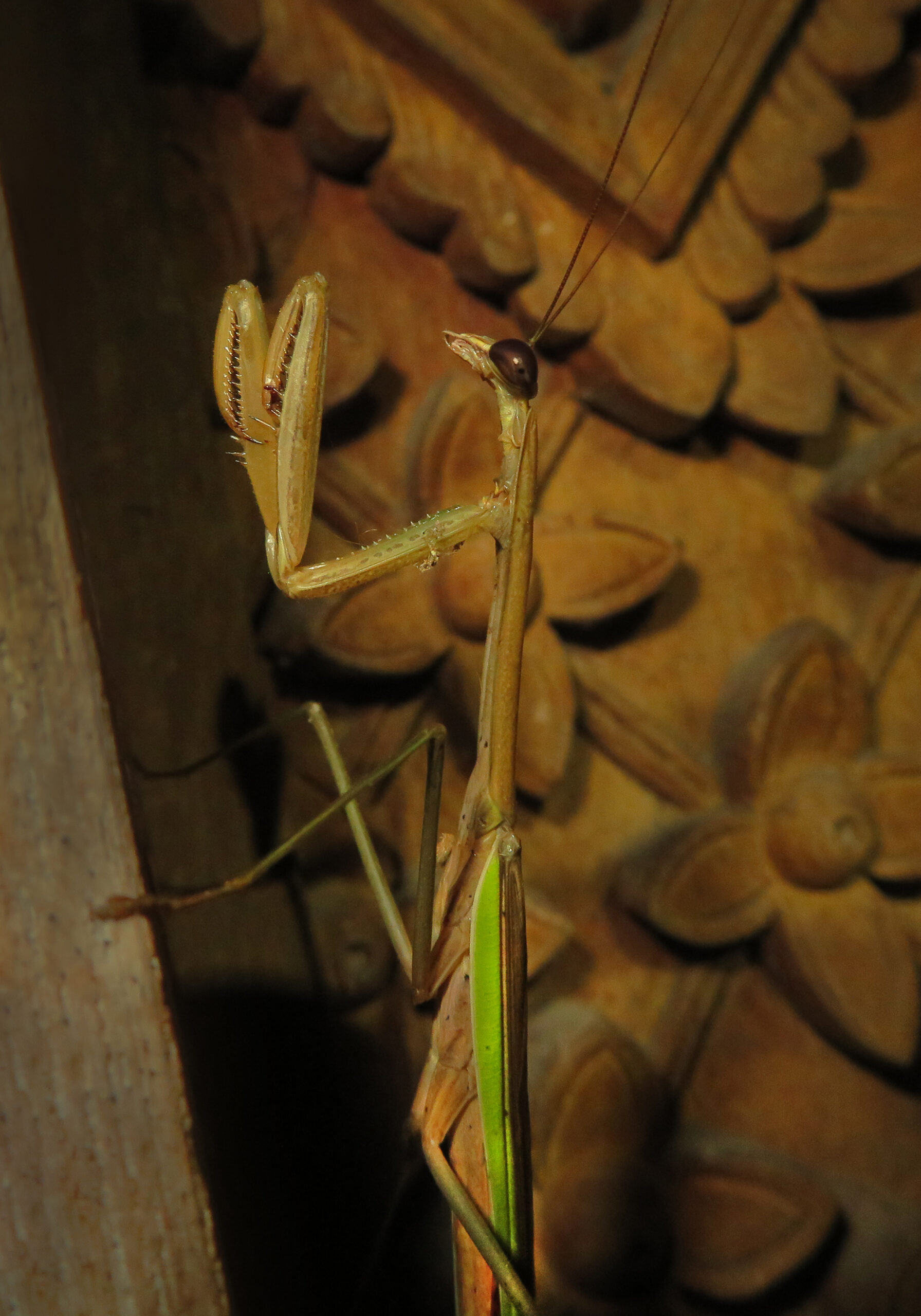
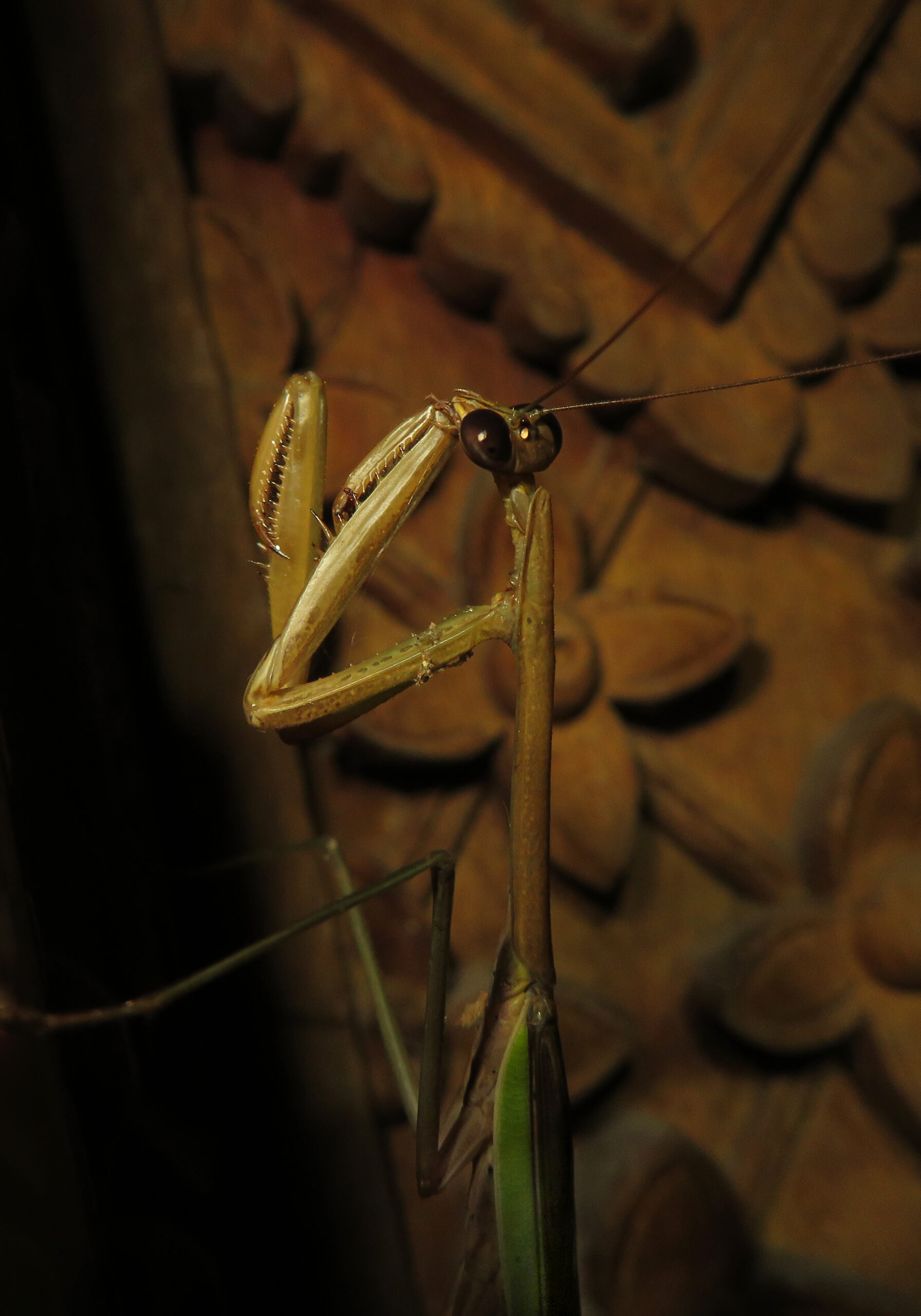
Mantises are easily recognized by their elongated body, triangular head, flexible neck, and distinctive raptorial forelegs adapted for grasping prey. The head is highly mobile and can rotate considerably, allowing the insect to scan its surroundings with exceptional precision. Large compound eyes provide excellent vision, which is crucial for detecting prey and avoiding predators.
Most mantises are ambush predators. They remain motionless among vegetation and rely on camouflage to avoid detection. When prey approaches, they strike with remarkable speed using their spined forelegs to capture and secure the victim. Their diet consists primarily of insects, although larger species may occasionally prey on spiders, small reptiles, amphibians, birds, or even small mammals.
Coloration and body shape vary greatly among species. Many exhibit extraordinary camouflage, resembling leaves, twigs, bark, flowers, or moss. Some species are masters of mimicry, blending seamlessly into their environment to both avoid predators and ambush prey.
Mantodeans undergo incomplete metamorphosis, consisting of egg, nymph, and adult stages. Females typically deposit eggs within a protective frothy structure called an ootheca, which hardens and safeguards the developing embryos. Nymphs resemble miniature adults and gradually develop wings and reproductive structures through a series of molts.
The order includes numerous families such as Mantidae, Hymenopodidae, Empusidae, and others, representing a wide diversity of forms and ecological adaptations.
Ecologically, Mantodea plays an important role as predators in terrestrial ecosystems, helping regulate populations of insects and other small animals. They serve as both predators and prey within food webs and contribute to maintaining ecological balance. Their remarkable morphology, hunting behavior, and camouflage make mantises among the most fascinating and recognizable insects in the world.