Bali Wildlife
Every Spices Matter


Schizomantodea is a major infraorder within the suborder Eumantodea (Order Mantodea), encompassing a large proportion of modern praying mantis diversity. Members of this group are distributed throughout tropical, subtropical, and temperate regions worldwide, occupying habitats such as forests, grasslands, shrublands, agricultural landscapes, and urban gardens.
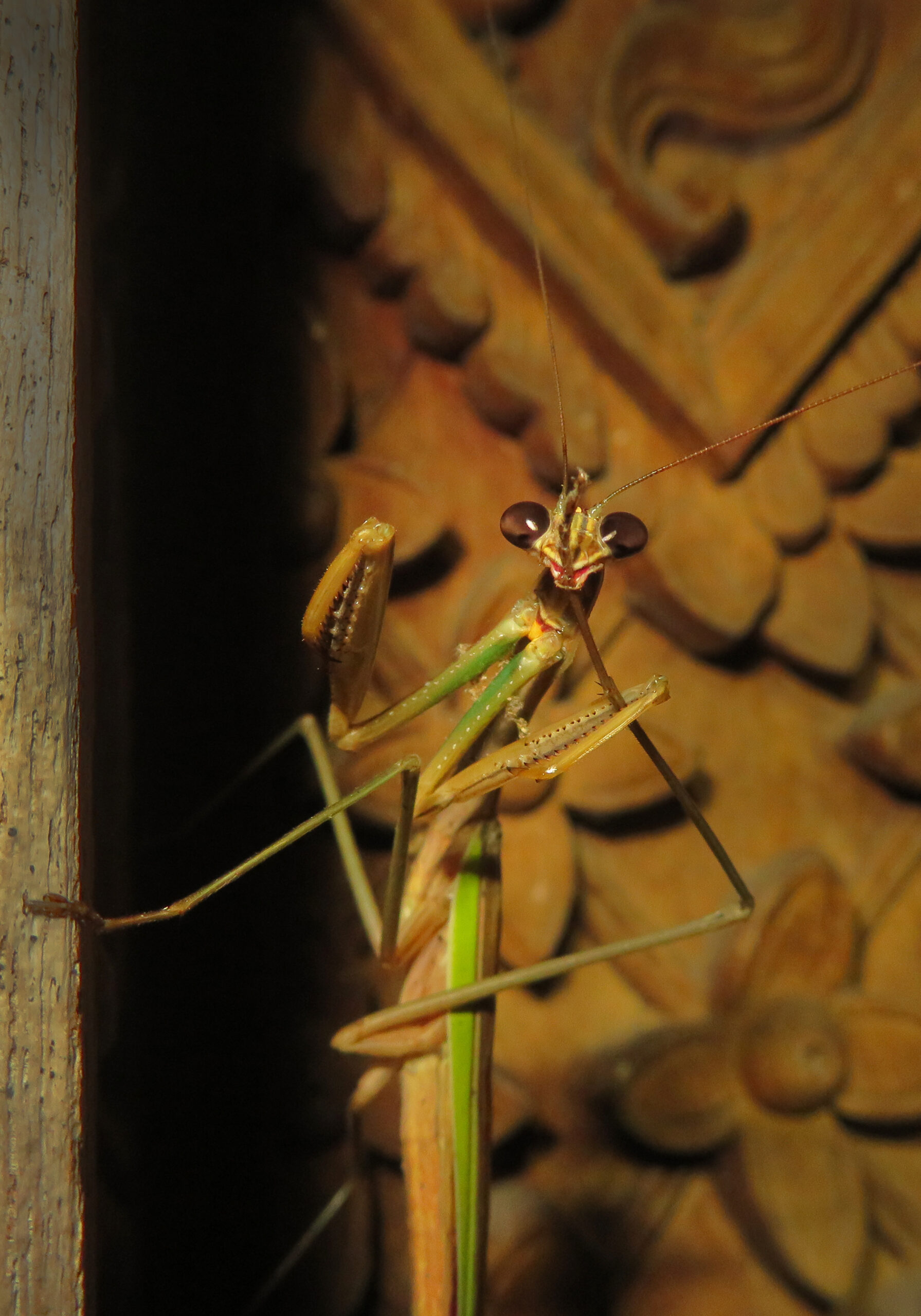
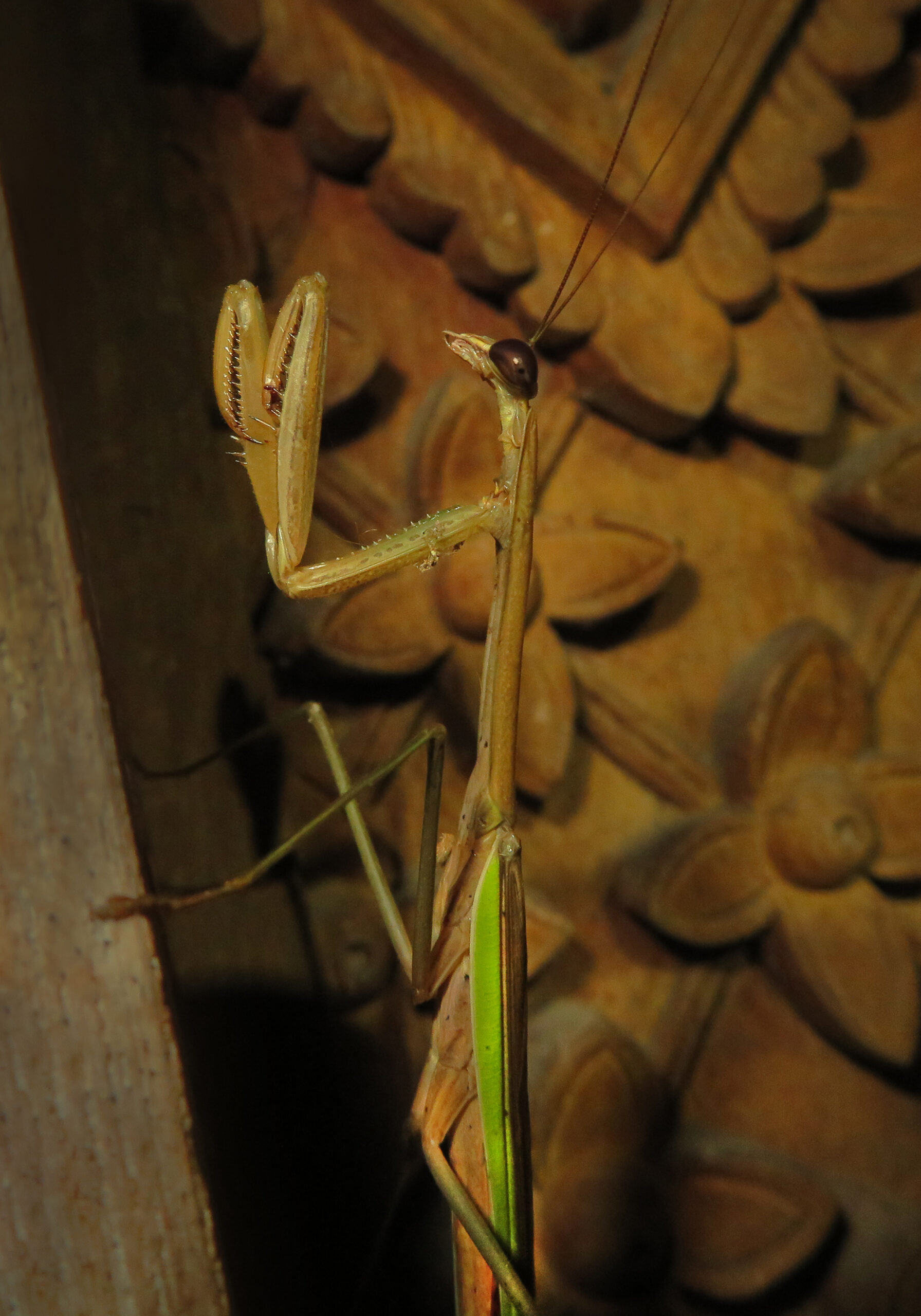
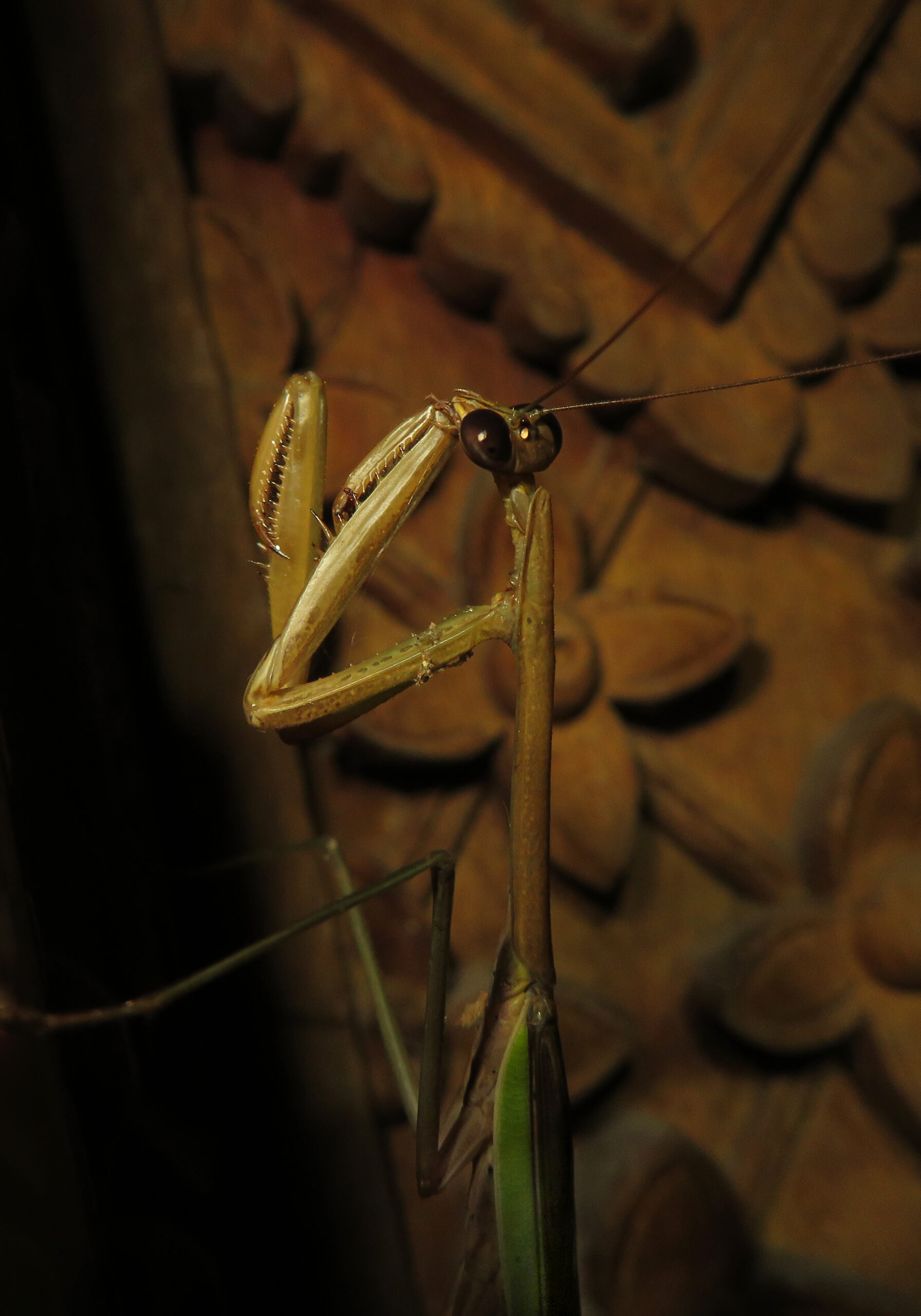
Mantises within Schizomantodea exhibit the characteristic features of modern praying mantises, including an elongated body, a highly mobile triangular head, large compound eyes, and specialized raptorial forelegs adapted for capturing prey. Their exceptional vision and flexible neck allow them to detect movement and accurately judge distances when hunting.
Most species are ambush predators that rely on camouflage and stealth rather than active pursuit. They typically remain motionless among vegetation until prey approaches, then strike rapidly with their spined forelegs. Their diet consists primarily of insects and other arthropods, although larger species may occasionally prey upon small vertebrates.
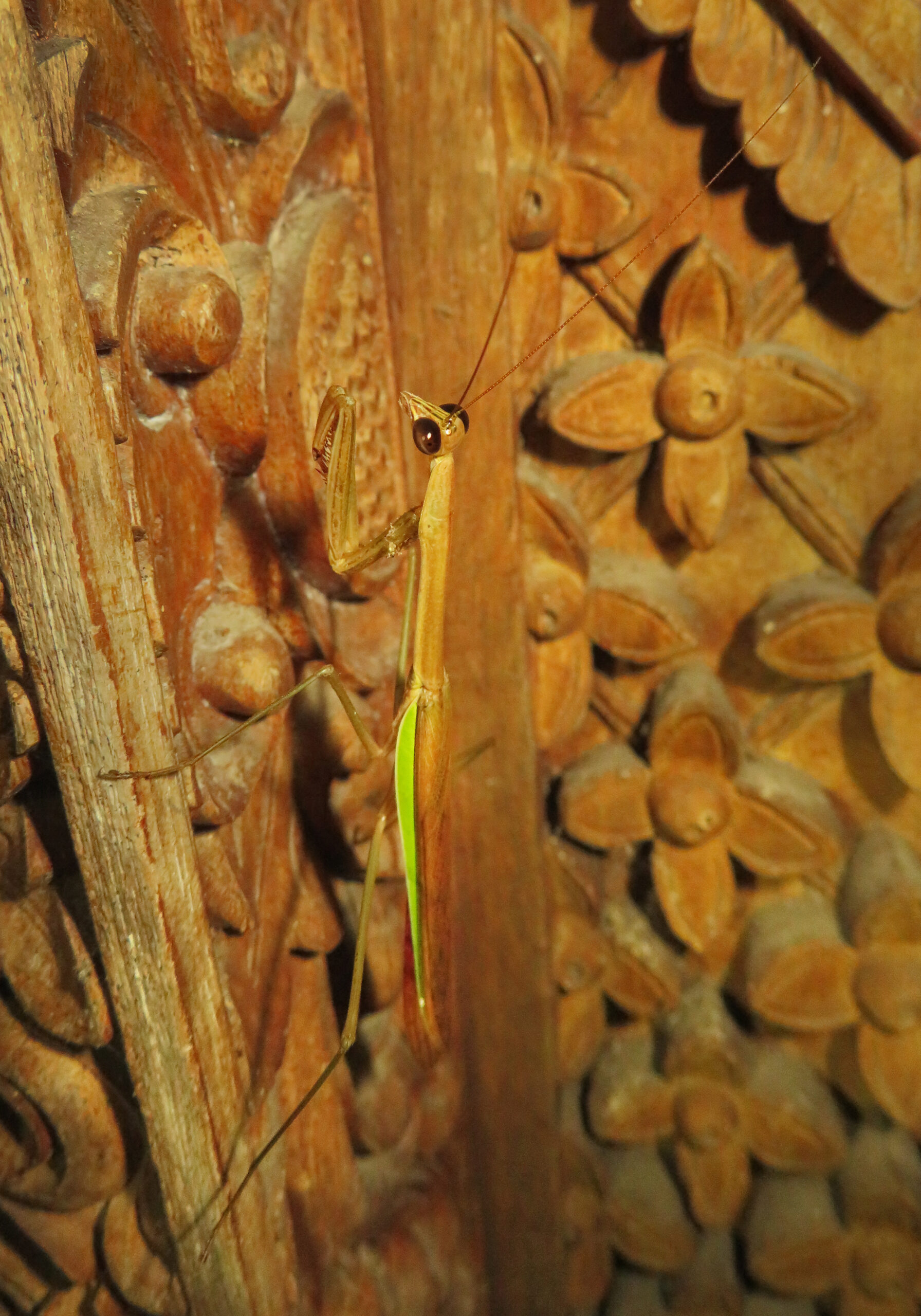
Members of Schizomantodea display remarkable diversity in appearance. Many species are cryptically colored and resemble leaves, twigs, bark, or dried vegetation. Others have evolved elaborate forms of mimicry, including flower-like appearances that attract pollinating insects.
The life cycle involves incomplete metamorphosis, consisting of egg, nymph, and adult stages. Females deposit eggs within a protective ootheca that shields developing embryos from environmental conditions and predators. Nymphs resemble miniature adults and gradually develop through successive molts.
The infraorder contains numerous families and lineages of modern mantises, representing a broad range of ecological adaptations and body forms.
Ecologically, Schizomantodea species serve as important predators in terrestrial ecosystems, helping regulate populations of insects and other small arthropods. They are also prey for birds, reptiles, amphibians, spiders, and mammals, contributing to food web dynamics. Their remarkable camouflage, predatory behavior, and morphological diversity make them among the most fascinating and ecologically significant insects.