Bali Wildlife
Every Spices Matter


Tenodera is a genus of praying mantises within the subtribe Tenoderina (Tribe Tenoderini, Family Mantidae, Order Mantodea). Members of this genus are widely distributed across Asia, with several species extending into other regions through natural dispersal or introduction. They are commonly found in grasslands, agricultural fields, wetlands, forest edges, gardens, and other habitats with abundant vegetation.
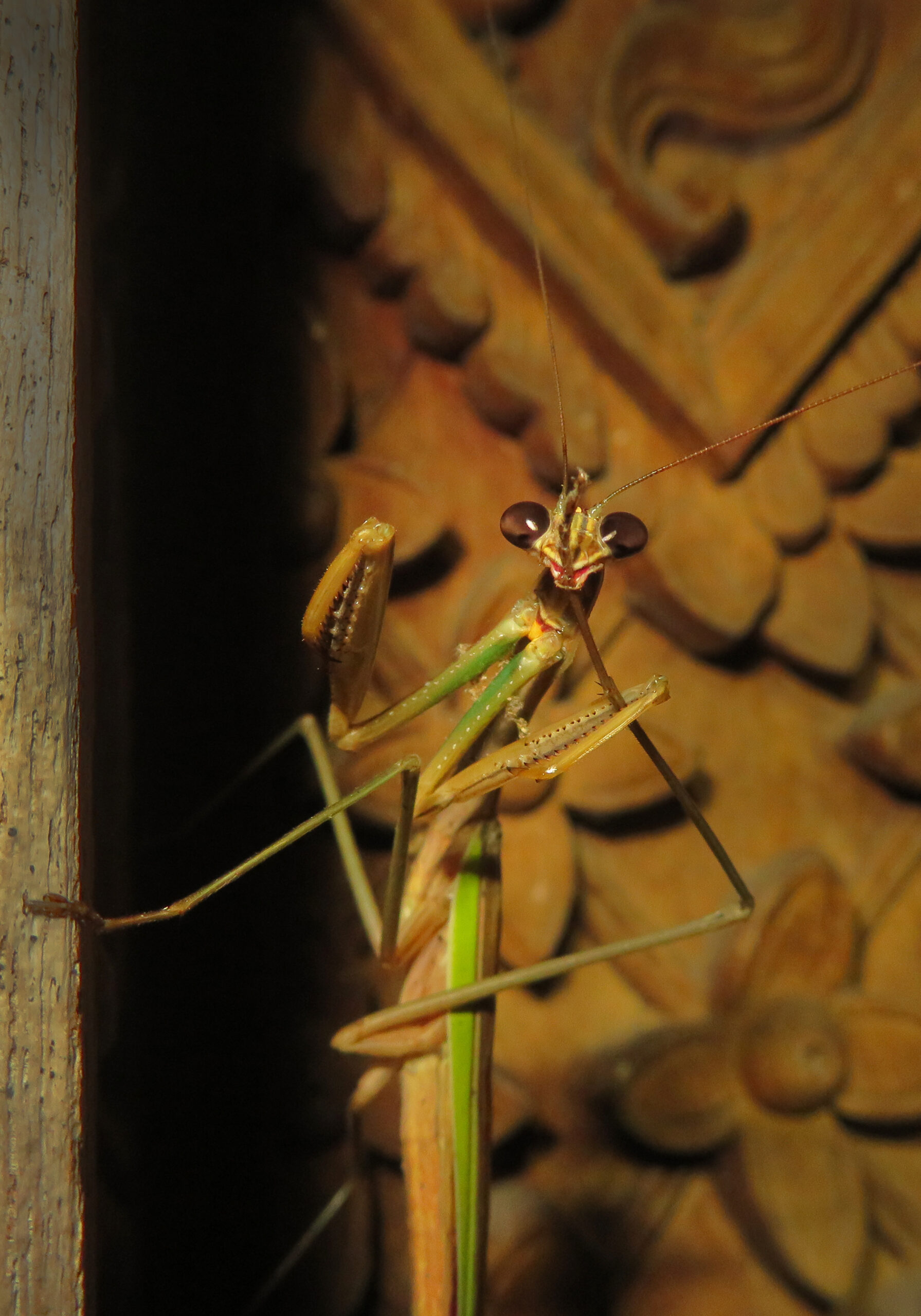
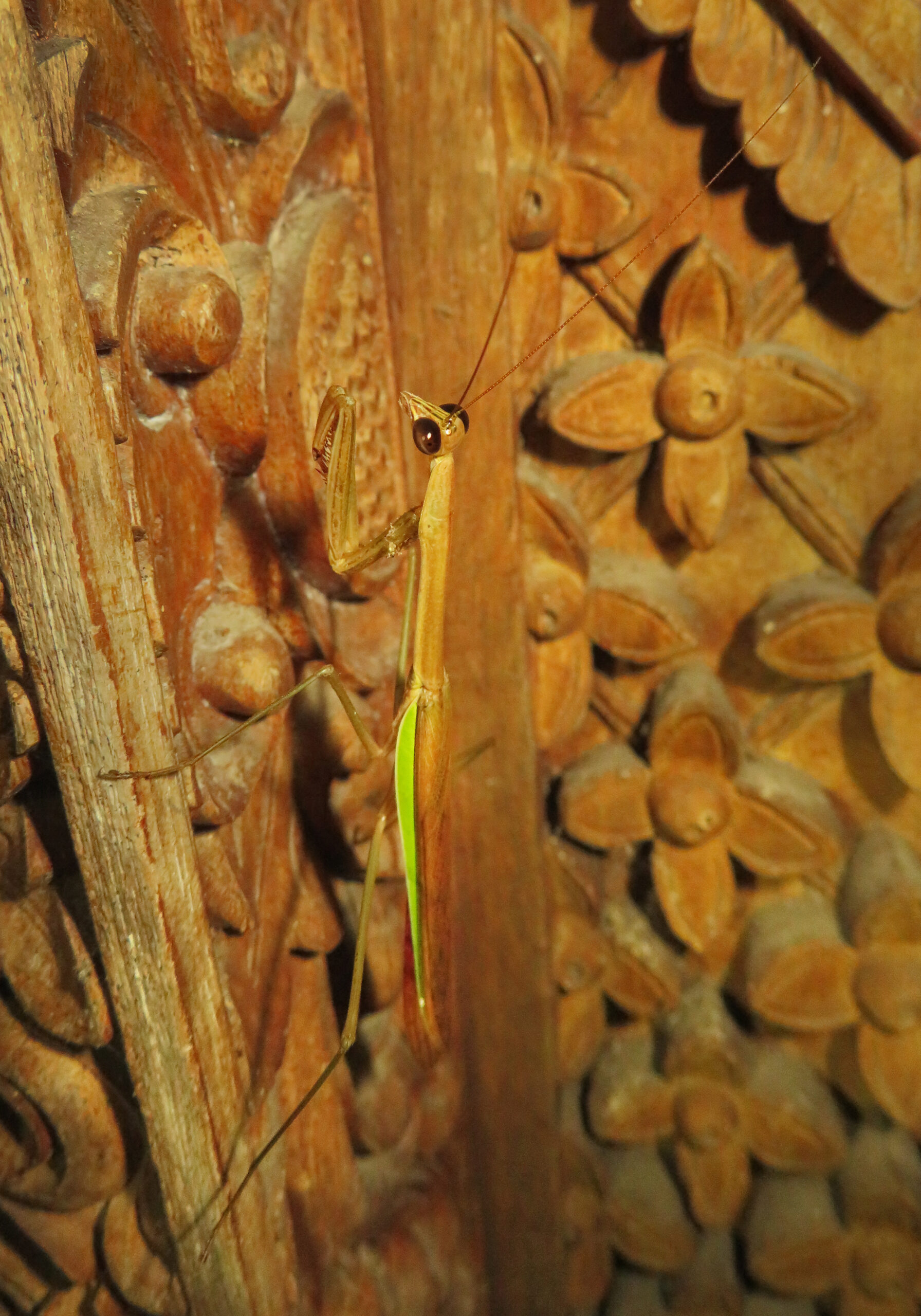
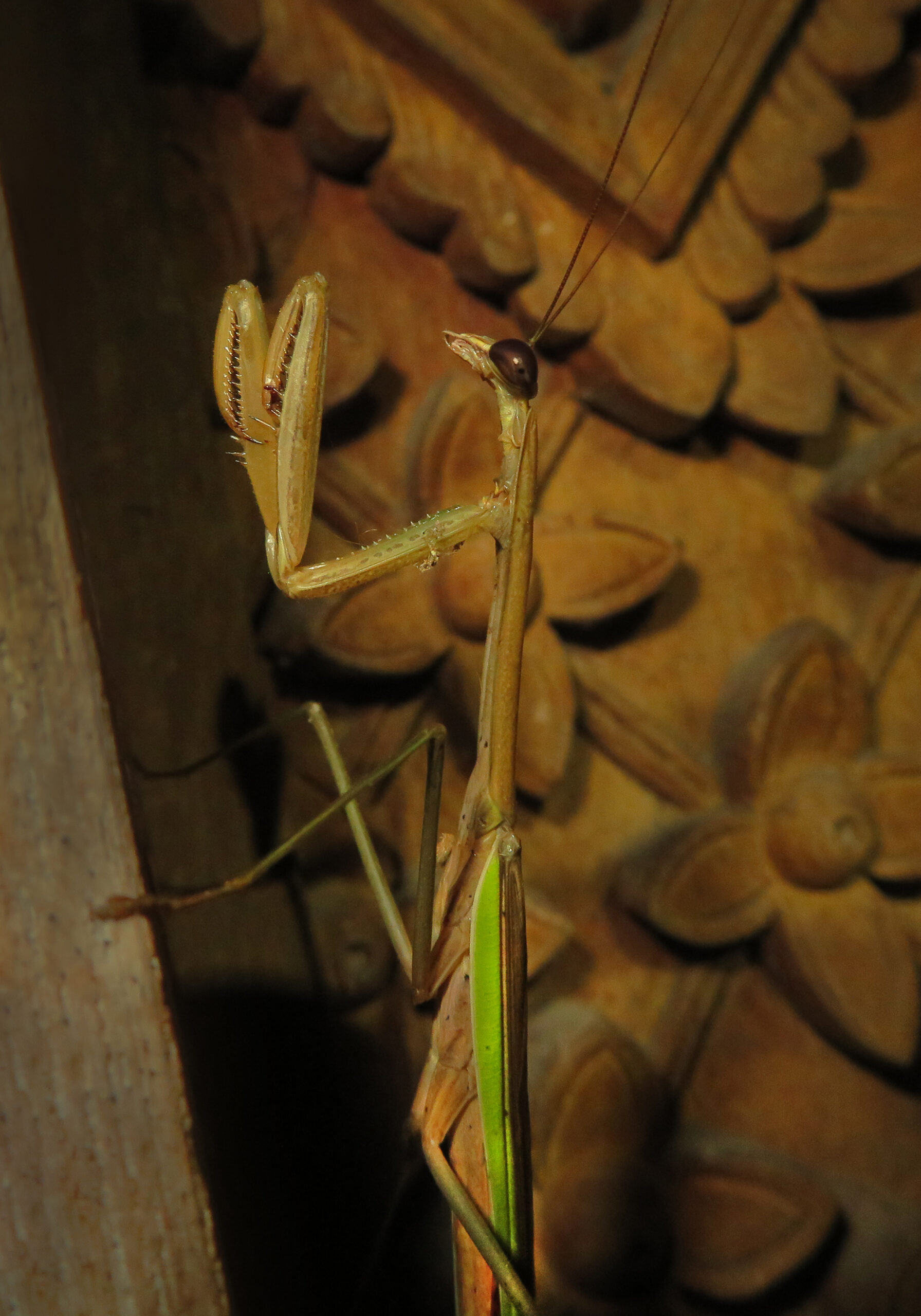
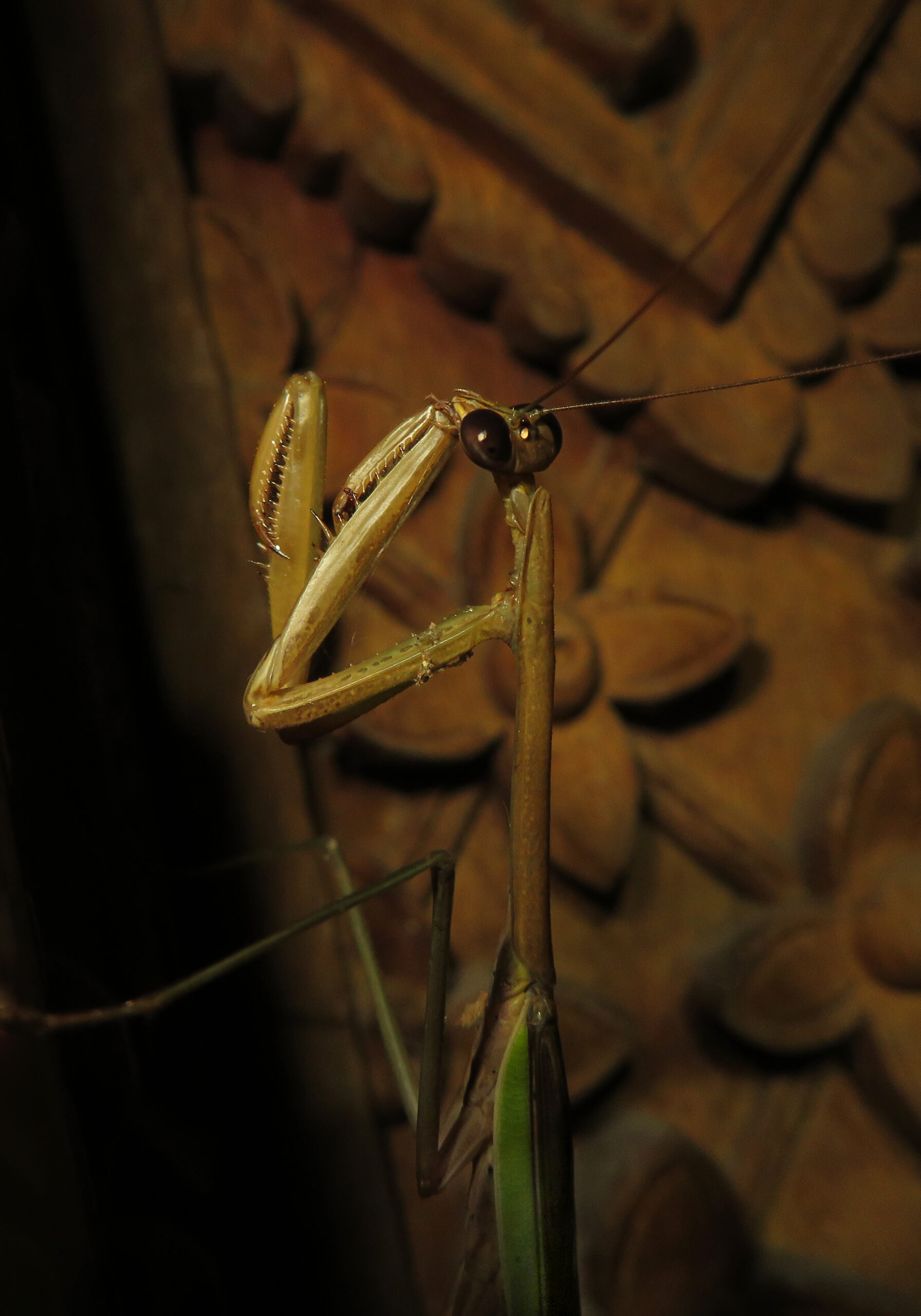
Mantises of the genus Tenodera are generally large and slender, often among the most conspicuous praying mantises in their habitats. They possess an elongated body, long prothorax, well-developed wings, and powerful raptorial forelegs equipped with rows of sharp spines. Their coloration is usually green, brown, yellowish-green, or straw-colored, providing effective camouflage among grasses and foliage.
The head is triangular and highly mobile, with large compound eyes that provide excellent vision and depth perception. Like other mantises, Tenodera species are primarily ambush predators. They remain motionless while waiting for prey and then strike with remarkable speed and precision.
Their diet consists mainly of insects such as grasshoppers, crickets, flies, moths, butterflies, beetles, and other arthropods. Larger individuals may occasionally capture spiders, small frogs, lizards, or other small vertebrates. Their predatory habits make them important natural regulators of insect populations.
The life cycle involves incomplete metamorphosis with egg, nymph, and adult stages. Females deposit eggs in a protective foamy structure known as an ootheca, which hardens and safeguards the developing embryos. Nymphs emerge as miniature versions of adults and undergo a series of molts before reaching maturity.
Notable species include Tenodera sinensis (Chinese mantis), Tenodera aridifolia (Japanese giant mantis), and several related species that are among the largest mantises in Asia.
Ecologically, Tenodera species play a significant role as predators within terrestrial ecosystems, helping control populations of insects and other small animals. They are themselves prey for birds, reptiles, amphibians, and mammals. Their large size, striking appearance, and efficient hunting behavior make them among the most recognizable and ecologically important praying mantises in the world.