Bali Wildlife
Every Spices Matter


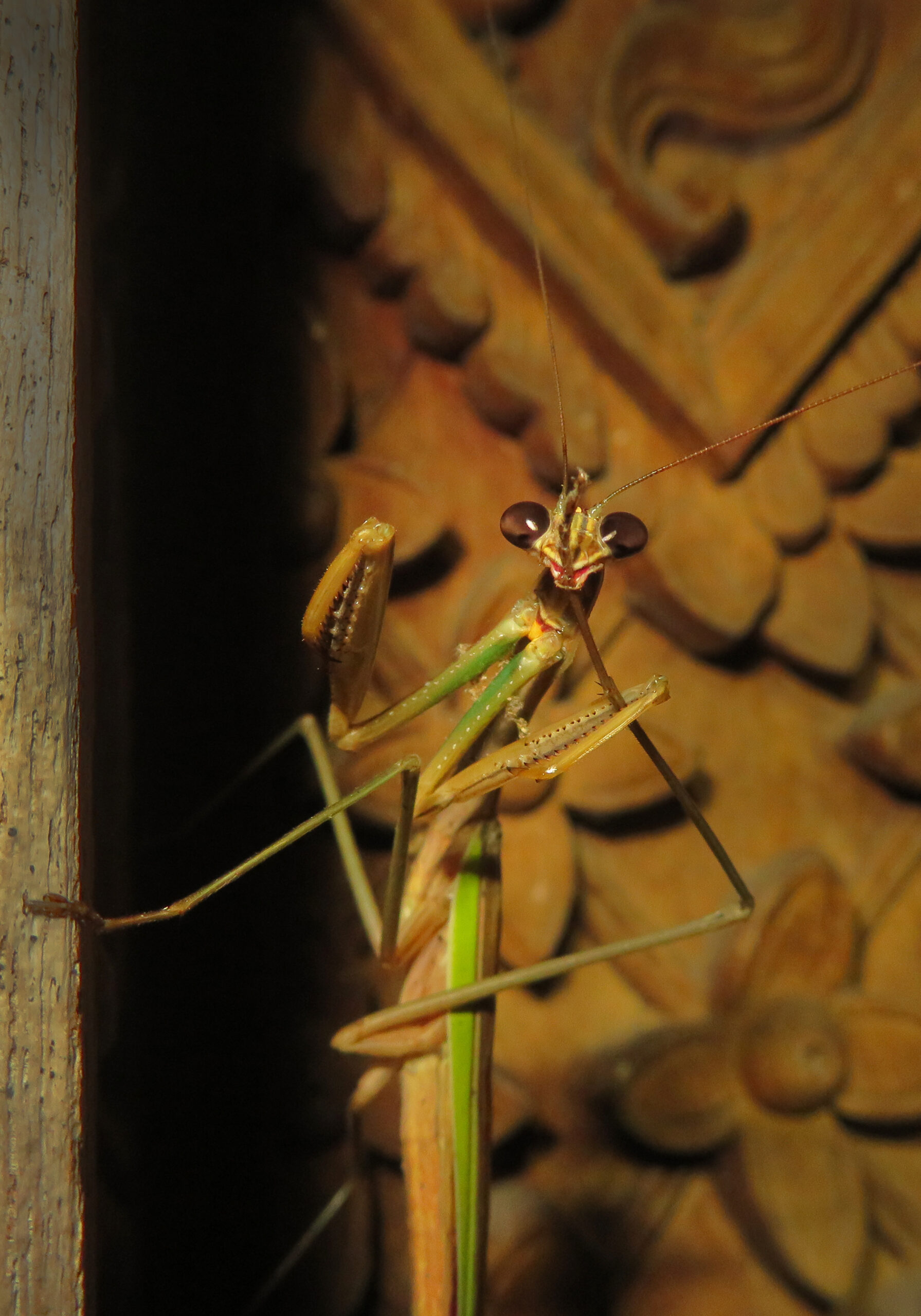
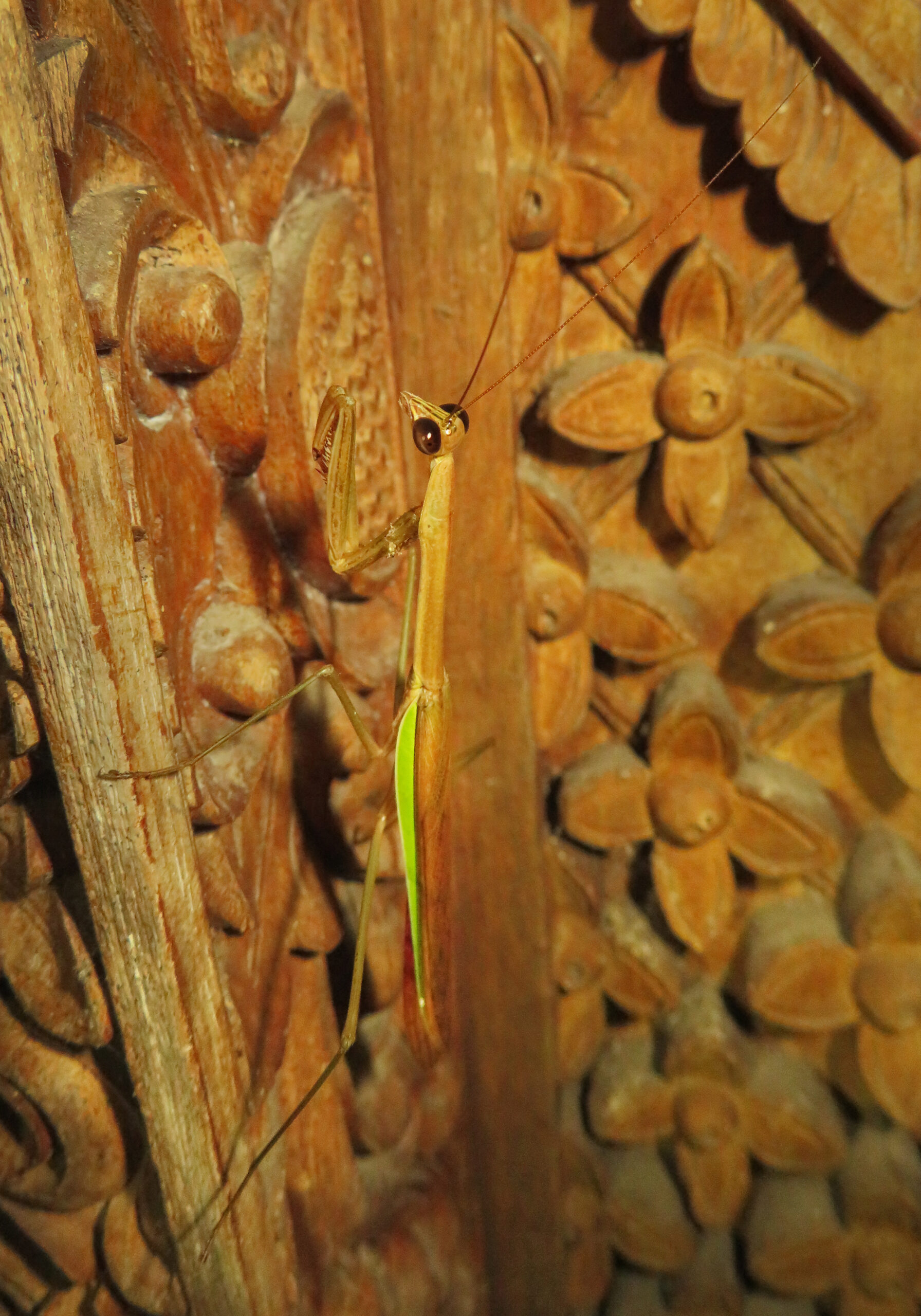
Tenodera aridifolia is a large species of praying mantis belonging to the genus Tenodera (Family Mantidae, Order Mantodea). Commonly known as the Japanese Giant Mantis, it is native to East Asia and is widely distributed in Japan, China, Korea, Taiwan, and parts of Southeast Asia. It inhabits grasslands, forest edges, agricultural fields, wetlands, gardens, and other vegetation-rich environments.
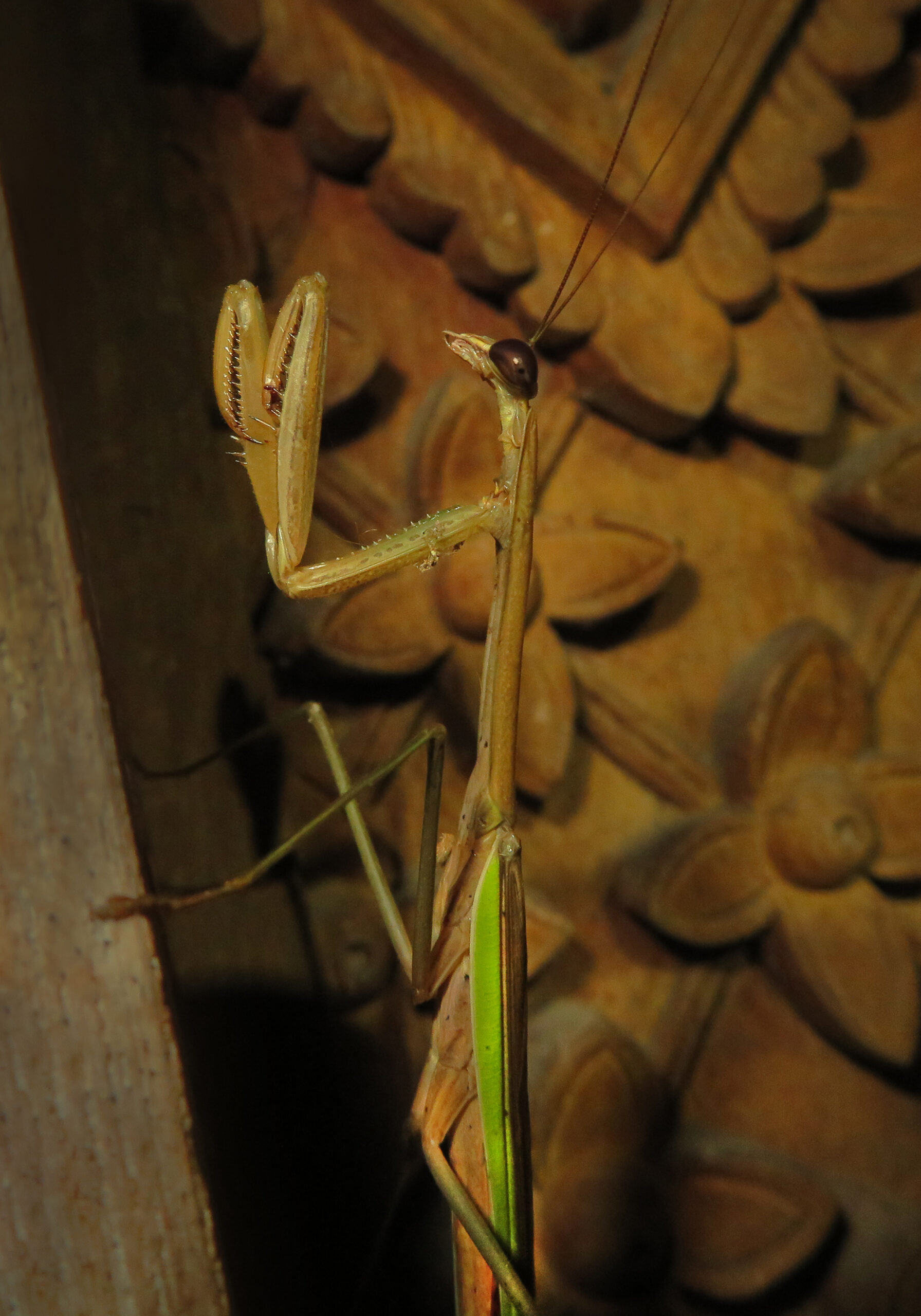
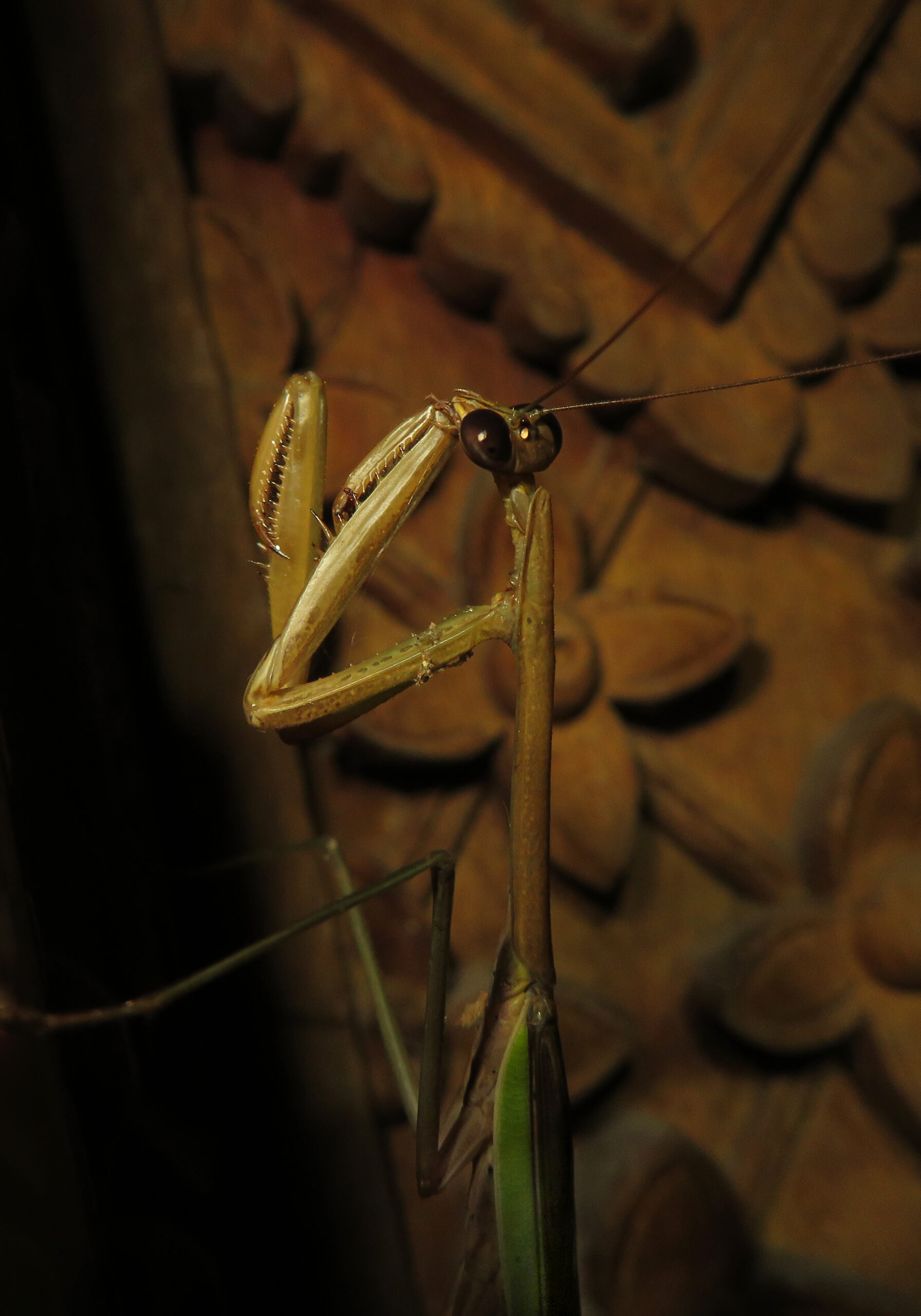
Tenodera aridifolia is one of the largest mantis species in Asia, with adult females often reaching 8–10 cm in length, while males are generally smaller and more slender. The body is elongated and typically green, although brown and yellowish forms also occur. Its long prothorax, large wings, and powerful spined forelegs make it a highly effective predator.
The species possesses a triangular, highly mobile head with large compound eyes that provide excellent vision. Like other mantises, it is an ambush hunter, remaining motionless among vegetation until prey approaches within striking distance.
Its diet consists primarily of insects such as grasshoppers, crickets, flies, moths, butterflies, beetles, and other arthropods. Larger individuals may occasionally prey on small vertebrates, including frogs, lizards, and even small birds under exceptional circumstances.
The life cycle involves incomplete metamorphosis with egg, nymph, and adult stages. Females lay eggs in a protective frothy case called an ootheca, which hardens and protects the developing embryos through winter or unfavorable conditions. Nymphs emerge resembling miniature adults and undergo multiple molts before reaching maturity.
Adults are most commonly encountered during late summer and autumn. Males are capable of strong flight and actively search for females, while females are generally heavier and less active fliers. Sexual cannibalism may occur, although it is not an obligatory behavior.
Ecologically, Tenodera aridifolia serves as an important predator in terrestrial ecosystems, helping regulate populations of insects and other small animals. It is also preyed upon by birds, reptiles, amphibians, spiders, and mammals. Due to its large size, adaptability, and striking appearance, the Japanese Giant Mantis is one of the most recognizable and ecologically significant mantis species in East Asia.