

Mabuyas (Subfamily Mabuyinae)

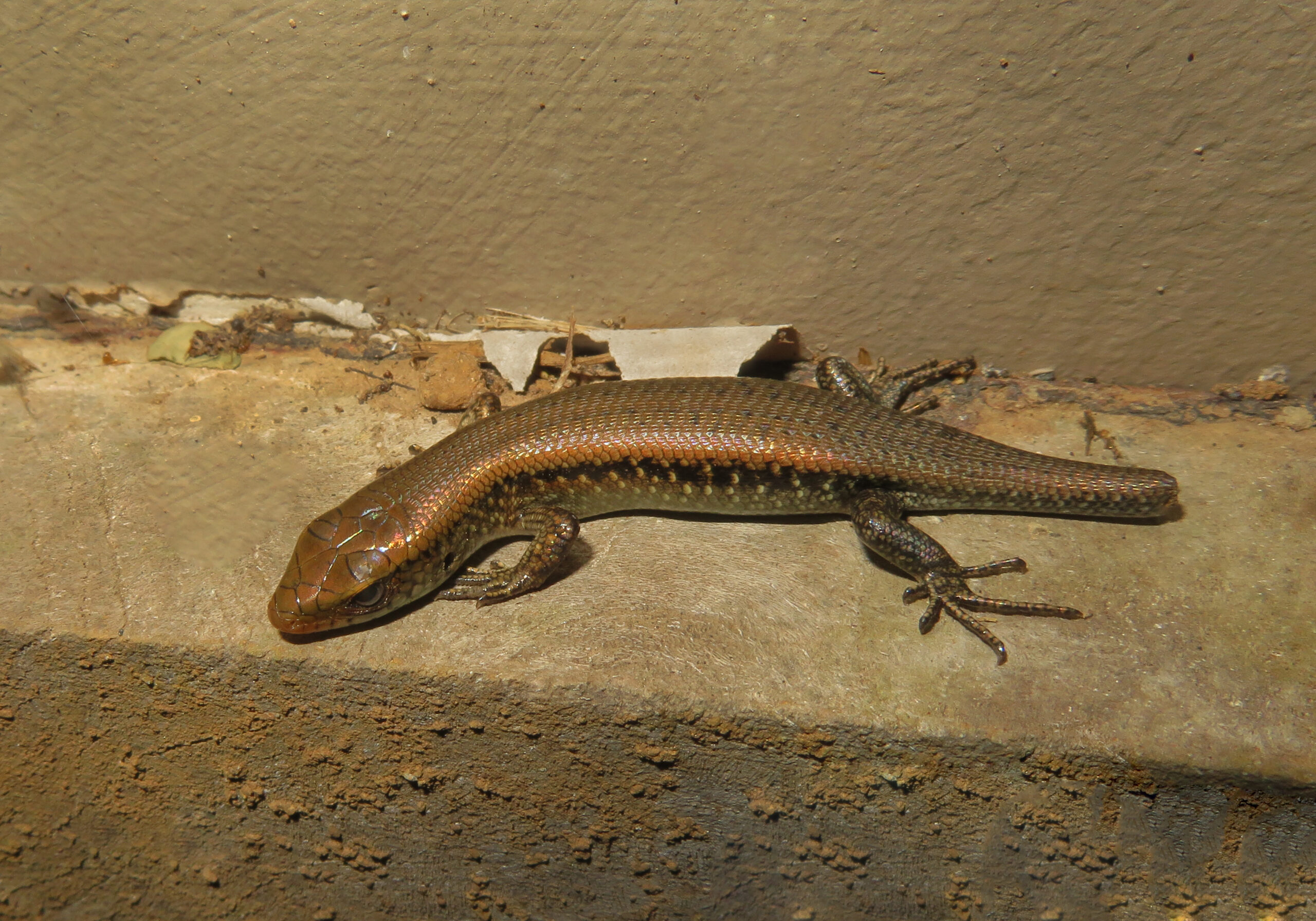
Mabuyinae is a subfamily of skinks within the family Scincidae (Infraorder Scincomorpha, Order Squamata, Class Reptilia). Members of this subfamily are widely distributed throughout tropical and subtropical regions of Africa, Madagascar, Asia, and the Americas, with many species occupying a broad range of terrestrial habitats. They occur in tropical rainforests, secondary forests, grasslands, savannas, scrublands, agricultural fields, plantations, coastal areas, and urban gardens, where they are commonly found among leaf litter, rocks, logs, and low vegetation.
Skinks of the subfamily Mabuyinae are generally small to medium-sized and are characterized by a slender, elongated body covered with smooth, glossy, overlapping scales. They possess a distinct head, well-developed limbs with five digits, and a long tail that often exceeds the length of the body. Their coloration varies from bronze, olive, brown, gray, and black to reddish or golden hues, with many species bearing longitudinal stripes, dark bands, or spotted patterns that provide effective camouflage among soil, leaf litter, and vegetation.
Most mabuyine skinks are diurnal, emerging during the day to bask in sunlight before actively foraging. They are agile runners and frequently seek shelter beneath rocks, fallen logs, loose bark, or dense ground vegetation when disturbed. Like many other skinks, they are capable of caudal autotomy, voluntarily shedding the tail to escape predators. The regenerated tail is structurally different from the original but restores much of its function.
Members of Mabuyinae are primarily insectivorous, feeding on ants, termites, beetles, grasshoppers, spiders, caterpillars, and other small invertebrates. Larger species may occasionally consume small vertebrates, fruits, flowers, or other plant material, making them opportunistic omnivores.
Reproductive strategies within the subfamily are diverse. Many species are viviparous, giving birth to fully developed live young, while others are oviparous, laying eggs in protected sites beneath rocks, logs, or within burrows. Viviparity is particularly widespread in Mabuyinae and has evolved repeatedly as an adaptation to different environmental conditions.
The subfamily includes numerous well-known genera, such as Eutropis, Trachylepis, Mabuya, Heremites, and Chioninia. These genera exhibit a wide range of ecological adaptations and are among the most abundant and widespread skinks in tropical and subtropical ecosystems.
Ecologically, Mabuyinae skinks are important predators of insects and other small invertebrates, helping regulate arthropod populations in forests, grasslands, and agricultural landscapes. They also serve as prey for snakes, birds, mammals, and larger reptiles, making them integral components of terrestrial food webs. Their abundance, ecological versatility, and sensitivity to habitat disturbance make them valuable indicators of ecosystem health and biodiversity.