Bali Wildlife
Every Spices Matter


Eudocima salaminia is a species of fruit-piercing moth belonging to the genus Eudocima (Tribe Ophiderini, Subfamily Calpinae, Family Erebidae, Superfamily Noctuoidea, Order Lepidoptera). It is widely distributed throughout South Asia, Southeast Asia, southern China, Taiwan, Japan, and parts of the Indo-Pacific region. The species inhabits tropical and subtropical forests, woodland edges, orchards, plantations, gardens, and agricultural landscapes where both larval host plants and fruit-bearing trees are available.
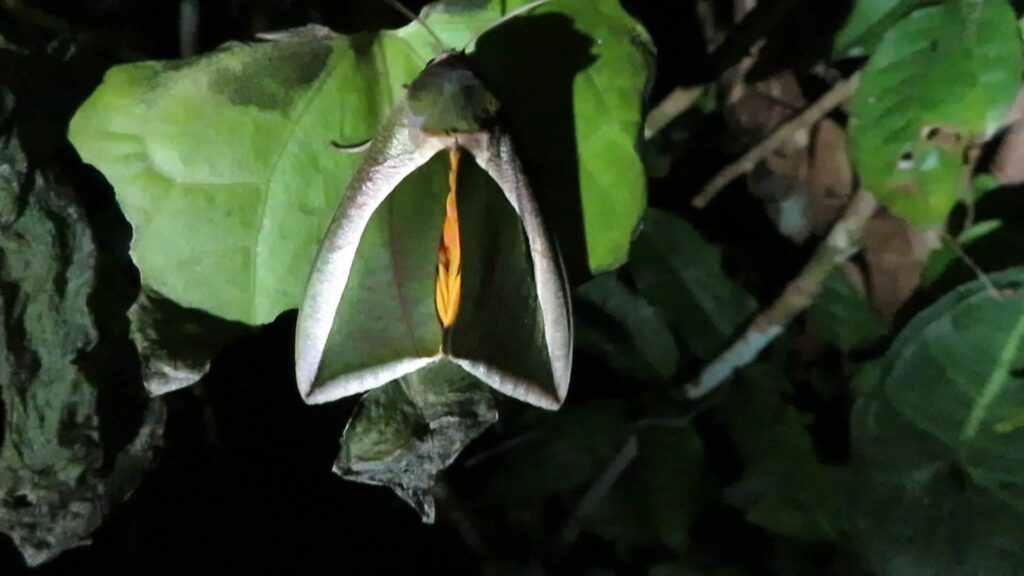
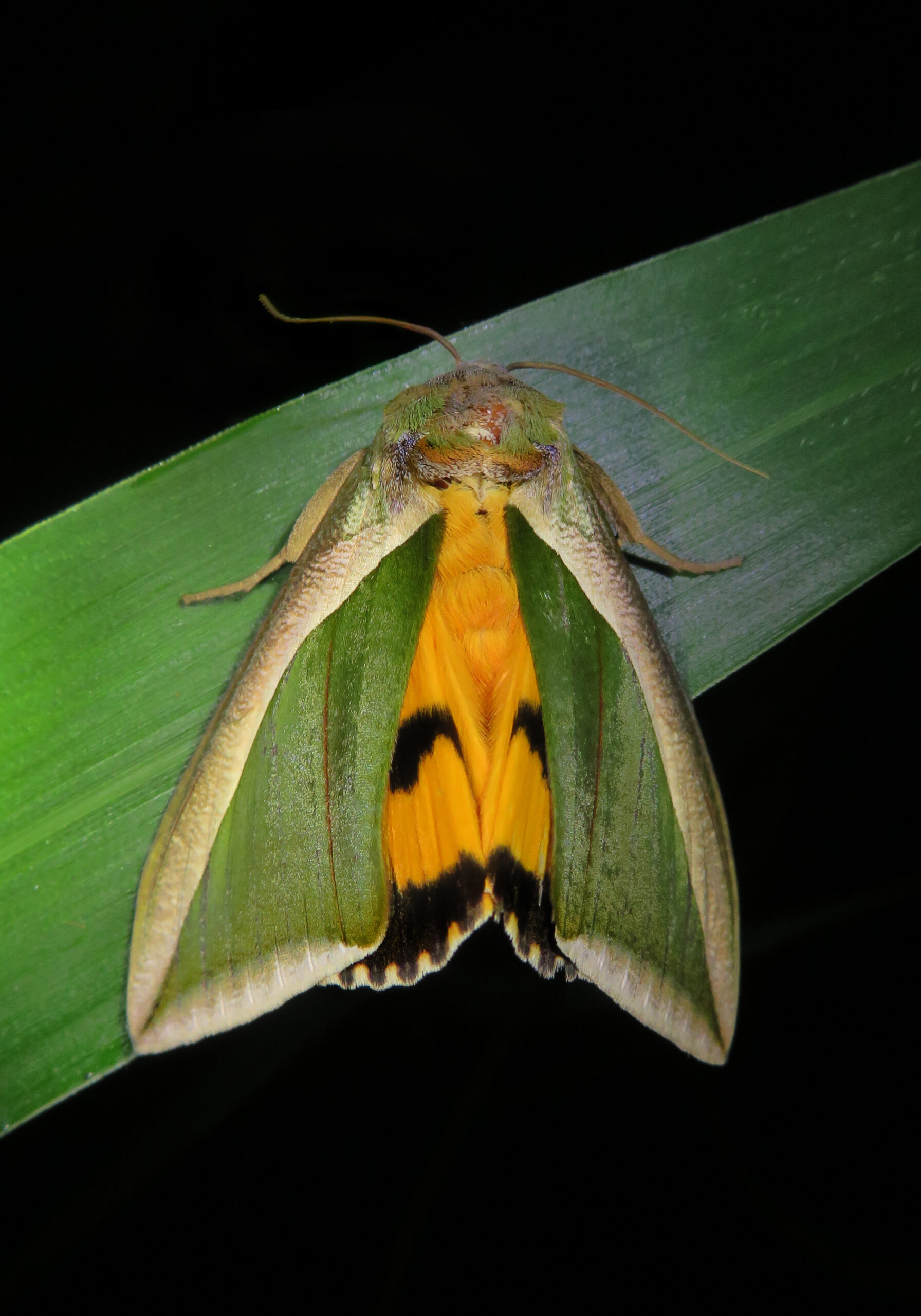
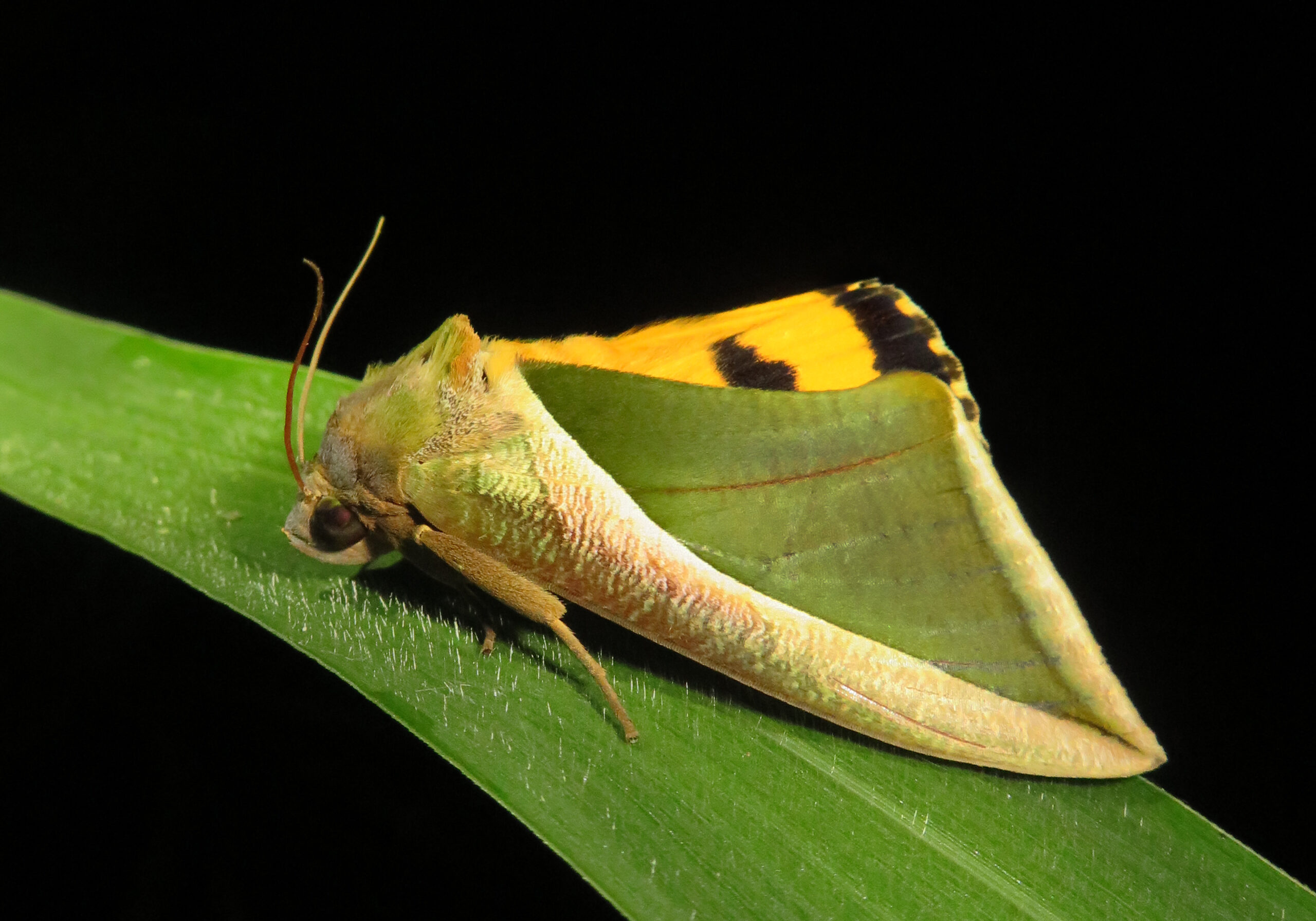
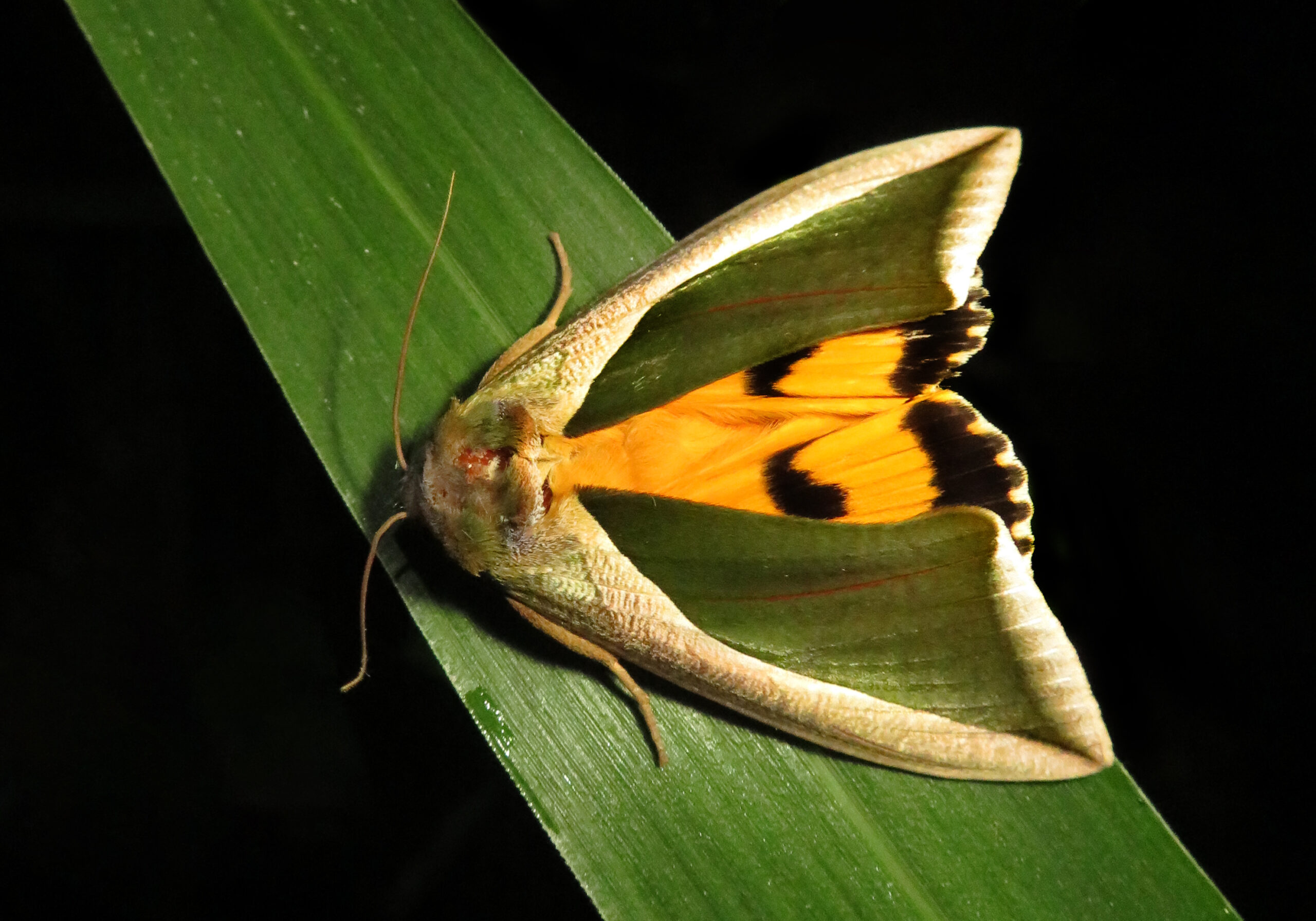
Eudocima salaminia is a medium to large-sized moth distinguished by its striking coloration and cryptic camouflage. The forewings are predominantly green to olive-green with intricate brown, gray, and black markings that resemble moss- or lichen-covered bark, allowing the moth to remain well concealed during the day. The hindwings are bright orange to yellow-orange with a broad black border and contrasting markings, producing a vivid flash of color during flight.
Adults are primarily nocturnal and possess a heavily sclerotized, barbed proboscis specially adapted for piercing the tough skin of ripe fruits. They feed on the juices of fruits such as citrus, mango, guava, papaya, peach, and other cultivated or wild species. This feeding behavior can create entry points for fungi and bacteria, making the species an occasional agricultural pest in fruit-growing regions.
The life cycle involves complete metamorphosis, consisting of egg, larva (caterpillar), pupa, and adult stages. Females lay eggs on the leaves of host plants, mainly climbing vines in the family Menispermaceae. The caterpillars are smooth-bodied and pass through several growth stages while feeding on foliage before pupating within a loose silken cocoon among leaf litter or attached to vegetation.
Adults are strong fliers and are frequently attracted to ripe or fermenting fruits during the night. During daylight hours they rest on tree trunks or among foliage, where their cryptic forewing pattern provides effective protection from predators.
Ecologically, Eudocima salaminia serves as a herbivore during its larval stage and as a consumer of fruit juices during adulthood. It forms part of tropical food webs by providing prey for bats, birds, reptiles, spiders, and predatory insects. Although it can cause localized damage to commercial fruit crops, the species also contributes to the biodiversity and ecological complexity of tropical forest and agricultural ecosystems.