Bali Wildlife
Every Spices Matter


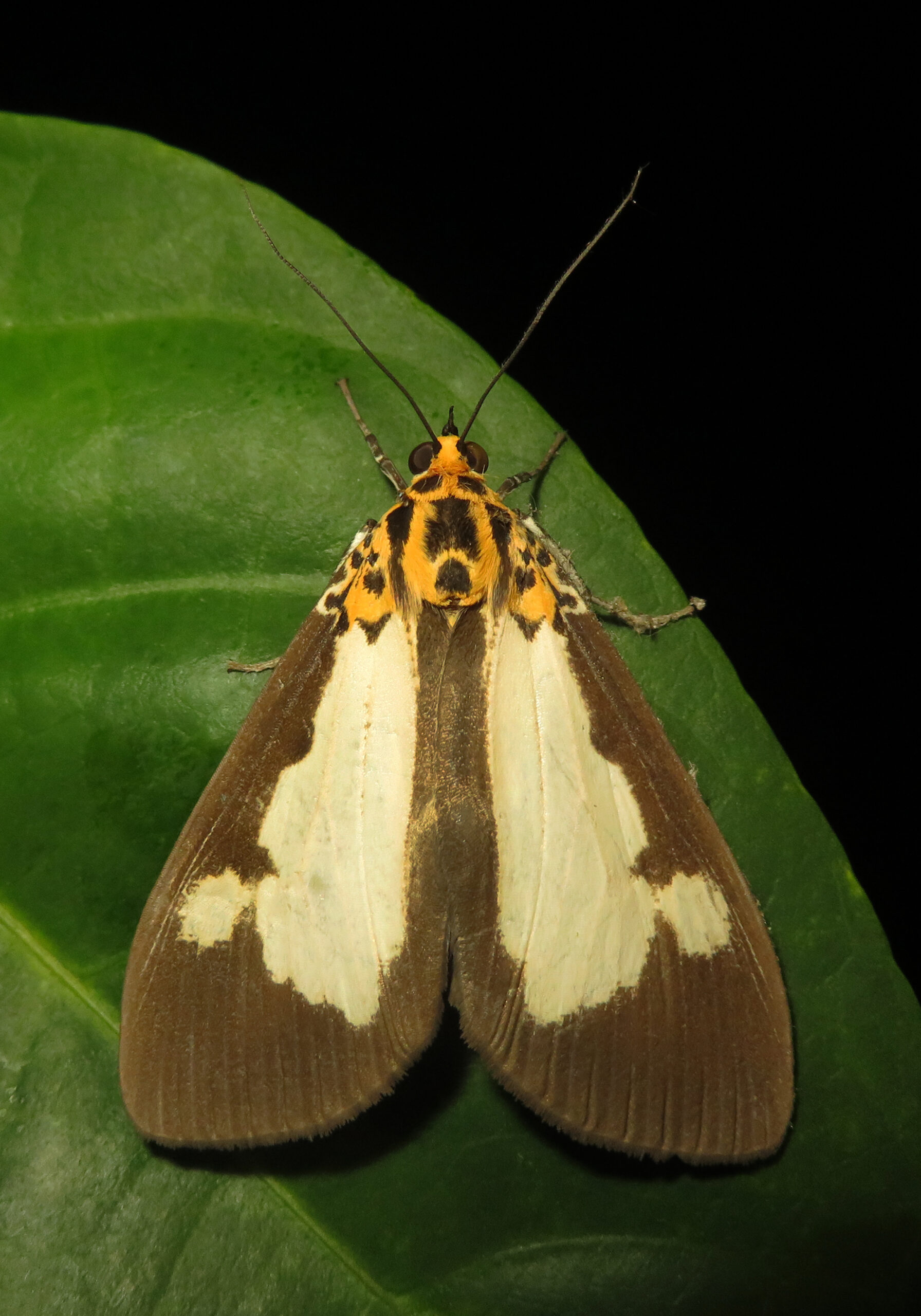
Asota plana is a species of erebid moth belonging to the genus Asota (Subfamily Aganainae, Family Erebidae, Superfamily Noctuoidea, Order Lepidoptera). It is widely distributed throughout South and Southeast Asia, including India, Sri Lanka, Bangladesh, Myanmar, Thailand, Malaysia, Singapore, Indonesia, the Philippines, and parts of southern China. The species inhabits tropical and subtropical forests, secondary woodlands, plantations, parks, gardens, and urban green spaces, particularly where fig trees (Ficus spp.) are abundant.
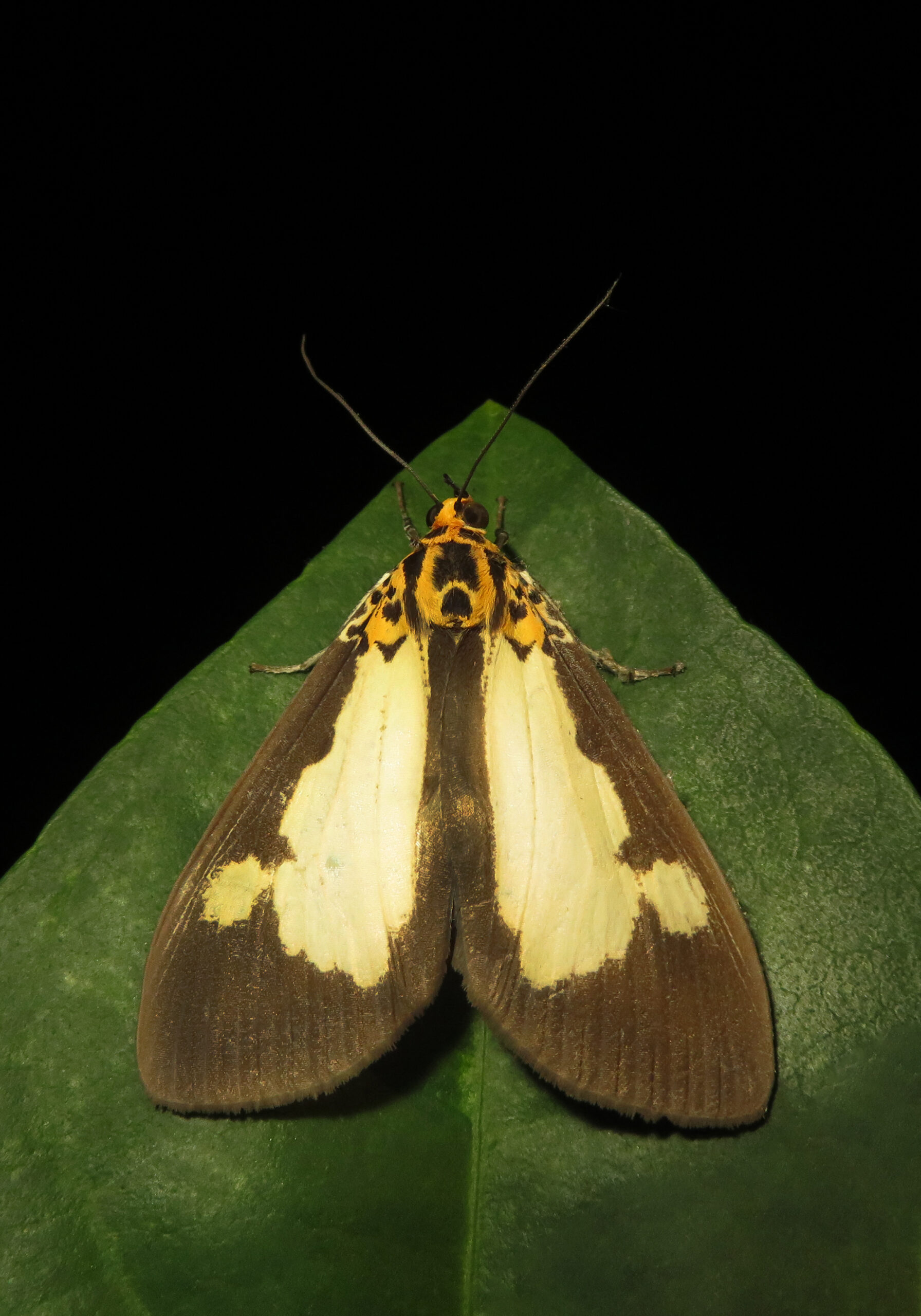
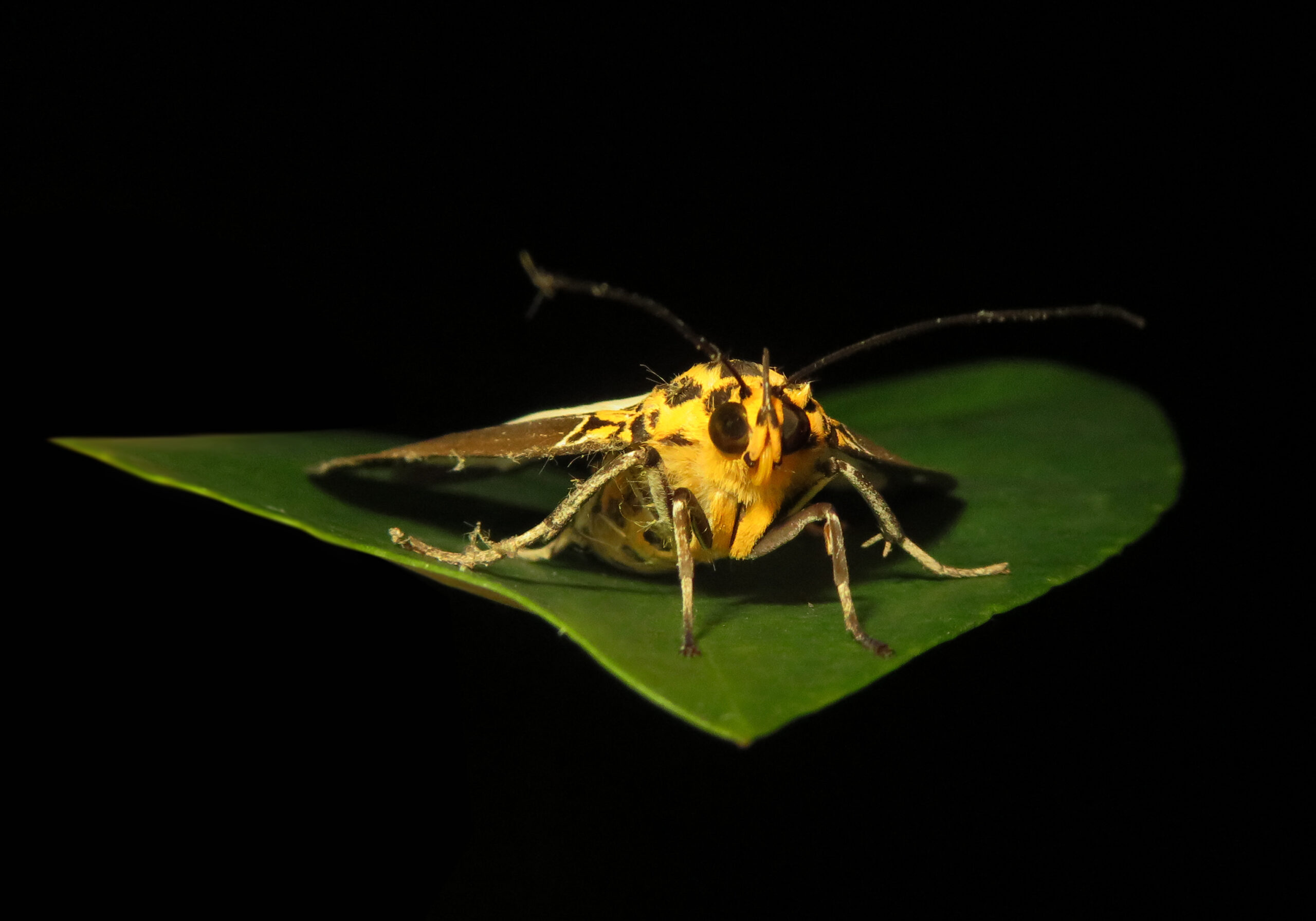
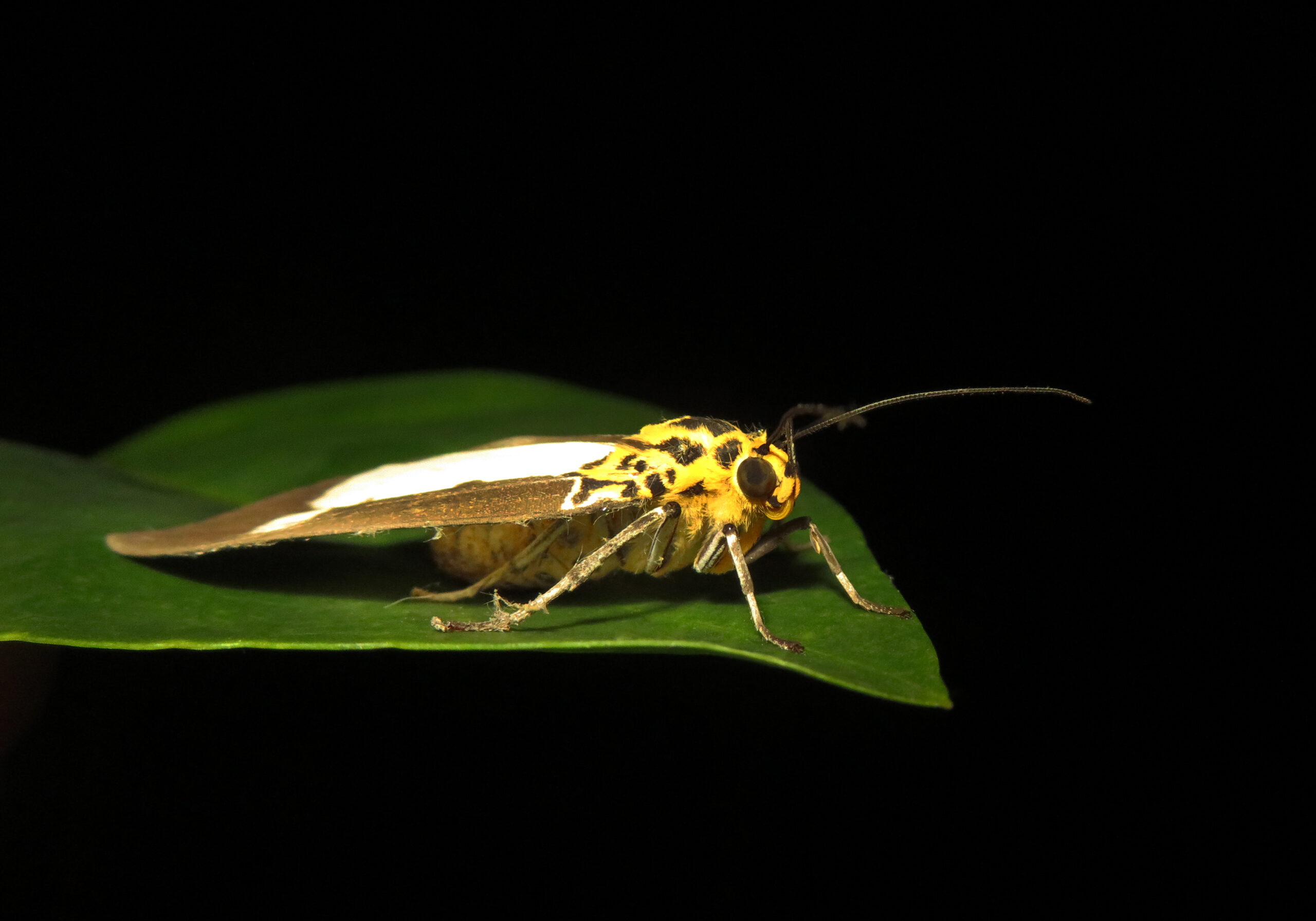
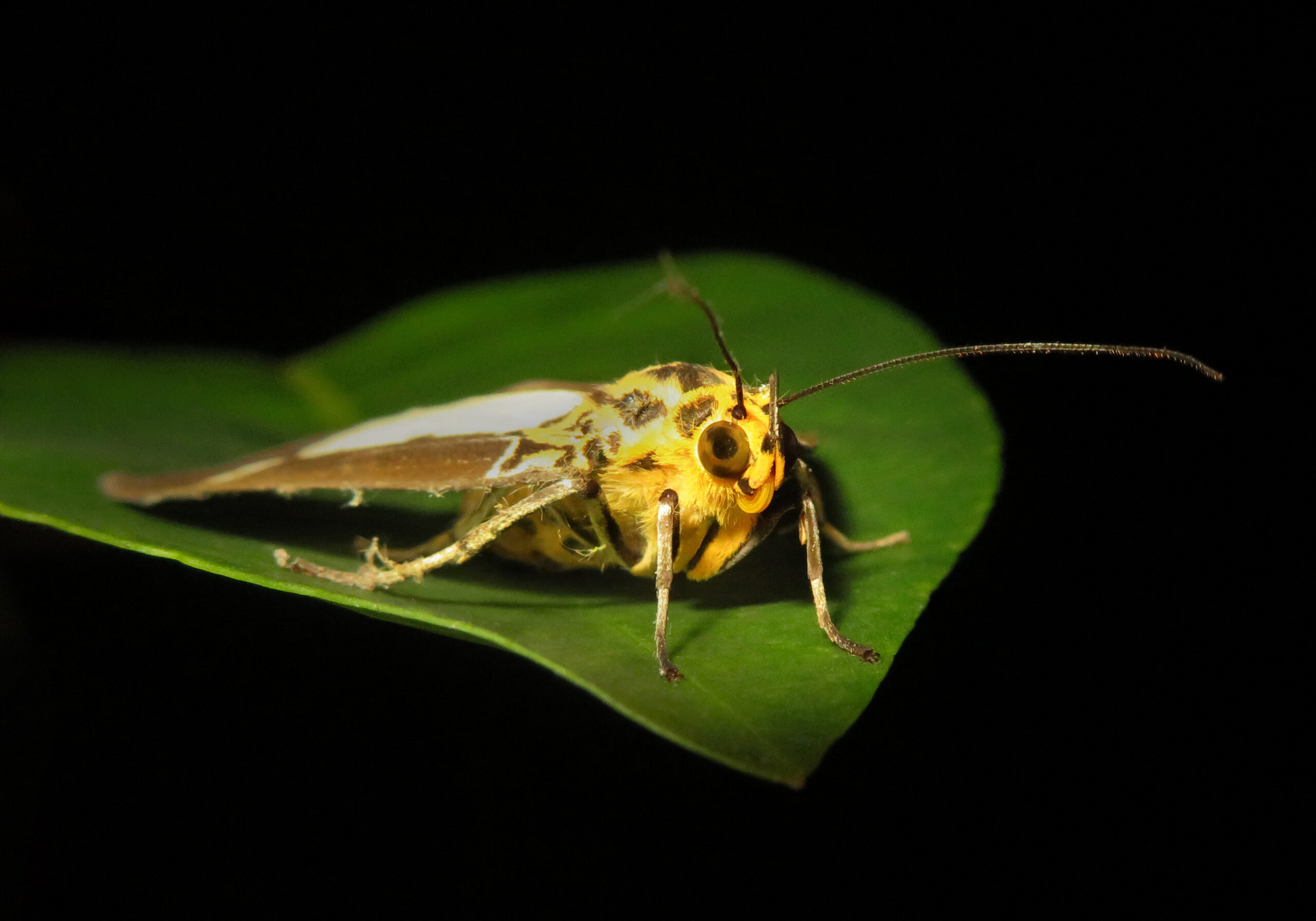
Asota plana is a medium-sized moth recognized by its striking coloration. The forewings are predominantly black or dark brown with contrasting white or cream-colored patches, while the hindwings are bright orange to yellow-orange with a broad black outer margin. The abdomen is often vividly colored with alternating orange and black markings, giving the moth a conspicuous appearance that is believed to function as warning coloration against predators.
Adults possess a robust body, simple antennae, and a well-developed proboscis used for feeding on nectar and other sugary fluids. They are mainly nocturnal but may occasionally be observed resting on tree trunks or walls during the day.
The life cycle involves complete metamorphosis with four stages: egg, larva (caterpillar), pupa, and adult. Females lay eggs on the leaves of host plants, primarily species of Ficus (family Moraceae). The caterpillars are smooth-bodied, dark gray to black, and marked with bright yellow, orange, or white longitudinal stripes and spots. They feed on fig leaves and may occasionally become locally abundant, causing noticeable defoliation.
Pupation occurs within a loose silken cocoon among leaves or leaf litter. After metamorphosis, the adult emerges and begins its reproductive cycle.
Ecologically, Asota plana serves as an herbivore during its larval stage and as a nectar-feeding pollinator during adulthood. It forms part of tropical forest food webs, serving as prey for bats, birds, reptiles, spiders, and predatory insects. The species also contributes to plant–insect interactions through its close association with Ficus trees, making it an important component of tropical forest biodiversity.