

Keeled Slug Snake (Pareas carinatus)
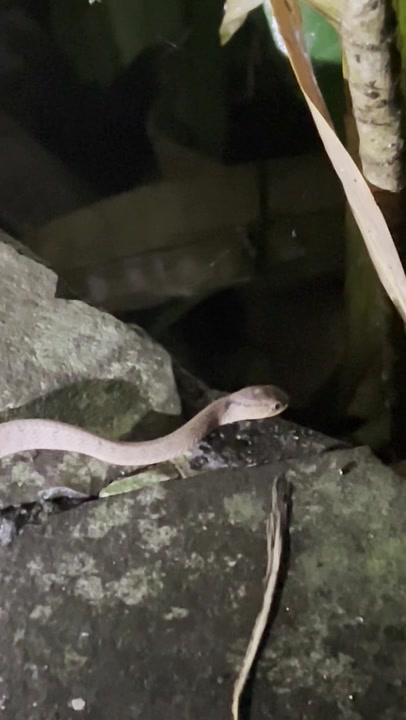
Pareas carinatus, commonly known as the keeled snail-eating snake, is a small, specialized colubroid snake in the family Pareidae and genus Pareas. It is a predominantly nocturnal predator adapted to feeding on terrestrial snails and slugs. The species is associated with humid forest environments in mainland Southeast Asia and adjacent regions, where its secretive habits and cryptic coloration allow it to remain inconspicuous among vegetation and leaf litter.
Pareas carinatus has the characteristic slender body and elongated tail of pareid snakes. The head is relatively distinct from the neck, with large eyes suited to its nocturnal lifestyle. The dorsal scales are distinctly keeled, giving the species its scientific and common-name association. Its coloration is generally composed of subdued brown, gray, or reddish-brown tones, often accompanied by darker markings that help it blend with bark, dead leaves, moss, and other forest substrates.
The species’ most important adaptation is its specialized feeding apparatus. Like other members of Pareas, P. carinatus possesses an unusually asymmetrical skull and jaw arrangement associated with extracting gastropods from their shells. Rather than crushing a snail’s shell, the snake uses its jaws and specialized teeth to grip the exposed soft body and gradually pull the snail from the shell. This remarkable adaptation permits exploitation of a prey resource that is inaccessible or difficult for most other snakes.
Pareas carinatus is primarily nocturnal and secretive. Activity generally increases after dusk, particularly under humid conditions when terrestrial snails and slugs become active. The snake moves slowly through leaf litter, low vegetation, shrubs, and sometimes branches while searching for prey. Its large eyes and chemically sensitive forked tongue assist in locating prey in the dimly lit forest environment.
The diet is dominated by terrestrial gastropods, especially snails, with slugs potentially forming part of the diet as well. The species’ feeding specialization is reflected in the morphology of its jaws and teeth. After securing a snail, the snake manipulates the prey with precise movements of the mouth, working around the shell opening until the soft body can be extracted and swallowed.
The habitat of P. carinatus is generally characterized by humid vegetation and abundant leaf litter, including tropical and subtropical forests and other wooded environments. Moisture is particularly important because terrestrial gastropods are strongly associated with humid conditions. The snake’s cryptic appearance allows it to remain concealed during daylight hours, when it typically seeks shelter among leaves, vegetation, or other protected structures.
Like other pareid snakes, P. carinatus uses chemical communication and prey detection extensively. Its forked tongue collects chemical particles from the surrounding environment and transfers them to the vomeronasal organ. This sensory system is especially useful for a nocturnal predator searching through complex vegetation and leaf litter where visual detection of small prey can be difficult.
Reproduction is oviparous, although detailed information on the breeding biology of the species remains relatively limited. Females lay small clutches of eggs in concealed, humid locations that provide protection and suitable conditions for embryonic development. Hatchlings are independent after emergence and possess the specialized morphology needed to begin feeding on small gastropods.
Ecologically, Pareas carinatus is an important specialist mollusc predator within the tropical Asian forest ecosystem. By consuming snails and slugs, it contributes to the regulation of terrestrial gastropod populations and forms part of the food web linking invertebrate communities with higher-level predators. Its dependence on humid habitats and gastropod prey also makes it closely connected to the ecological integrity of forest environments.
Although small and rarely seen, Pareas carinatus illustrates the remarkable evolutionary specialization found within Pareidae. Its keeled scales, nocturnal habits, cryptic coloration, and highly asymmetric snail-extracting jaws represent a tightly integrated suite of adaptations for exploiting gastropods. As with many specialized forest snakes, habitat degradation and fragmentation may pose localized threats by reducing both suitable shelter and the humid conditions required by its principal prey.