

Slug Snakes (Family Pareidae)
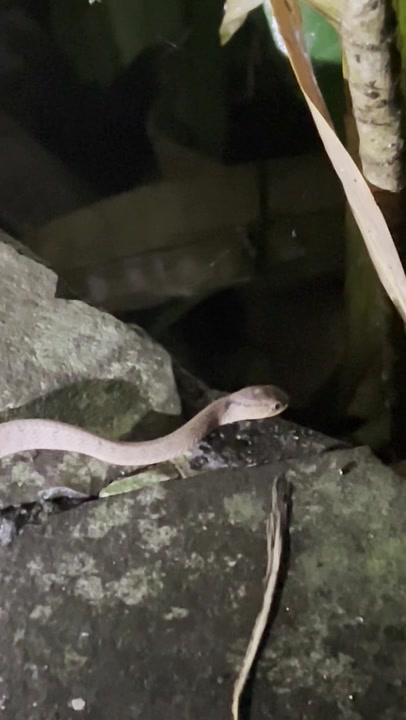
Pareidae is a family of specialized colubroid snakes in the superfamily Colubroidea, commonly known as snail-eating snakes or slug-eating snakes. The family is primarily distributed across South and Southeast Asia, with its greatest diversity in tropical forests of mainland Southeast Asia and the Sunda region. Pareids are particularly notable for their highly specialized feeding adaptations, especially their ability to prey on snails and slugs, which are difficult for most snakes to extract from their shells.
Pareid snakes are generally small to medium-sized and slender, with elongated bodies and tails. Their coloration is often cryptic, consisting of combinations of brown, gray, reddish, olive, yellow, or black markings that blend with leaf litter, moss, bark, and other forest substrates. Many species have keeled body scales that give the skin a roughened appearance. The head is usually distinct from the neck, although overall body proportions vary among species and genera.
One of the family’s most remarkable features is its asymmetrical skull and jaw morphology. The jaws are specialized for extracting soft-bodied gastropods from their shells. In many pareids, the teeth and bones of the jaws are arranged asymmetrically, allowing the snake to grip a snail and pull its body out while avoiding the shell. This specialization is particularly evident in the genus Pareas, which contains many of the best-known snail-eating snakes.
Pareids are predominantly nocturnal or crepuscular, corresponding with the activity patterns of many of their preferred prey. They commonly inhabit humid forests, plantations, gardens, limestone areas, and other environments where snails and slugs are abundant. Many species are arboreal or semi-arboreal and move through vegetation in search of prey, while others forage among leaf litter and low vegetation.
Their diet is unusually specialized. Snails and slugs form the principal food of many species, although the exact dietary range varies among taxa. A pareid typically uses its head and jaws to grasp a gastropod before manipulating it with repeated movements of the mouth. The specialized dentition and asymmetric jaws allow the snake to extract the soft body from the shell, leaving the empty shell behind. This represents a striking example of evolutionary adaptation to a highly specialized food resource.
The sensory system of Pareidae is well suited to nocturnal hunting. Like other snakes, they use their forked tongue and vomeronasal organ to detect chemical cues in their surroundings. Vision also contributes to prey detection, particularly at close range. Their relatively slow and deliberate movements are appropriate for searching among vegetation and leaf litter rather than pursuing fast-moving prey.
Reproduction varies among species, but pareids are generally oviparous, laying eggs in sheltered locations such as soil, leaf litter, cavities, or beneath vegetation. Females typically produce relatively small clutches compared with many larger snake species. Hatchlings are independent after emergence and possess the characteristic feeding adaptations of adults, although they may initially consume smaller gastropods.
The family includes several genera, most prominently Pareas, along with Aplopeltura, Asthenodipsas, and other lineages depending on the taxonomic treatment. Pareas is particularly diverse and widespread, while Aplopeltura includes the distinctive Malayan slug-eating snake (Aplopeltura boa). Molecular studies have helped clarify relationships within the family and have resulted in changes to the classification of several Southeast Asian species.
Pareidae occupies an important ecological niche as a group of specialized mollusc predators. By feeding heavily on terrestrial gastropods, these snakes participate in regulating populations of snails and slugs within forest ecosystems. Their dependence on humid habitats and abundant gastropod prey also makes them closely associated with relatively intact tropical environments, although some species can persist in agricultural landscapes and gardens.
Many pareid species have restricted geographic ranges, particularly those confined to individual mountains, islands, or forest regions. Habitat destruction, forest fragmentation, agricultural expansion, and other forms of environmental change can therefore threaten localized populations. Despite their often inconspicuous appearance, Pareidae represents an evolutionarily distinctive radiation of snakes, illustrating how jaw asymmetry, specialized dentition, and behavioral adaptations can evolve in response to an unusually narrow dietary niche.