

Pygmy Grasshopper Superfamily (Superfamily Tetrigoidea)
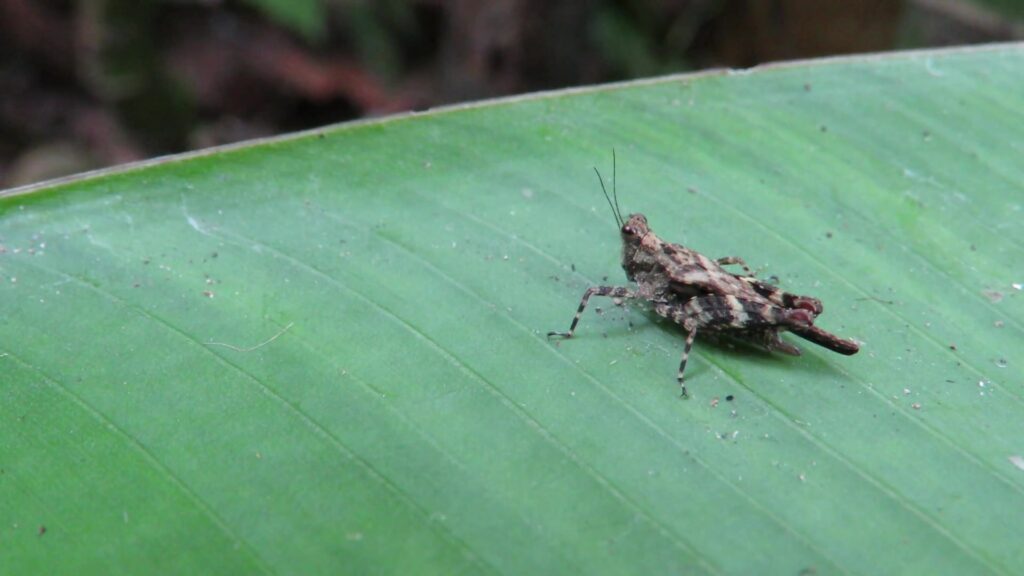
The superfamily Tetrigoidea is a group of short-horned grasshoppers in the order Orthoptera and suborder Caelifera. Its members are commonly known as pygmy grasshoppers, groundhoppers, or grouse locusts. They are generally small, cryptically colored insects that live close to the ground, especially in moist environments where mosses, algae, and low-growing vegetation are abundant. Unlike typical grasshoppers, tetrigoids possess a distinctive enlarged pronotum that extends backward over much of the abdomen.
Tetrigoidea belongs to the broader radiation of grasshoppers and locusts, but its members are readily distinguished by their unusual body proportions. The superfamily is best known for the family Tetrigidae, which contains the great majority of living species traditionally assigned to this group. Classification at the superfamily level can vary among taxonomic authorities, particularly in the treatment of smaller related lineages.
One of the most distinctive anatomical features of tetrigoids is the elongated pronotum, the hardened dorsal plate immediately behind the head. In many species, this structure extends backward into a long, pointed projection that covers much of the abdomen and may reach toward or beyond the tips of the hind legs. This feature gives pygmy grasshoppers a somewhat triangular or wedge-shaped profile and helps distinguish them from many other short-horned grasshoppers.
Tetrigoids are usually small, commonly measuring approximately 5–20 millimeters in body length, although size varies among species. Their coloration often includes shades of brown, gray, black, green, or mottled combinations of these colors. Many resemble soil particles, dried leaves, bark, or moss, making them difficult to detect among the substrates on which they live. Their compact bodies and subdued coloration are important adaptations for avoiding predators.
The wings of tetrigoids vary considerably. In many species, the forewings are reduced to small, scale-like structures, while the hindwings may be relatively well developed and concealed beneath the elongated pronotum. Some species are capable of flight, whereas others have reduced flight capacity. The hind legs are adapted for jumping, as in other grasshoppers, although their overall proportions and jumping performance differ among species.
Tetrigoidea occurs across much of the world, with particularly high diversity in tropical and subtropical regions. Species inhabit rainforests, riverbanks, marshes, wetlands, damp grasslands, forest floors, and mountain environments. Many are closely associated with moist substrates, where algae and mosses provide both food and camouflage. Other species occupy drier habitats, including open woodland and rocky ground, demonstrating that the superfamily is not restricted exclusively to wetlands.
Most tetrigoids are herbivorous or primarily plant-associated feeders. Many consume algae, mosses, lichens, and small amounts of other low-growing vegetation. Some species feed on seedlings or delicate plant tissues, while others forage on the surface of damp soil and stones. Their feeding habits are generally less associated with consuming large quantities of grasses than those of many familiar grasshoppers.
These insects are predominantly active during daylight, although their activity depends on local temperature, moisture, and habitat conditions. They often remain motionless when approached, relying on camouflage to avoid detection. When disturbed, they may leap suddenly into nearby vegetation, water, leaf litter, or crevices. Some species can move across the water surface or escape into shallow water, a useful behavior in habitats along streams and wetlands.
Reproduction follows the general pattern of grasshoppers. Females deposit eggs in soil, among mosses, or in other suitable substrates, depending on the species. The eggs develop before hatching into nymphs that resemble smaller, wingless versions of adults. Nymphs grow through a series of molts before reaching maturity. The duration of development and the number of generations per year vary with species, temperature, moisture, and local seasonal conditions.
The superfamily’s best-known members belong to the family Tetrigidae, which includes numerous genera distributed across tropical and temperate regions. Representative genera include Tetrix, Tetrigidea, Paratettix, Euparatettix, and Criotettix. These groups exhibit substantial variation in pronotum shape, wing development, body coloration, and habitat preference. Accurate identification often requires examination of detailed morphological features rather than coloration alone.
Tetrigoids occupy a useful position in terrestrial food webs. By consuming algae, mosses, and other small plant materials, they participate in the transfer of energy from primary producers to higher trophic levels. They are also prey for spiders, predatory insects, amphibians, reptiles, birds, and other small animals. Their presence in damp habitats can contribute to local biodiversity assessments, particularly where specialized species are associated with intact stream margins or forest-floor environments.
Although pygmy grasshoppers are generally less economically significant than many large grasshoppers and locusts, their populations can be affected by habitat alteration. Drainage of wetlands, removal of streamside vegetation, pollution, changes in moisture regimes, and destruction of forest-floor microhabitats may threaten species with narrow ecological requirements. Their small size and cryptic behavior can also make population changes difficult to detect.
Overall, Tetrigoidea represents a distinctive lineage of small, ground-dwelling grasshoppers characterized by an elongated pronotum, camouflage, and frequent associations with moist habitats. Their unusual morphology, varied wing development, specialized feeding habits, and ecological relationships make them an important component of the diversity of the order Orthoptera.