

Tribe Melanitini
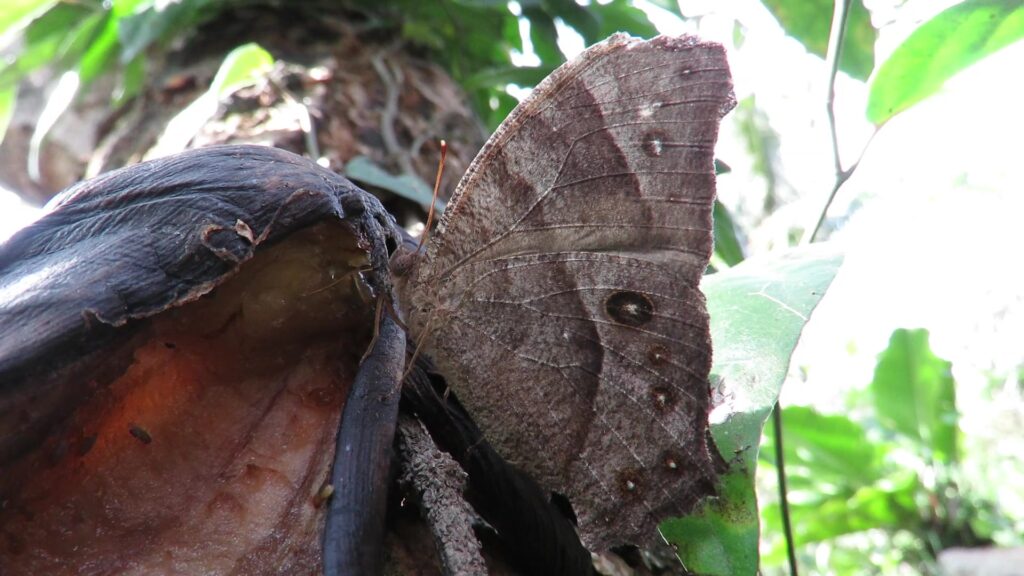
Melanitini is a taxonomic tribe of butterflies belonging to the family Nymphalidae, commonly known as brush-footed butterflies. It is associated with the subfamily Satyrinae, a diverse group of butterflies often referred to as browns or satyr butterflies. Members of this group are generally recognized by their earthy coloration, rounded or elongated wings, and adaptations for living in grassy, wooded, and forested environments. The classification and limits of Melanitini may vary among taxonomic sources as researchers continue to investigate relationships within Satyrinae.
Butterflies traditionally associated with this group typically have brown, dark brown, grayish, or blackish wings, often decorated with eyespots, pale bands, or subtle patterns. These markings can help camouflage them among fallen leaves, tree trunks, grasses, and shaded vegetation. In some species, the underside of the wings is more intricately patterned than the upper surface, providing concealment when the butterfly rests with its wings closed. Eyespots may also distract predators by directing attacks away from the butterfly’s body.
Like many satyrine butterflies, members of Melanitini are associated with habitats that provide suitable larval food plants and sheltered resting places. Depending on the species, these environments may include tropical forests, forest edges, woodland clearings, grassy areas, and mountain slopes. Many satyrine butterflies spend much of their time close to the ground or within the lower vegetation, where their subdued coloration makes them difficult to detect.
Adult butterflies generally feed on available sources of nourishment such as rotting fruit, tree sap, and other fermenting organic material, although feeding preferences differ among species. Some may also visit damp soil to obtain dissolved minerals and moisture. Their flight is often relatively low and irregular, with short periods of movement followed by resting on vegetation or the ground. This behavior can make them appear inconspicuous compared with more brightly colored butterflies.
The life cycle follows the typical pattern of butterflies, with four developmental stages: egg, larva, pupa, and adult. Females lay eggs on or near suitable host plants, and the caterpillars feed on plant material as they grow. In Satyrinae, the larvae commonly feed on grasses or other monocotyledonous plants, although host plants depend on the species. After passing through several larval stages, the caterpillar pupates before emerging as an adult butterfly.
As part of the broader diversity of Nymphalidae, butterflies associated with Melanitini contribute to terrestrial food webs. Their caterpillars consume vegetation, while adults may serve as prey for spiders, birds, lizards, and predatory insects. Adult butterflies can also participate in nutrient cycling by feeding on decaying organic material and may contribute indirectly to ecosystem processes through their interactions with plants and other organisms.
The precise composition, distribution, and diagnostic features of Melanitini should be interpreted in light of current taxonomic references, since tribal boundaries within Satyrinae have changed as morphological and molecular studies have advanced. A reliable description of the tribe’s genera and species requires confirmation of its accepted placement in the classification being used.
Overall, Melanitini is a taxonomic name associated with the diversity of satyrine butterflies, a group notable for its often subdued coloration, camouflage, and close association with ground-level vegetation. Understanding its members requires careful attention to wing patterns, anatomical characteristics, host-plant relationships, and evolutionary classification. Further taxonomic and ecological research helps clarify the group’s diversity and its role within butterfly communities.