

Evening Browns (Genus Melanitis)
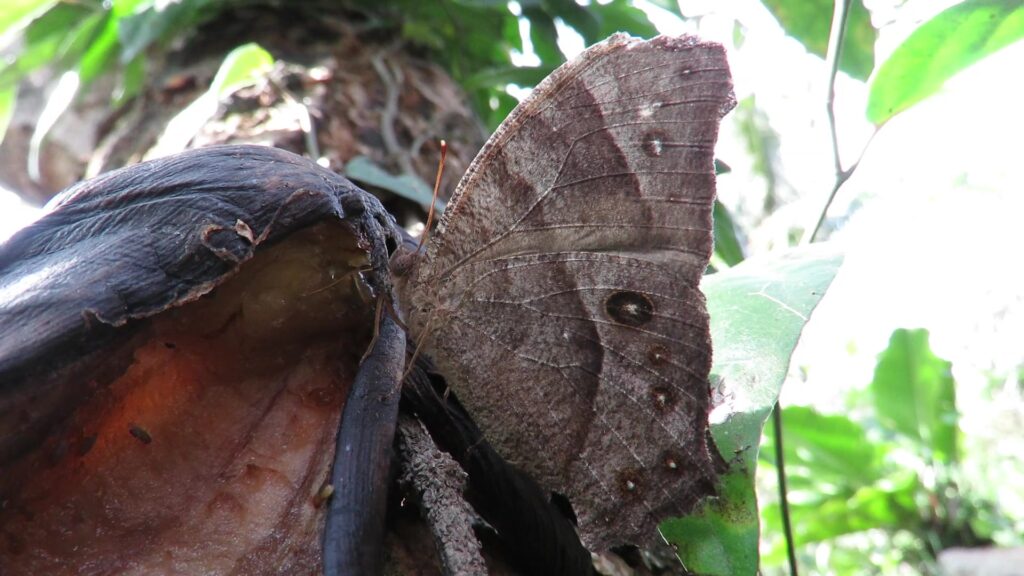
Melanitis is a genus of butterflies belonging to the family Nymphalidae and the subfamily Satyrinae. Its members are commonly known as evening browns because of their predominantly brown coloration and tendency to become particularly active during twilight or in dimly lit conditions. These butterflies are widely distributed across tropical and subtropical regions of Asia, including South Asia, Southeast Asia, and parts of East Asia. They are especially associated with forests, woodland edges, plantations, gardens, and grassy habitats where suitable larval food plants are available.
Members of Melanitis are medium-sized butterflies with broad, rounded wings and earthy coloration that provides effective camouflage. Their upper wing surfaces are generally brown, dark brown, or grayish brown, sometimes marked with orange patches, darker bands, and prominent eyespots. The undersides often display intricate patterns of mottled brown, gray, and cream, resembling dried leaves or other plant debris. This coloration helps the butterflies remain inconspicuous when resting among fallen leaves or on tree trunks.
The genus includes several well-known species, such as the common evening brown (Melanitis leda), which is widespread across tropical Asia and other warm regions, and Melanitis phedima, found in parts of South and Southeast Asia. These species exhibit considerable variation in coloration and wing patterns, sometimes influenced by seasonal conditions. In some species, wet-season and dry-season forms differ noticeably, with changes in the size and prominence of eyespots and the overall appearance of the wings.
Melanitis butterflies are typically crepuscular, meaning that they are often most active during the early morning, late afternoon, and twilight hours. During the day, they usually rest in shaded places among leaf litter, dense vegetation, or on tree trunks. When disturbed, they may fly briefly before settling again nearby. Their flight is often relatively low and irregular, allowing them to move through undergrowth while remaining difficult to follow.
Adult butterflies feed on a variety of nutrient-rich resources, particularly fermenting fruit, decaying plant matter, and tree sap. They may visit fallen fruits in gardens, plantations, and forested areas. Their feeding behavior differs from that of many brightly colored butterflies that frequently visit flowers, as members of Melanitis are often more attracted to decomposing organic material than to floral nectar.
The life cycle of Melanitis follows the four stages typical of butterflies: egg, larva, pupa, and adult. Females lay eggs on suitable host plants, and the caterpillars generally feed on grasses and other monocotyledonous plants. The larvae grow through several developmental stages before forming a pupa, from which the adult butterfly eventually emerges. The duration of development and timing of reproduction vary with species, temperature, rainfall, and the availability of food plants.
The genus occupies an important ecological position in tropical environments. Its caterpillars consume grasses and other vegetation, while adults and immature stages provide food for birds, reptiles, spiders, and predatory insects. Their preference for fermenting fruit and decaying plant material also connects them with the natural decomposition processes occurring in forests and other habitats.
Although several Melanitis species are relatively adaptable and can inhabit disturbed environments, their populations may be affected by habitat destruction, changes in vegetation, and the loss of suitable larval host plants. Maintaining diverse grass cover, forest edges, and natural vegetation can help support their life cycles. Further studies of their seasonal forms, behavior, and geographic variation continue to improve understanding of this distinctive butterfly genus.
Overall, Melanitis is a genus of predominantly brown, often crepuscular butterflies recognized for their leaf-like wing patterns, characteristic eyespots, and association with grasses and other vegetation. Their camouflage and activity patterns help them survive in environments where predators are abundant. As members of the diverse family Nymphalidae, they contribute to tropical butterfly diversity and play a role in the ecological communities they inhabit.