

Tribe Attacini
Attacini is a tribe of giant silk moths within the subfamily Saturniinae (Family Saturniidae, Superfamily Bombycoidea, Order Lepidoptera). The tribe includes some of the world’s largest and most spectacular moths, including the genera Attacus, Samia, Archaeoattacus, and several related taxa. Members are distributed mainly across tropical and subtropical regions of Asia, Australia, and the Indo-Pacific, with some species occurring in Africa and other regions through introductions or historical classifications.
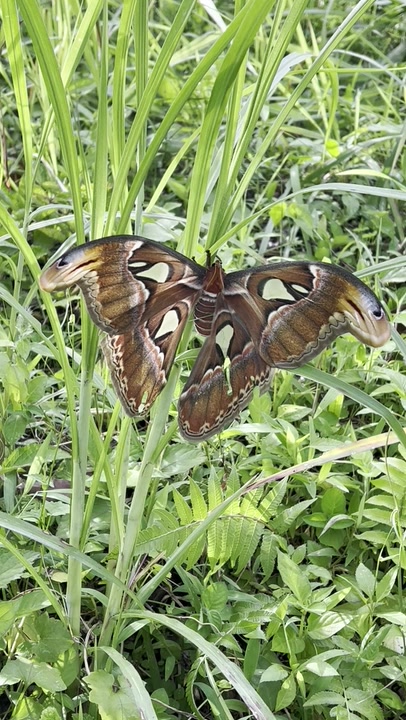
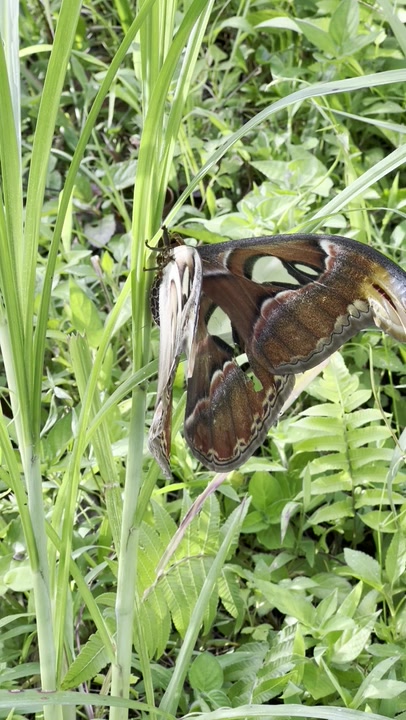
Attacini moths are generally large to extremely large, with wingspans commonly ranging from 80–250 mm, depending on the species. Their wings are broad and often richly patterned with brown, gray, tan, reddish, or purplish tones. Many species possess distinctive transparent or translucent eyespots and wing windows, along with intricate bands and scalloped margins. The famous Atlas Moth (Attacus atlas) is among the largest moths in the world by wing area. Several species also have elongated, curved forewing tips that resemble the head of a snake, a possible defensive adaptation against predators.
Adults are primarily nocturnal and generally have reduced or non-functional mouthparts. Consequently, many adults do not feed and survive mainly on energy reserves accumulated during the larval stage. Their principal function as adults is reproduction. Males are often strong fliers and use their highly sensitive, feather-like antennae to detect female pheromones over considerable distances.
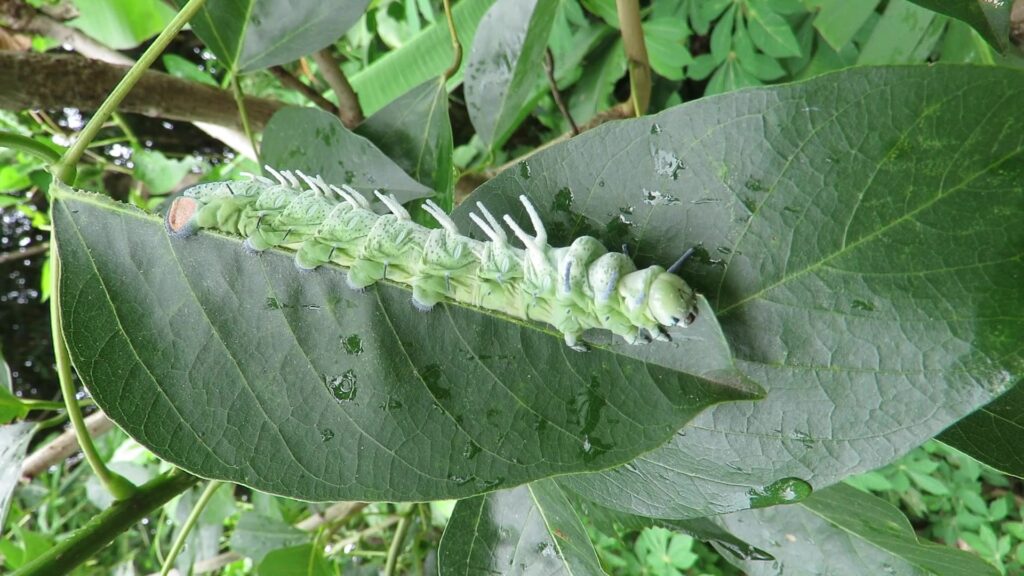
The life cycle involves complete metamorphosis, consisting of egg, larva (caterpillar), pupa, and adult stages. Females lay eggs on suitable host plants, often singly or in groups. Caterpillars are large and frequently brightly colored, with fleshy tubercles or spines along the body. They consume substantial quantities of foliage before pupating. Depending on the genus, the pupa may be enclosed within a silken cocoon, sometimes attached to leaves or branches. Species of Samia are particularly important in wild and semi-domesticated silk production, especially the Eri silk moth, Samia ricini.
The tribe includes several prominent genera, notably Attacus, Samia, and Archaeoattacus. Species such as Attacus atlas, Attacus caesar, Samia ricini, and Samia cynthia are well known for their large size, distinctive wing patterns, and importance in silk production or entomological study.
Ecologically, Attacini moths are important herbivores during their larval stage, transferring large quantities of plant biomass into terrestrial food webs. Their caterpillars serve as prey for birds, reptiles, mammals, parasitoid wasps, and other predators, while adults provide food for nocturnal predators such as bats and owls. Their dramatic size, specialized defensive structures, and dependence on healthy host plants make Attacini important components of tropical and subtropical ecosystems and valuable representatives of moth biodiversity.