

Subtribe Ypthimina
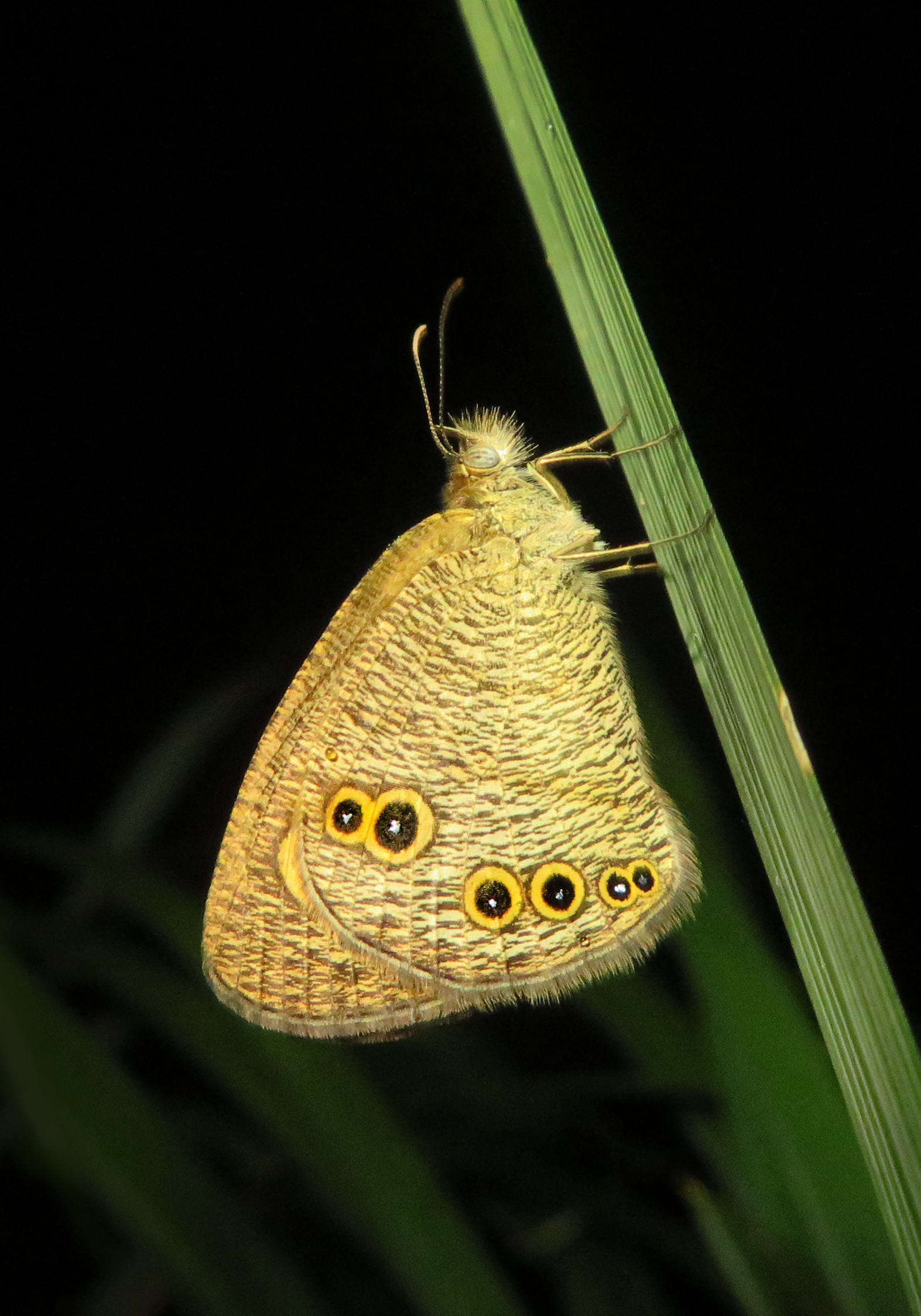
Ypthimina is a subtribe of brush-footed butterflies within the tribe Satyrini (Subfamily Satyrinae, Family Nymphalidae, Superfamily Papilionoidea, Order Lepidoptera). The subtribe comprises numerous genera and several hundred described species distributed primarily throughout Africa, Europe, Asia, and Australia, with the greatest diversity occurring in tropical and subtropical regions. Members inhabit tropical rainforests, temperate forests, grasslands, savannas, woodland edges, wetlands, agricultural fields, plantations, parks, and gardens, where grasses and other monocotyledonous plants are abundant.
Butterflies of the subtribe Ypthimina are generally small to medium-sized, with wingspans ranging from approximately 30–60 mm. Like all members of the family Nymphalidae, they possess reduced, brush-like forelegs that are not used for walking. Their bodies are compact and sturdy, while the wings are rounded and predominantly colored in shades of brown, gray, tan, or ochre. A characteristic feature of the group is the presence of distinct eyespots (ocelli) on the wings, particularly on the underside of the hindwings and forewings. These eyespots, often surrounded by concentric rings of black, yellow, and white, help deter predators by startling them or diverting attacks away from vital body parts. The cryptically patterned undersides closely resemble dried leaves or grasses, providing excellent camouflage when the butterflies rest with their wings closed.
Adults are diurnal and are most active during the morning and late afternoon. Their flight is typically slow, low, and fluttering, remaining close to the ground or among grasses and low vegetation. Adults feed on nectar, but many species also obtain nutrients from fermenting fruits, tree sap, animal dung, and mineral-rich moisture. Males frequently engage in mud-puddling to acquire sodium and other minerals that enhance reproductive success.
The life cycle involves complete metamorphosis, consisting of egg, larva (caterpillar), pupa (chrysalis), and adult stages. Females usually lay eggs singly on host plants. Caterpillars are smooth-bodied, green or brown, and possess a characteristic bifid (forked) tail, a common feature of many satyrine larvae. They feed primarily on grasses (Poaceae), although some species also utilize sedges (Cyperaceae) and bamboos. Pupation occurs on leaves, stems, or among leaf litter, where the chrysalis is attached by a silken pad and blends well with its surroundings.
The subtribe includes several well-known genera, notably Ypthima, Mashunoides, and related taxa. Species of Ypthima, commonly known as ringlets, are among the most widespread and familiar satyrine butterflies, recognized by the characteristic arrangement and number of eyespots on their wings.
Ecologically, Ypthimina butterflies are important herbivores during their larval stage and contribute to nutrient cycling and pollination as adults. Their caterpillars influence grassland and forest-understory vegetation through grazing, while both larvae and adults serve as prey for birds, reptiles, amphibians, spiders, predatory insects, and parasitoids. Because many species are closely associated with grasslands and forest edges and respond rapidly to habitat disturbance and changes in vegetation structure, Ypthimina butterflies are valuable indicators of ecosystem health, habitat quality, and biodiversity.