

Subtribe Mycalesina
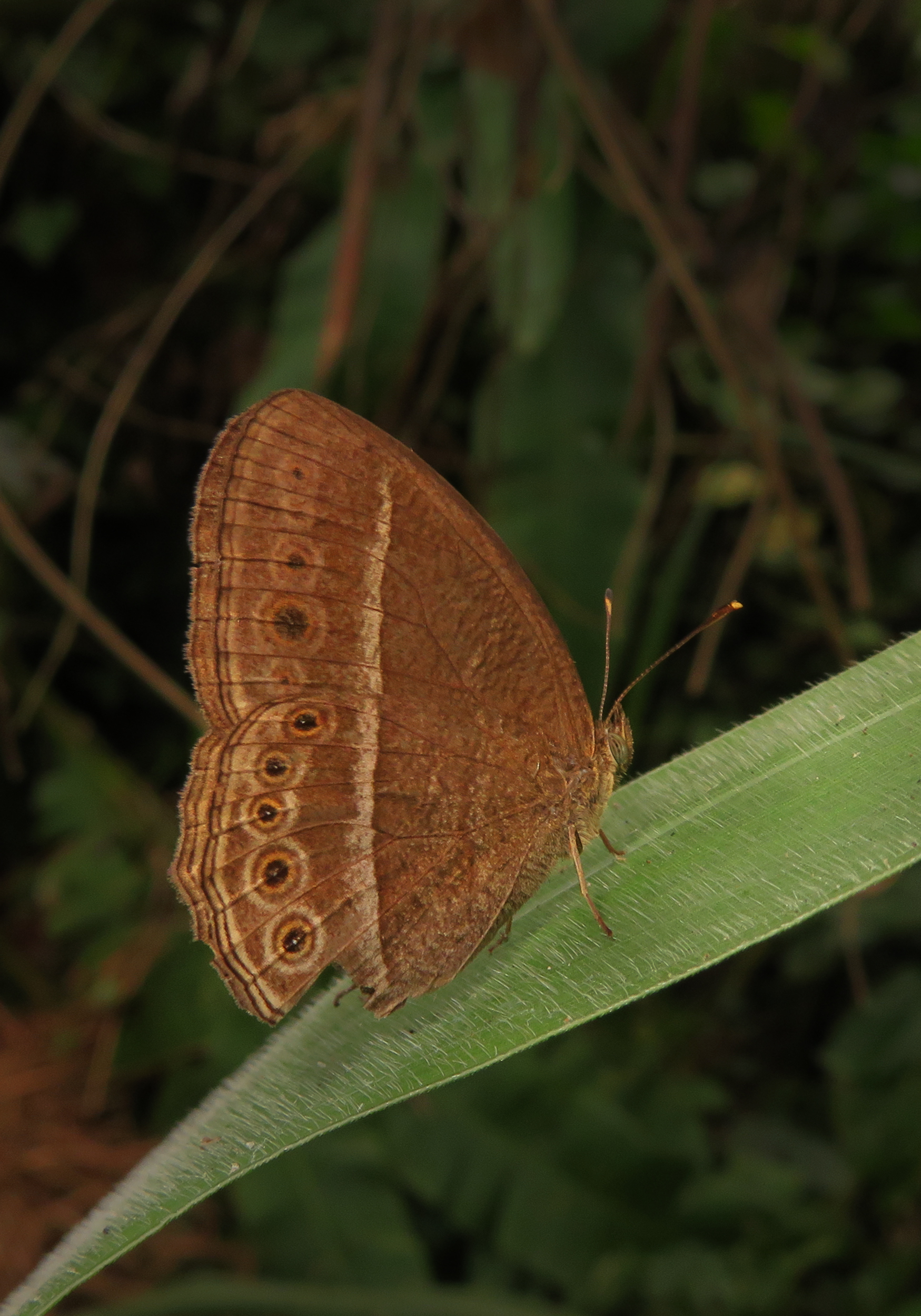
Mycalesina is a subtribe of brush-footed butterflies within the tribe Satyrini (Subfamily Satyrinae, Family Nymphalidae, Superfamily Papilionoidea, Order Lepidoptera). Members of this subtribe are distributed primarily throughout tropical and subtropical regions of Africa, South Asia, Southeast Asia, East Asia, Australia, and the Indo-Pacific islands. They are especially abundant in tropical forests, where they inhabit rainforest understories, secondary forests, woodland edges, bamboo groves, grasslands, plantations, parks, and shaded gardens.
Butterflies of the subtribe Mycalesina are generally small to medium-sized and possess the robust body and rounded wings characteristic of satyrine butterflies. Like all members of the family Nymphalidae, their forelegs are reduced and brush-like, making them functionally four-legged. Wing coloration is predominantly brown, gray, ochre, or reddish-brown, often decorated with one or more eyespots (ocelli) on the forewings and hindwings. The undersides are intricately patterned with wavy lines and subtle bands that closely resemble dried leaves or dead grasses, providing excellent camouflage when the butterflies rest with their wings closed. Many species exhibit seasonal polyphenism, producing distinct wet-season and dry-season forms that differ in wing coloration and eyespot development.
Adults are diurnal, although many species are most active during the early morning, late afternoon, or under shaded forest conditions. Their flight is slow, low, and fluttering, usually close to the ground or among dense undergrowth. Rather than relying mainly on floral nectar, many species feed on fermenting fruits, tree sap, animal dung, decaying organic matter, and mineral-rich moisture, although nectar is also taken when available. Males commonly engage in mud-puddling to obtain sodium and other minerals important for successful reproduction.
The life cycle involves complete metamorphosis, consisting of egg, larva (caterpillar), pupa (chrysalis), and adult stages. Females lay eggs singly on the leaves of host plants. Caterpillars are smooth-bodied, green or brown, and possess a characteristic bifid (forked) tail, providing camouflage among grasses and foliage. Most species feed on grasses (Poaceae), bamboos, and other monocotyledonous plants, although some utilize sedges (Cyperaceae) or palms (Arecaceae). Pupation occurs on leaves, stems, or among leaf litter, where the chrysalis is attached by a silken pad.
The subtribe includes several well-known genera, including Mycalesis, Orsotriaena, Lohora, Mydosama, Culapa, and Bicyclus. Among these, Mycalesis is the largest and most widespread genus, containing numerous species commonly known as bushbrowns.
Ecologically, Mycalesina butterflies are important components of forest and grassland ecosystems. Their caterpillars contribute to plant–herbivore interactions by feeding on grasses and bamboos, while adults assist in nutrient recycling through feeding on fermenting organic matter and occasionally visit flowers for nectar. Both larvae and adults serve as prey for birds, reptiles, amphibians, spiders, predatory insects, and parasitoids. Because many species are closely associated with intact forest understories and respond sensitively to habitat disturbance, Mycalesina butterflies are valuable indicators of forest health, habitat quality, and regional biodiversity.