

Dragon-headed Caterpillars (Tribe Charaxini)
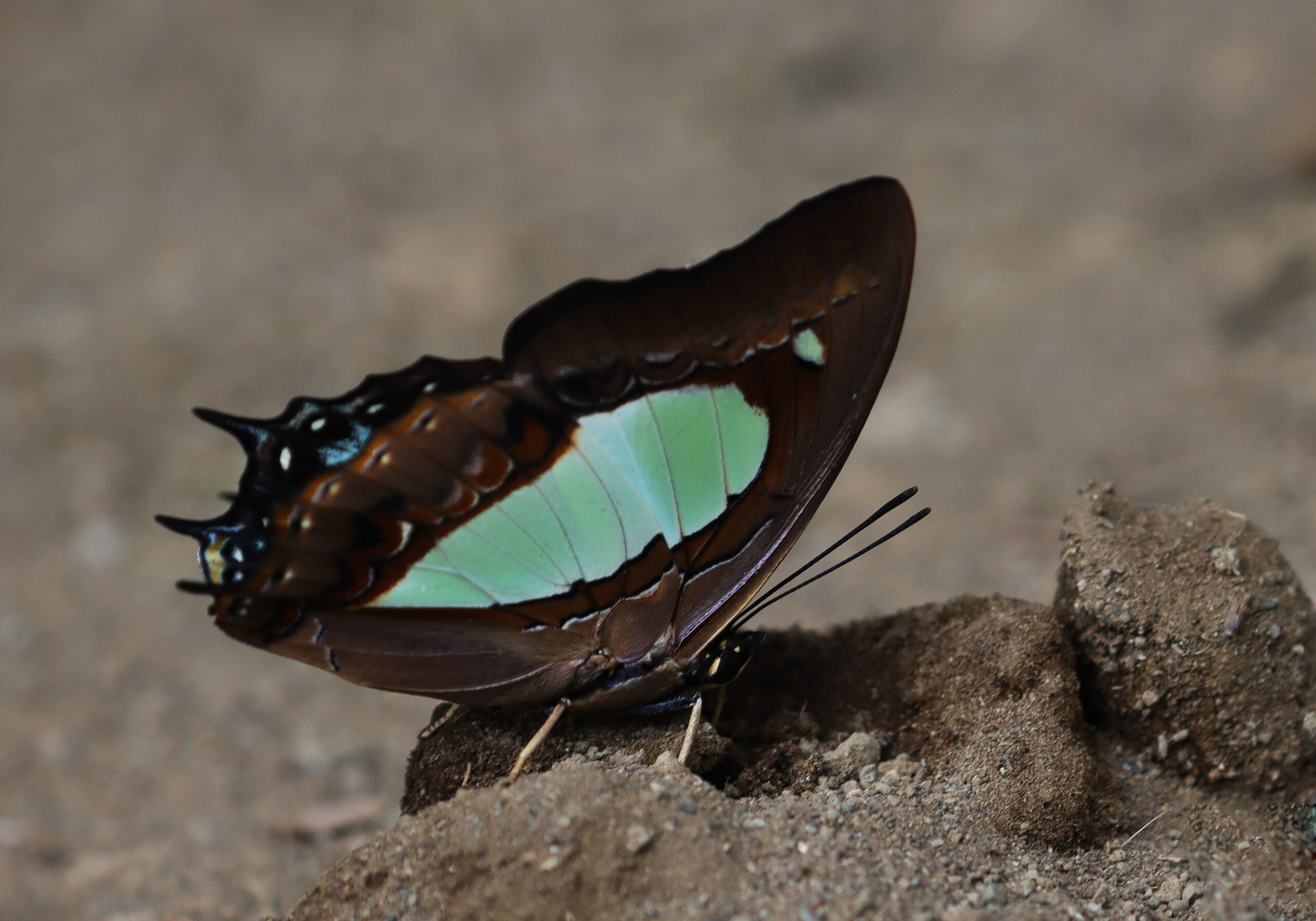
Charaxini is a tribe of brush-footed butterflies within the subfamily Charaxinae (Family Nymphalidae, Superfamily Papilionoidea, Order Lepidoptera). The tribe comprises more than 300 described species, making it the largest tribe within Charaxinae. Members are distributed throughout tropical and subtropical regions of Africa, Asia, Australia, and the Americas, with the greatest diversity occurring in tropical forests. They inhabit primary and secondary rainforests, woodland edges, riverine forests, mangroves, savannas, plantations, parks, and gardens.
Butterflies of the tribe Charaxini are generally medium to very large and are distinguished by their robust body, broad forewings, and angular hindwings that often bear short tails or pointed projections. As with all members of the family Nymphalidae, the forelegs are reduced and brush-like. Wing coloration is highly diverse, ranging from brilliant blue, green, orange, yellow, white, and black to cryptic shades of brown and gray. Many species display vivid dorsal patterns, while the ventral surface closely resembles dried leaves, bark, or other natural substrates, providing excellent camouflage when the wings are folded.
Adults are diurnal and rank among the strongest and fastest-flying butterflies. They are highly territorial and frequently perch on sunlit branches or tree trunks, making rapid flights to chase away rivals or investigate passing insects. Unlike many butterflies that feed mainly on nectar, most Charaxini species prefer fermenting fruits, tree sap, animal dung, carrion, and mineral-rich moisture, although some also visit flowers. Males commonly gather at damp ground or stream banks for mud-puddling, obtaining sodium and other minerals essential for reproduction.
The life cycle involves complete metamorphosis, consisting of egg, larva (caterpillar), pupa (chrysalis), and adult stages. Females lay eggs singly on the leaves of host plants. Caterpillars are typically green or brown and often possess distinctive horn-like projections on the head, together with a flattened or saddle-shaped body that provides effective camouflage among leaves. Larvae feed mainly on trees and shrubs belonging to families such as Fabaceae, Sapindaceae, Euphorbiaceae, Annonaceae, and Moraceae, depending on the species. Pupation occurs on vegetation, where the chrysalis is suspended by a silken girdle or attached by its cremaster.
The tribe includes several prominent genera, including Charaxes, Polyura, Euxanthe, and closely related taxa. Species within these genera are renowned for their powerful flight, territorial behavior, striking coloration, and remarkable adaptations for camouflage.
Ecologically, Charaxini butterflies are important components of tropical forest ecosystems. Adults contribute to nutrient recycling through feeding on decaying organic matter and occasionally assist in pollination while visiting flowers. Their caterpillars participate in plant–herbivore interactions, while both larvae and adults provide food for birds, reptiles, spiders, predatory insects, and parasitoids. Because many species are closely associated with mature forests and specific host plants, Charaxini butterflies are valuable indicators of forest health, habitat quality, and biodiversity.