

Ophthalmis milete
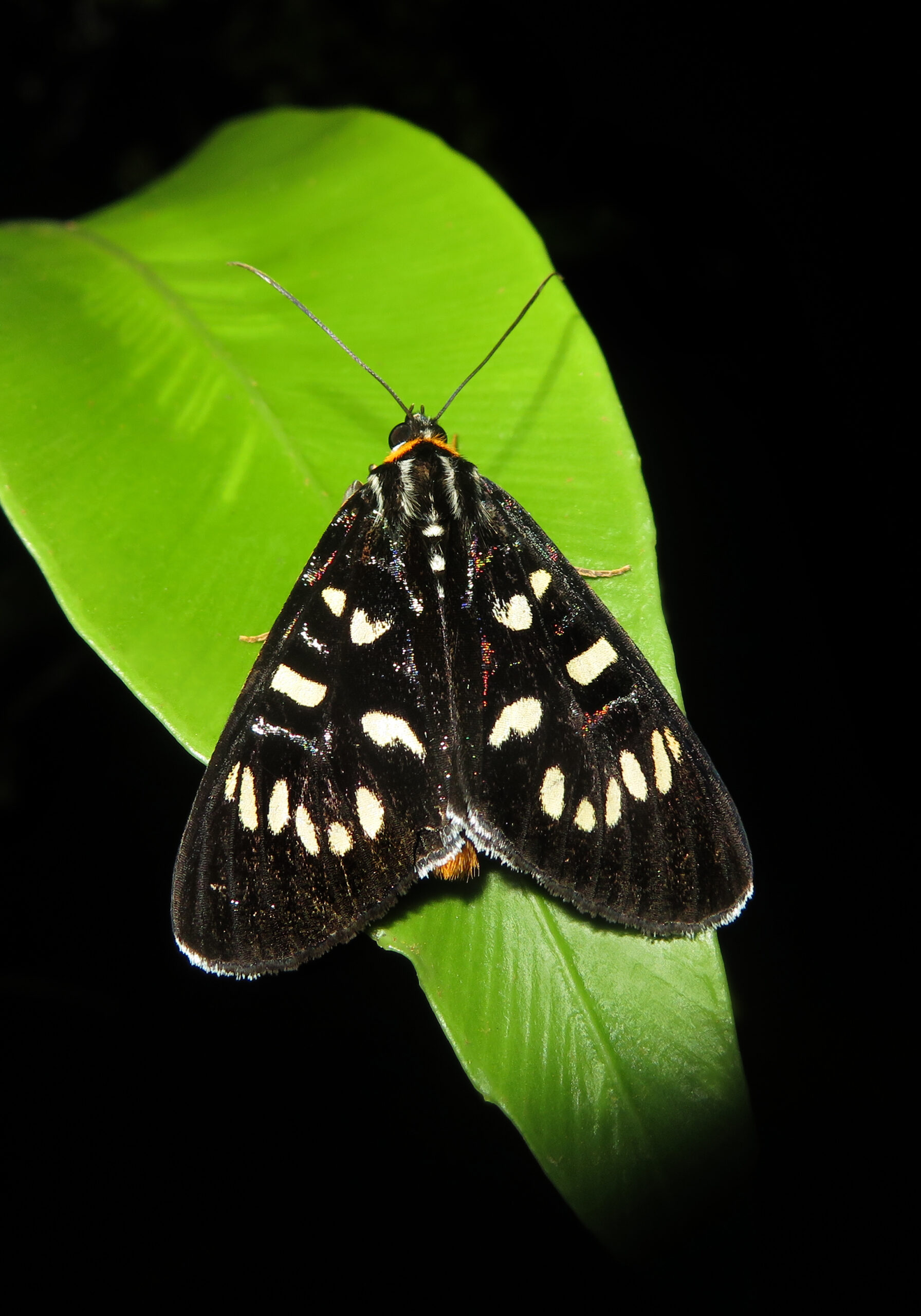
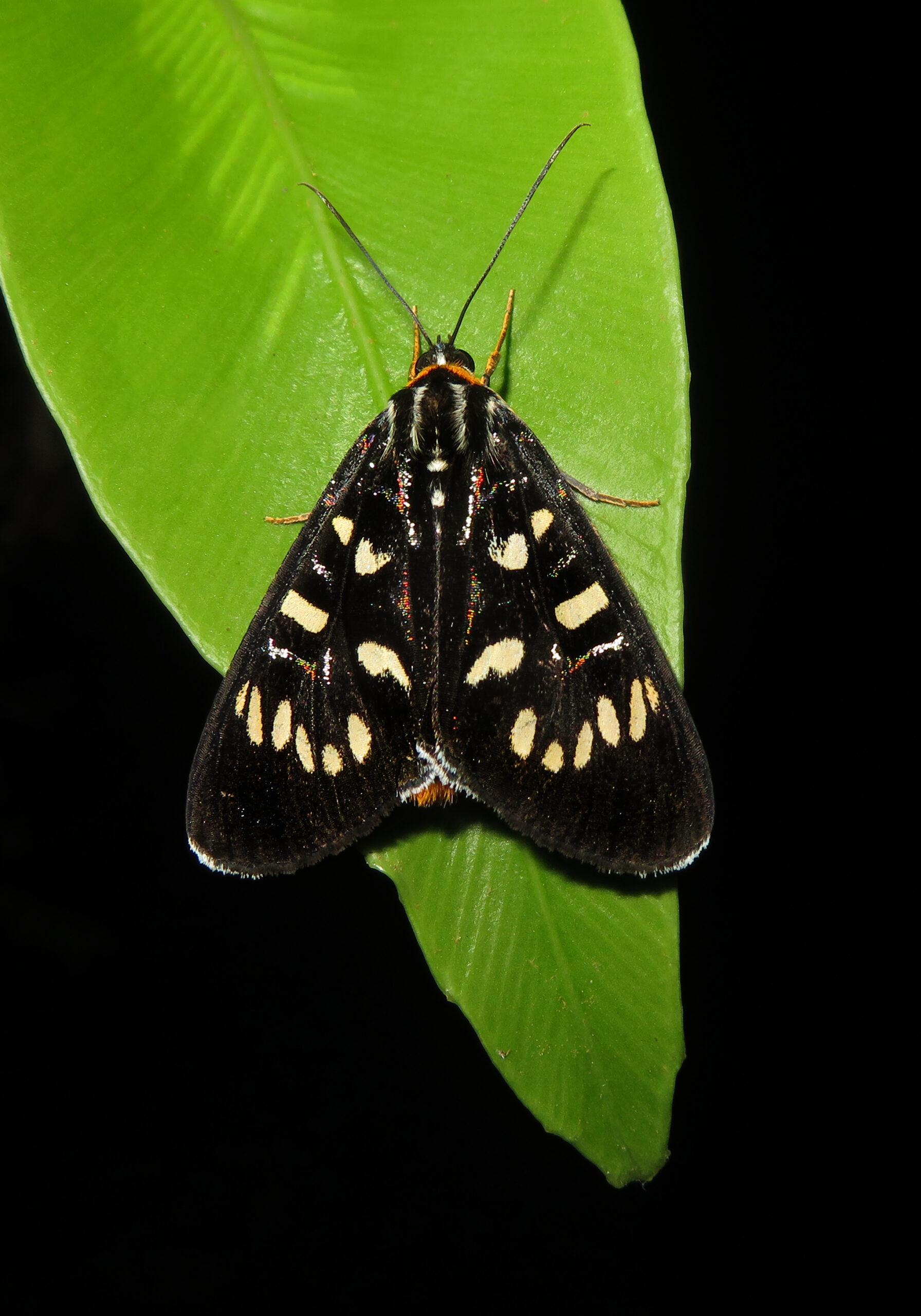
Ophthalmis milete is a species of day-flying moth belonging to the genus Ophthalmis (Subfamily Agaristinae, Family Noctuidae, Superfamily Noctuoidea, Order Lepidoptera). It is distributed throughout parts of South and Southeast Asia, where it inhabits tropical rainforests, secondary forests, woodland edges, plantations, parks, gardens, and other vegetation-rich habitats. Adults are commonly encountered in sunny forest clearings and along woodland margins where flowering plants are abundant.
Ophthalmis milete is a medium-sized moth with a moderately robust body and broad wings. It is distinguished by its striking black ground coloration, which is contrasted by conspicuous white or pale markings on the wings and body. The abdomen often bears bright yellow or orange markings, creating a bold appearance characteristic of many agaristine moths. These contrasting colors are believed to function as aposematic (warning) coloration, discouraging visually hunting predators and possibly contributing to mimicry of unpalatable butterflies or other protected insects.
Unlike most members of the family Noctuidae, O. milete is primarily diurnal, flying actively during daylight hours. Adults are agile and fast fliers, frequently visiting flowers to feed on nectar using their well-developed coiled proboscis. They may also obtain nutrients from tree sap or other sugar-rich plant exudates. Their bright coloration and daytime activity make them resemble butterflies in both appearance and behavior.
The life cycle involves complete metamorphosis, consisting of egg, larva (caterpillar), pupa, and adult stages. Females lay eggs on suitable host plants, where the caterpillars develop as leaf-feeding herbivores. Although the immature stages and host plants of O. milete remain poorly documented, the larvae are believed to feed on broad-leaved forest plants. Pupation takes place within a silken cocoon attached to vegetation or concealed among leaf litter.
Ophthalmis milete is typically associated with well-vegetated tropical habitats and is most often observed during the day resting on foliage or flying between flowering plants in forest edges and clearings. Although not as frequently encountered as many butterfly species, it is a distinctive member of the daytime moth fauna in Southeast Asia.
Ecologically, O. milete contributes to forest ecosystems as a nectar-feeding pollinator during the adult stage and as a herbivore during the larval stage. It also forms part of the forest food web, serving as prey for birds, reptiles, spiders, predatory insects, and parasitoids. Its close association with tropical forests and flowering vegetation makes Ophthalmis milete an important component of regional biodiversity and a useful indicator of healthy forest habitats.