

Rattlepod Moths (Genus Utetheisa)
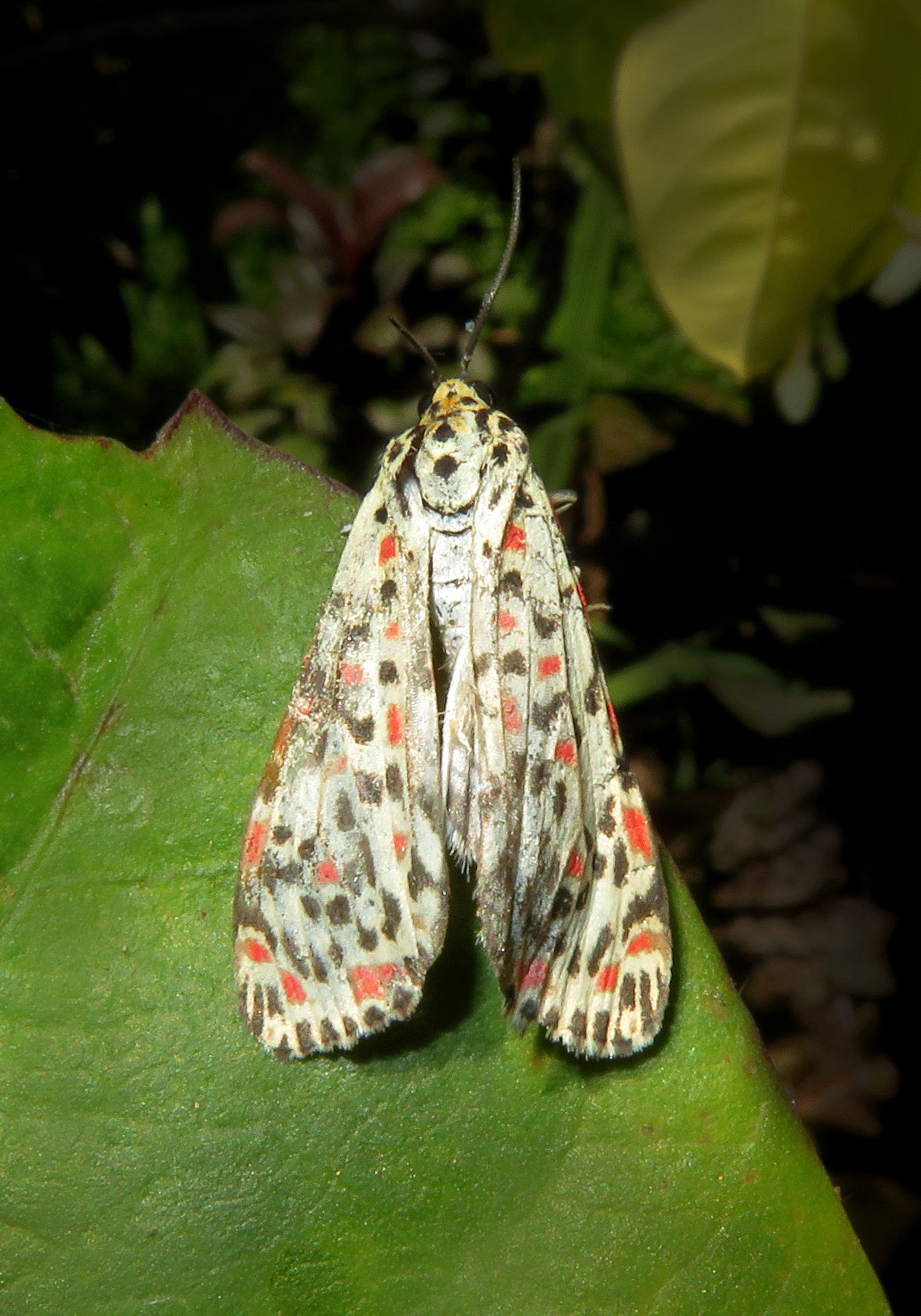
Utetheisa is a genus of tiger moths within the subtribe Callimorphina (Tribe Arctiini, Subfamily Arctiinae, Family Erebidae, Superfamily Noctuoidea, Order Lepidoptera). Commonly known as the bella moths or rattlebox moths, the genus comprises approximately 60 described species distributed throughout tropical and subtropical regions of Africa, Asia, Australia, Europe, and the Americas, with many species occurring on oceanic islands. Members inhabit tropical rainforests, coastal dunes, grasslands, shrublands, woodland edges, agricultural fields, plantations, parks, and gardens where suitable larval host plants are available.
Moths of the genus Utetheisa are generally small to medium-sized, with wingspans ranging from approximately 30–55 mm. They possess a slender body and relatively narrow forewings. Wing coloration is highly distinctive, usually consisting of a white, cream, or pale pink background marked with vivid red, orange, crimson, or black spots and streaks. The hindwings are often pale pink, white, or cream with darker margins or scattered markings. These striking color patterns function as aposematic (warning) coloration, advertising the presence of defensive chemicals acquired during the larval stage.
Adults are primarily nocturnal or crepuscular, although many species are also active during the day, especially in sunny, open habitats. They are agile fliers and frequently visit flowers to feed on nectar using their well-developed coiled proboscis. Adults may also feed on other sugar-rich plant exudates. Their conspicuous coloration and daytime activity reflect their chemical protection from many predators.
The life cycle involves complete metamorphosis, consisting of egg, larva (caterpillar), pupa, and adult stages. Females lay eggs in clusters on suitable host plants. Caterpillars are elongate and covered with short hairs or bristles, usually displaying contrasting bands or spots. Most species feed on plants in the family Fabaceae, particularly Crotalaria (rattlebox) species, from which they sequester pyrrolizidine alkaloids. These compounds are retained through metamorphosis, providing chemical defense to both larvae and adults. In many species, males also transfer alkaloids to females during mating, and females incorporate these compounds into their eggs, protecting the developing offspring. Pupation occurs within a loose silken cocoon among leaves, leaf litter, or low vegetation.
The genus includes several well-known species, including Utetheisa ornatrix (Bella Moth), Utetheisa pulchella (Crimson-speckled Moth), Utetheisa lotrix, and Utetheisa pulchelloides. Many species are recognized for their brilliant coloration, complex chemical ecology, and important role as model organisms in studies of mimicry, mate choice, and chemical defense.
Ecologically, Utetheisa moths contribute to terrestrial ecosystems as herbivores during the larval stage and as pollinators while feeding on flowers as adults. Their caterpillars influence host-plant populations, while both larvae and adults serve as prey for specialized birds, reptiles, spiders, predatory insects, and parasitoids capable of tolerating their chemical defenses. Because many species depend on native host plants and healthy flowering habitats, Utetheisa moths are valuable indicators of ecosystem health, habitat quality, and biodiversity.