Bali Wildlife
Every Spices Matter


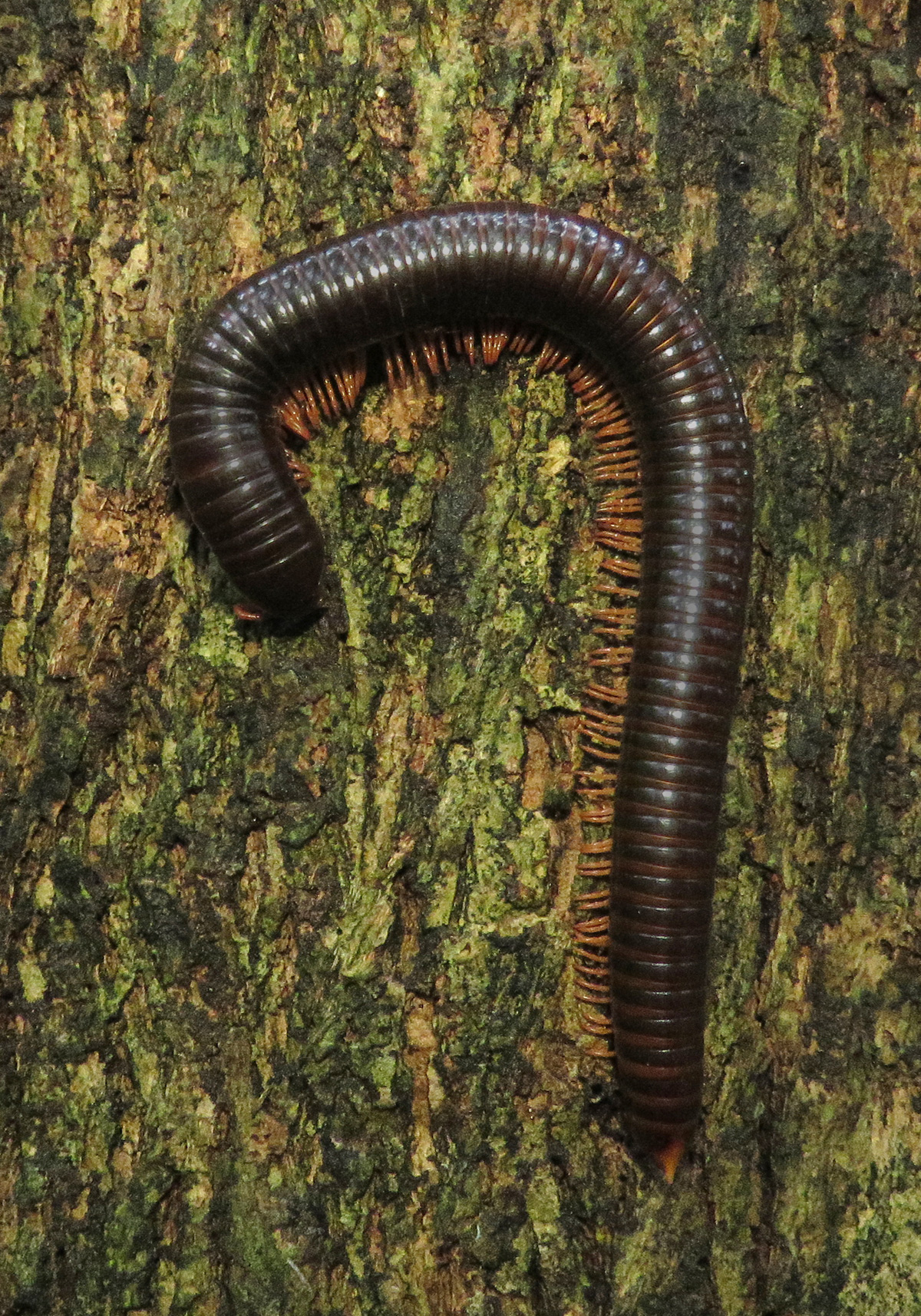
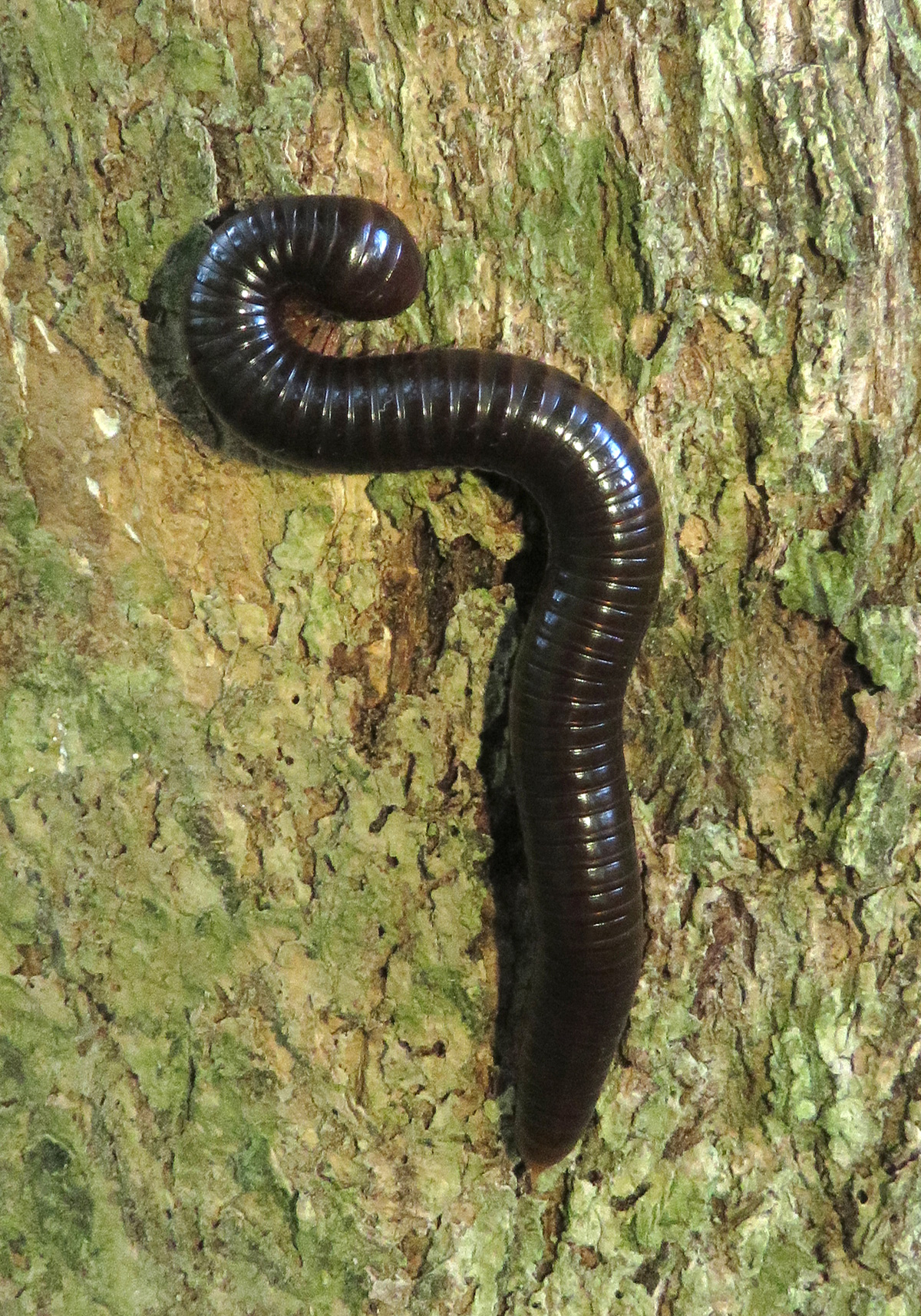
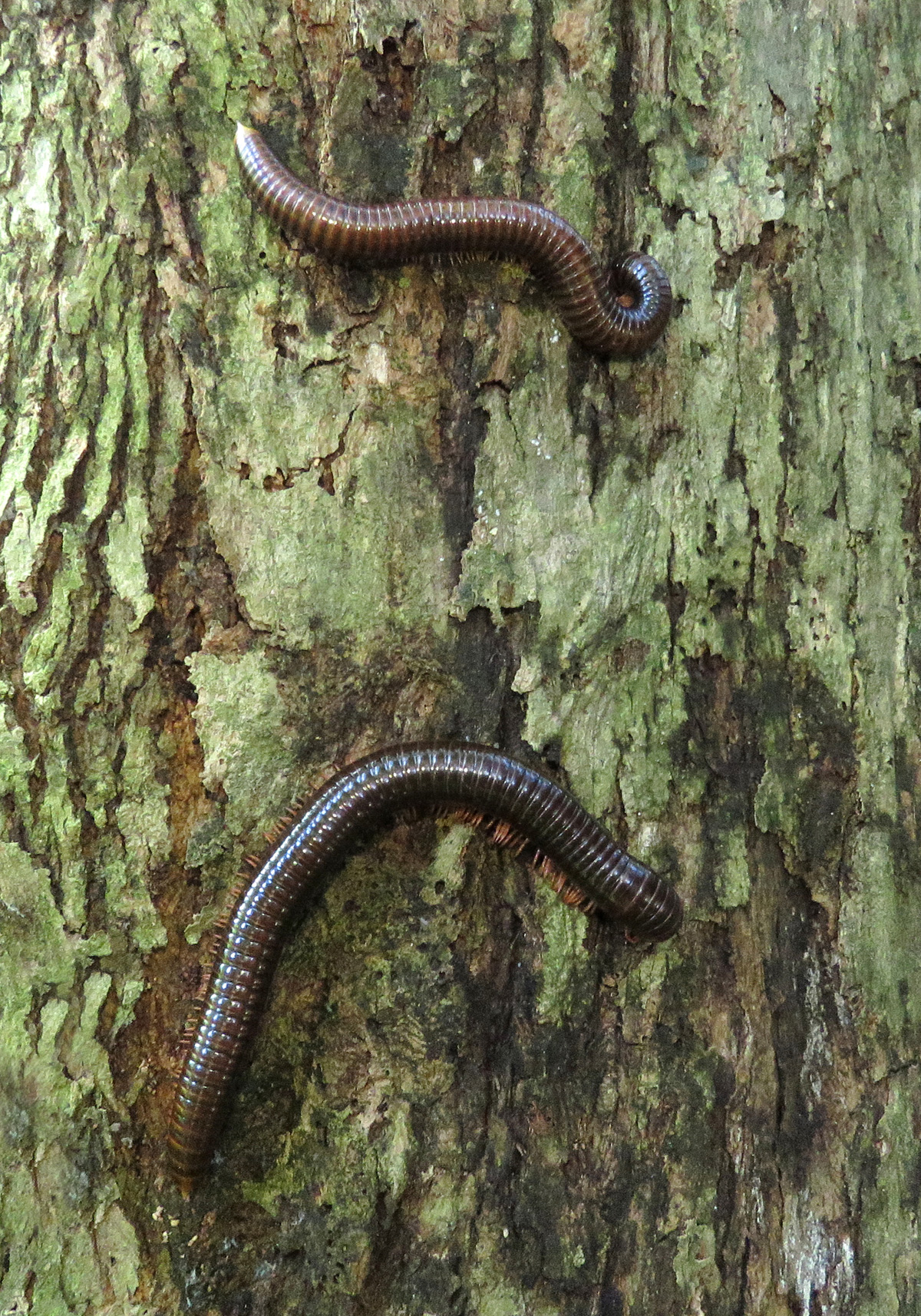
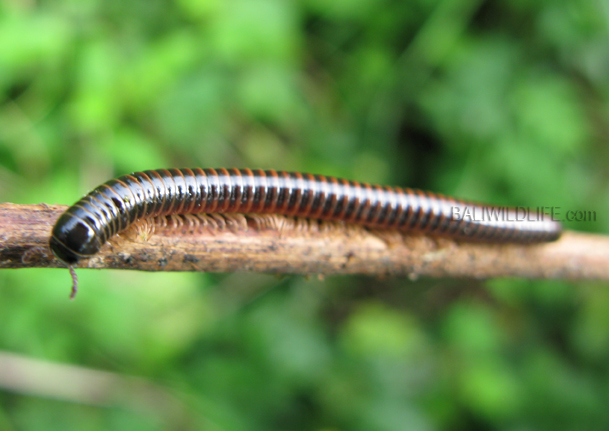
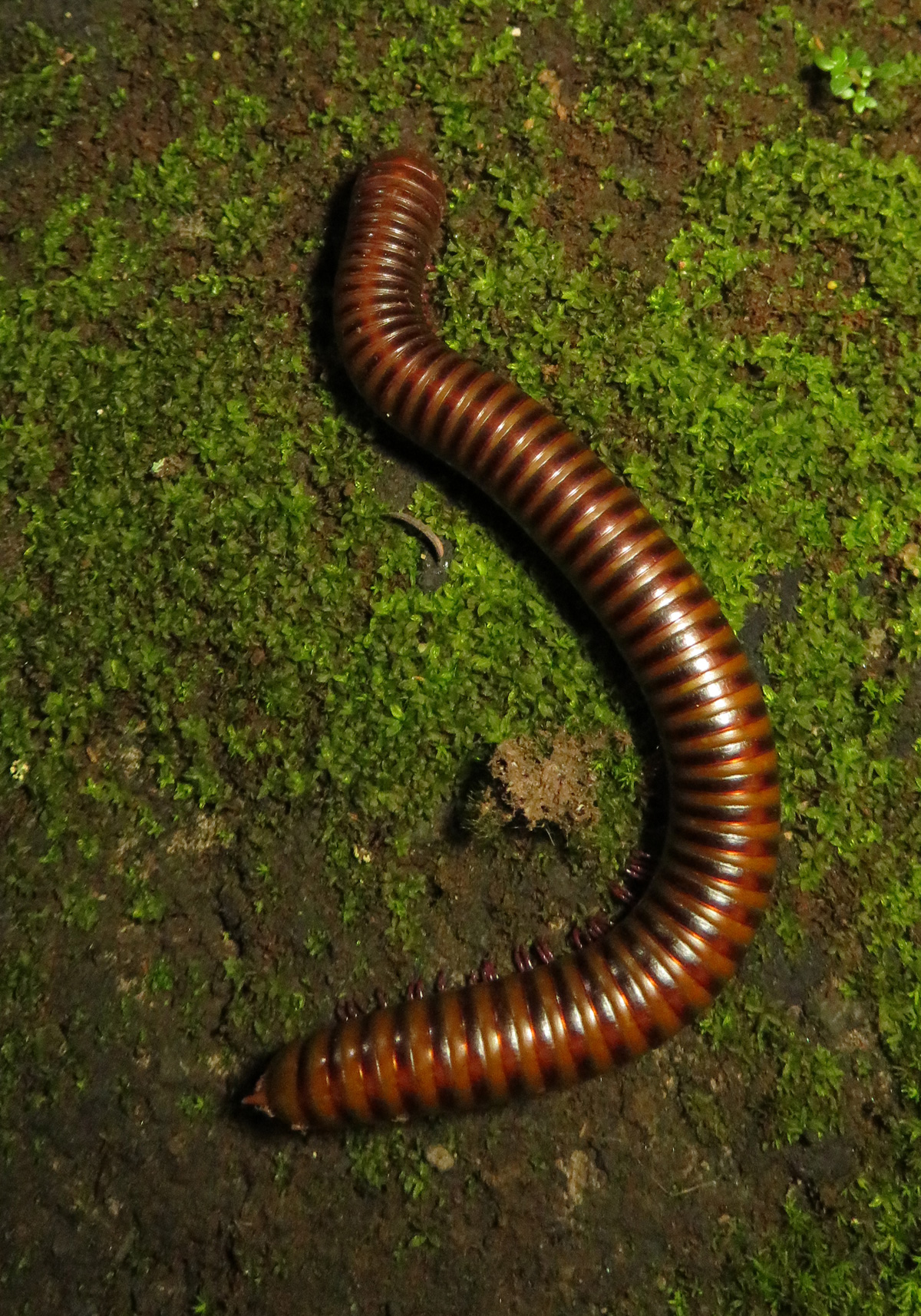
Trigoniulus is a genus of millipedes in the subfamily Trigoniulinae, family Pachybolidae, within the order Spirobolida of the class Diplopoda. Species of this genus belong to the group commonly known as round-backed millipedes, characterized by their cylindrical bodies and numerous body segments bearing paired legs.
Millipedes in the genus Trigoniulus generally have elongated, smooth, and robust bodies with a rounded cross-section. Their coloration is usually dark brown, black, or reddish, although some species may show lighter rings or subtle patterning along the segments. Like other millipedes, most body segments carry two pairs of legs, which enable slow but steady movement through soil and leaf litter.
Species of Trigoniulus are primarily distributed in tropical regions, especially in Southeast Asia and other humid environments. They typically inhabit forest floors, leaf litter, decaying wood, and other moist microhabitats rich in organic matter.
Ecologically, members of this genus act as detritivores, feeding on decomposing plant material such as fallen leaves, rotting wood, and other organic debris. Their feeding activities contribute to the breakdown of organic matter and play an important role in nutrient cycling within soil ecosystems.
When threatened, Trigoniulus millipedes often curl their bodies into a tight spiral as a defensive behavior. They may also release chemical secretions that deter predators and provide additional protection.