

Tribe Thoradontini
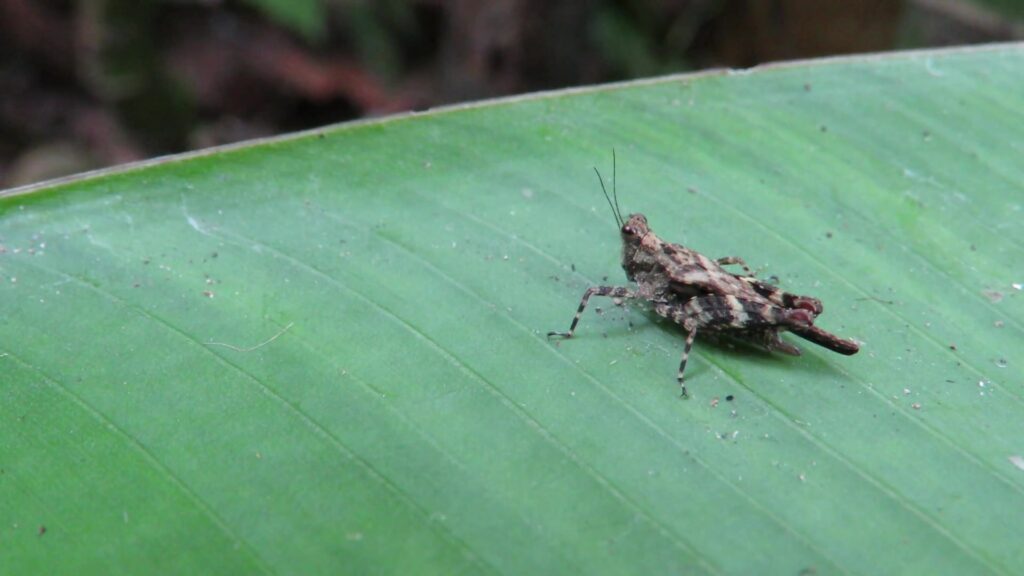
Thoradontini is a tribe of pygmy grasshoppers belonging to the family Tetrigidae within the order Orthoptera. These small insects are commonly known as groundhoppers and are distinguished by their compact bodies, enlarged hind legs adapted for jumping, and a prominent pronotum that often extends backward over the abdomen. Like other members of Tetrigidae, they are generally well camouflaged and adapted to living close to the ground.
Members of Thoradontini typically have brown, gray, greenish, or mottled coloration that helps them blend into soil, stones, fallen leaves, mosses, and other natural surfaces. Their body shape and surface markings provide effective camouflage against predators. The pronotum is an important feature for identification, with its shape, length, and margins varying among species. Other distinguishing characteristics include the structure of the head, the width of the vertex, and the development of the wings.
Representatives of this tribe are associated mainly with Asian habitats, where groundhoppers occupy environments that provide suitable shelter and food. They may be encountered in forested areas, damp clearings, and places with abundant ground cover. Like other pygmy grasshoppers, they are generally associated with low-growing vegetation and moist surfaces, where algae, mosses, lichens, and other small food resources may be available.
Thoradontini grasshoppers are adapted to a ground-dwelling lifestyle. When disturbed, they can make sudden leaps using their powerful hind legs, helping them escape potential predators. Their small size and cryptic appearance also make them difficult to detect. Their feeding habits and other ecological characteristics are not equally well documented across all species, but groundhoppers generally consume algae, mosses, lichens, and other plant material found close to the ground.
Their life cycle follows the typical pattern of grasshoppers, with eggs developing into nymphs that gradually mature through successive molts. This process is known as incomplete metamorphosis because there is no pupal stage. The nymphs generally resemble miniature adults, although their wings and reproductive structures are not fully developed. Environmental conditions, including temperature, humidity, and food availability, influence their growth and reproduction.
As part of the diverse family Tetrigidae, Thoradontini contributes to the biodiversity of terrestrial ecosystems. These insects participate in food webs as consumers of small plant materials and as prey for spiders, predatory insects, amphibians, reptiles, and birds. Although their small size makes them easy to overlook, they represent an important component of ground-level insect communities. Further taxonomic and ecological research is needed to clarify the diversity, distribution, and biological characteristics of the tribe.