

Genus Pareas
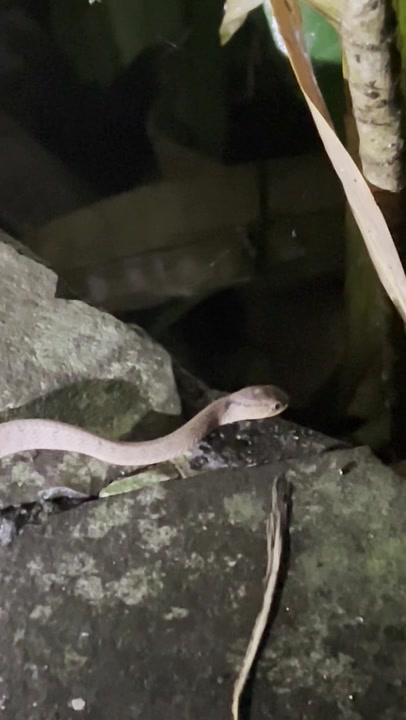
Pareas is a genus of snail-eating snakes in the family Pareidae, within the superfamily Colubroidea and order Squamata. The genus is distributed primarily across South and Southeast Asia, with species occurring in mainland Southeast Asia, southern China, and parts of the Sunda region. Pareas is particularly notable for its highly specialized feeding apparatus, which enables these relatively small snakes to prey efficiently on terrestrial snails and slugs.
Species of Pareas are generally slender, relatively small snakes, with elongated bodies and proportionally long tails. Their heads are usually distinct from the neck, and the eyes are relatively large, reflecting their predominantly nocturnal activity. Body coloration varies among species and may include shades of brown, gray, reddish brown, olive, yellow, and black. Many have irregular markings or longitudinal patterns that provide effective camouflage among leaf litter, moss, branches, and forest vegetation.
The body is typically covered with keeled dorsal scales, giving many Pareas species a somewhat rough-textured appearance. Their coloration and slender form allow them to blend into vegetation and forest-floor debris. Some species possess contrasting head markings or bands, while others are relatively plain. Such variation in appearance often corresponds to differences in habitat and geographic distribution.
The most extraordinary feature of Pareas is its highly specialized skull and jaw structure. The jaws are strongly asymmetrical, with modifications that allow the snake to manipulate and extract snails from their shells. Their teeth are arranged in a manner that helps grip the soft body of a gastropod while the snake pulls it free. This unusual feeding mechanism is one of the clearest examples of morphological specialization for a particular prey type among snakes.
Pareas species are predominantly nocturnal, becoming active after dusk when many terrestrial snails and slugs emerge from shelter. They move relatively slowly and deliberately through vegetation, branches, and leaf litter while searching for prey. Their forked tongues continually collect chemical particles from the environment and deliver them to the vomeronasal organ, allowing the snakes to follow chemical cues associated with prey.
Their diet is strongly dominated by terrestrial gastropods. When a snail is encountered, a Pareas may grasp the exposed portion of the animal and use repeated jaw movements to pull it from its shell. The specialized asymmetry of the skull is particularly important because it allows the snake to work around the shell opening rather than simply crushing the shell. Slugs, which lack shells, can also be consumed and may be easier to handle.
The genus is primarily associated with humid tropical and subtropical habitats. Species occur in evergreen forests, montane forests, secondary woodland, plantations, gardens, and other areas where suitable gastropod prey is available. Many are at least partly arboreal and can climb through shrubs and low vegetation, while others forage close to the ground. Humidity is generally important because their principal prey depends strongly on moist environmental conditions.
Reproduction is generally oviparous, with females laying small clutches of eggs in concealed locations such as leaf litter, soil, beneath vegetation, or other sheltered sites. The reproductive biology of many species remains incompletely documented because these snakes are secretive and predominantly nocturnal. Hatchlings are independent and possess the specialized cranial morphology necessary for feeding on small gastropods.
Representative species include Pareas carinatus, Pareas margaritophorus, Pareas hamptoni, and Pareas iwasakii, among numerous other geographically restricted species. The genus has undergone substantial taxonomic revision as morphological and molecular studies have revealed previously unrecognized diversity. Several Pareas species have small geographic ranges, particularly those associated with particular mountain systems, islands, or forest regions.
Ecologically, Pareas occupies a distinctive niche as a specialized predator of terrestrial gastropods. By consuming snails and slugs, these snakes participate in regulating mollusc populations and contribute to the structure of humid forest food webs. Their close dependence on gastropod prey also links their distribution to moisture, vegetation, and habitat quality.
The combination of nocturnal behavior, cryptic coloration, arboreal ability, and extreme jaw specialization makes Pareas one of the most distinctive snake genera in tropical Asia. Although usually harmless to humans and rarely encountered because of their secretive habits, these snakes provide an especially striking example of evolutionary specialization, demonstrating how the vertebrate skull can become modified to exploit a challenging and highly specific food resource.