

Marbled White Moth (Nyctemera coleta)
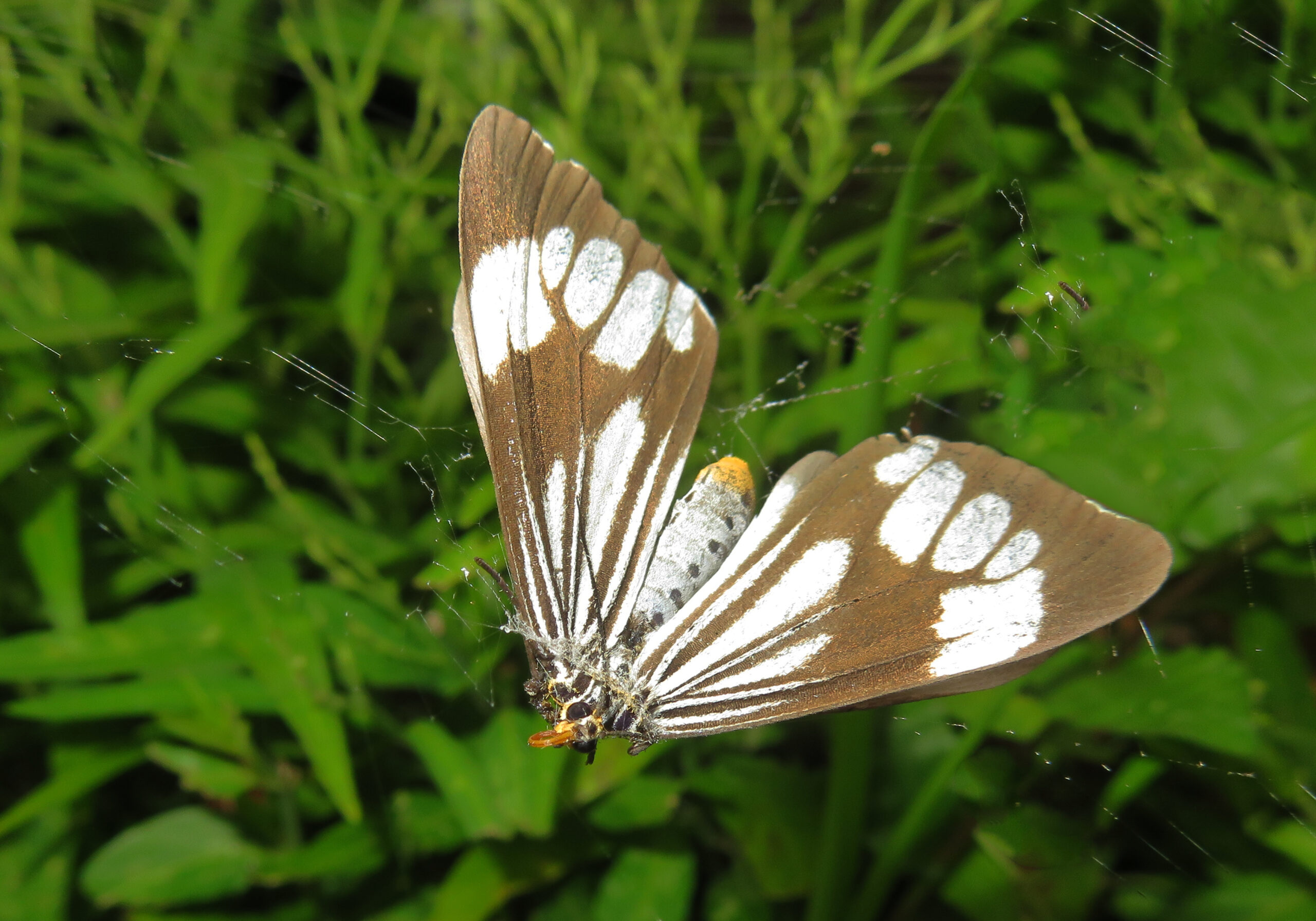
Nyctemera coleta is a species of tiger moth belonging to the subgenus Coleta, genus Nyctemera (Subtribe Nyctemerina, Tribe Arctiini, Subfamily Arctiinae, Family Erebidae, Superfamily Noctuoidea, Order Lepidoptera). It is widely distributed throughout South and Southeast Asia, including India, Sri Lanka, Bangladesh, Nepal, Myanmar, Thailand, Laos, Cambodia, Vietnam, Peninsular Malaysia, Singapore, southern China, Taiwan, and Indonesia. The species inhabits tropical rainforests, secondary forests, forest edges, mangroves, plantations, agricultural areas, parks, gardens, and other vegetation-rich habitats.
Nyctemera coleta is a medium-sized moth with a wingspan of approximately 45–65 mm. It is easily recognized by its striking black-and-white wing pattern. The forewings are black with several conspicuous white patches and bands, while the hindwings are predominantly white with broad black borders. The abdomen is black, usually marked with bright yellow or orange lateral spots or bands that function as aposematic (warning) coloration, signaling the presence of defensive chemicals. The body is slender, and both sexes are similar in appearance, although females are generally slightly larger.
Unlike most moths, N. coleta is primarily diurnal, being most active during daylight hours. Adults are agile fliers and are commonly seen visiting flowers to feed on nectar using their long, coiled proboscis. They may also feed on tree sap and other sugar-rich plant exudates. Their bold coloration, coupled with daytime activity, helps advertise their chemical defenses and reduces predation by visually hunting predators.
The life cycle involves complete metamorphosis, consisting of egg, larva (caterpillar), pupa, and adult stages. Females lay eggs in clusters on the undersides of host plant leaves. The caterpillars are elongate and densely covered with tufts of black, gray, or orange hairs that provide protection against predators. Larvae feed primarily on plants in the family Asteraceae, particularly species of Crassocephalum and related genera, although other herbaceous plants may also be utilized. Pupation occurs within a loose silken cocoon that incorporates larval hairs and is attached to vegetation or concealed among leaf litter.
Nyctemera coleta is one of the most widespread and frequently encountered species of its genus in South and Southeast Asia. It readily adapts to disturbed habitats and is often observed in gardens, plantations, and forest margins, where flowering plants and larval host plants are abundant.
Ecologically, Nyctemera coleta contributes to pollination while feeding on nectar and participates in plant–herbivore interactions during its larval stage. Although protected by chemical defenses and warning coloration, it still serves as prey for specialized birds, spiders, predatory insects, and parasitoids. Its abundance, ecological adaptability, and association with diverse vegetation make N. coleta an important component of tropical ecosystems and a useful indicator of habitat quality and biodiversity.