Bali Wildlife
Every Spices Matter


Liris is a genus of solitary digger wasps within the subtribe Larrina (Tribe Larrini, Subfamily Crabroninae, Family Crabronidae, Order Hymenoptera). The genus is widely distributed across tropical, subtropical, and temperate regions of the world. Species of Liris are commonly found in open habitats such as sandy soils, grasslands, coastal areas, and disturbed environments where suitable nesting substrates are available.
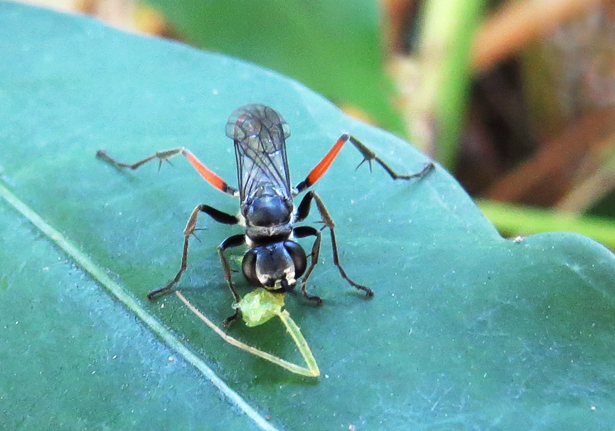
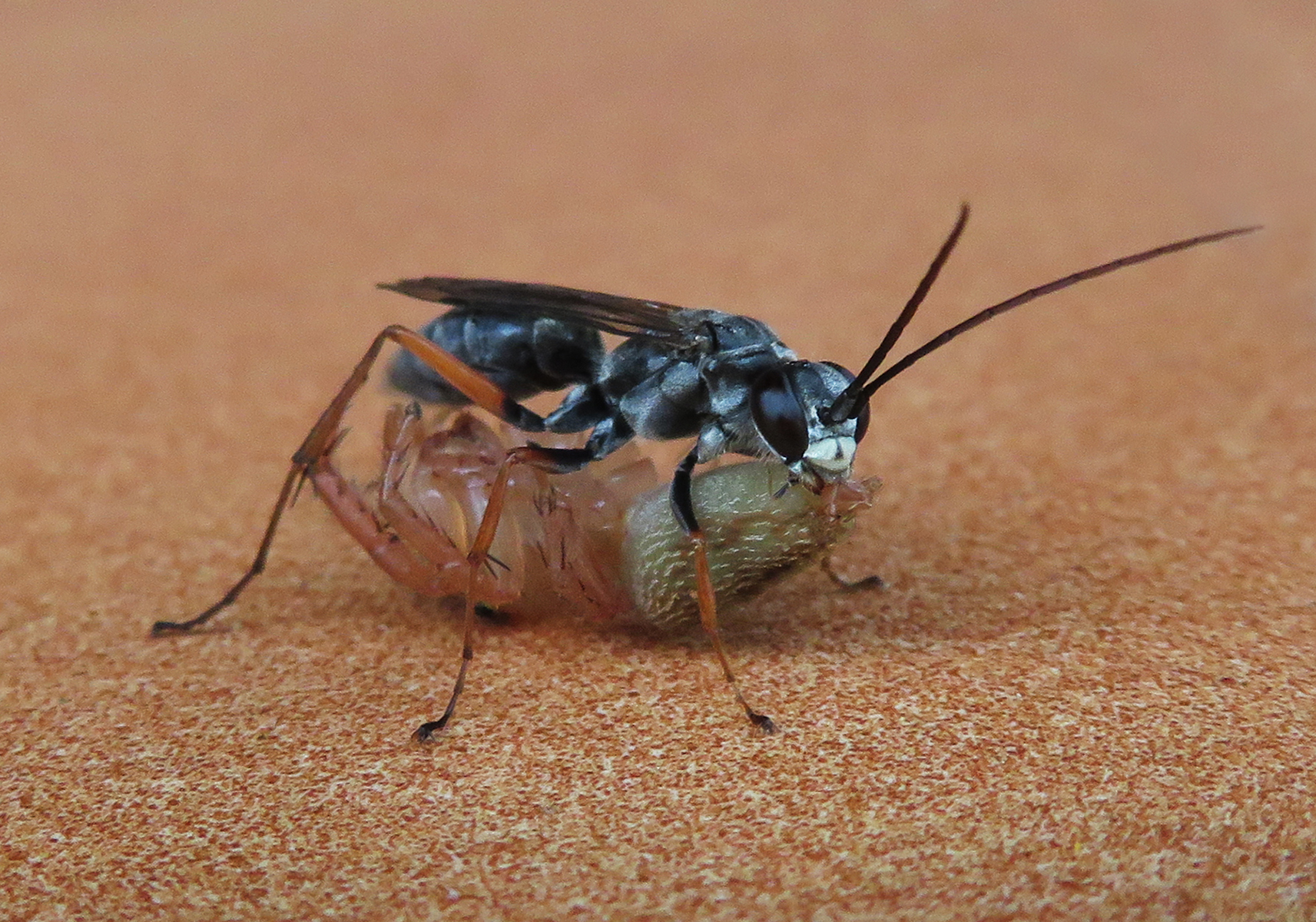
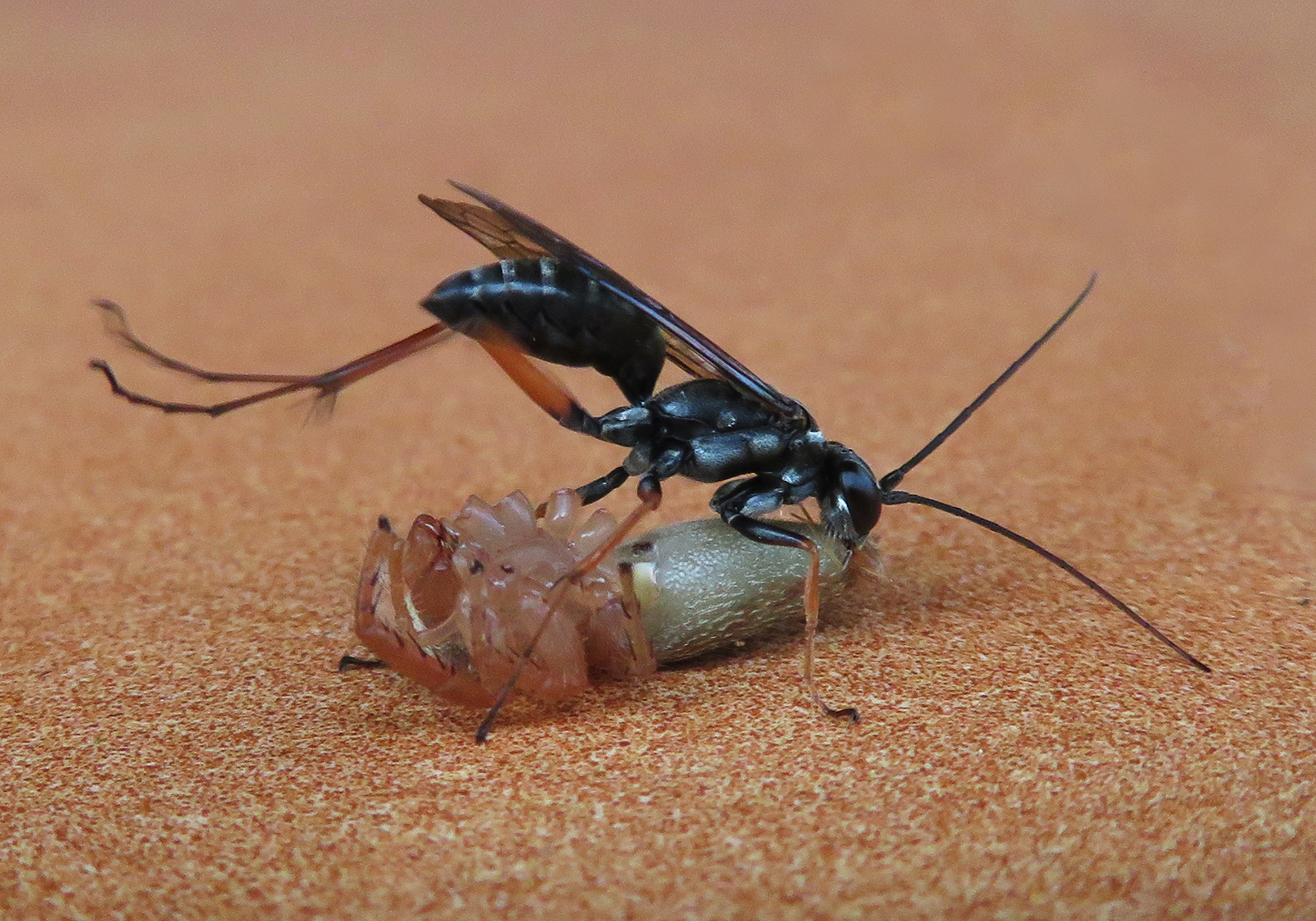
Members of the genus Liris are generally small to medium-sized wasps with a slender, elongated body and a narrow waist. They are typically dark in coloration, often entirely black or with subtle markings. The head is well developed with strong mandibles and large compound eyes, and the antennae are relatively long. Their legs are adapted for digging, with spines that assist in excavating burrows in soil.
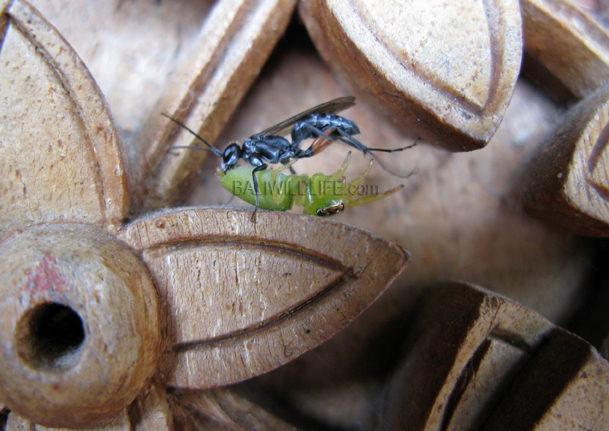
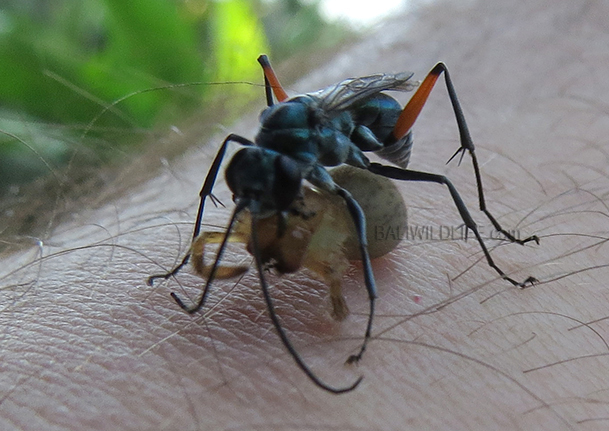
Liris species are solitary and construct nests in the ground, usually in sandy or loose soil. Females excavate burrows that may contain one or more brood cells. Each cell is provisioned with paralyzed prey, most commonly crickets or other orthopteran insects. The female captures and stings the prey to immobilize it before transporting it to the nest.
The life cycle involves complete metamorphosis. An egg is laid on the stored prey, and the larva feeds on the immobilized host. After completing development, the larva pupates within the burrow and later emerges as an adult.
Adults feed primarily on nectar and other sugary substances, though they are active predators when provisioning their nests. They are generally non-aggressive and rarely sting unless handled.
Ecologically, Liris species play an important role in controlling populations of ground-dwelling insects, particularly crickets. Their nesting activities contribute to soil aeration, and their nectar-feeding behavior supports pollination. Their predatory habits and ecological functions make them beneficial components of natural and agricultural ecosystems.