Bali Wildlife
Every Spices Matter


Helicoidei is an infraorder within the suborder Helicina (Order Stylommatophora, Superorder Eupulmonata, Class Gastropoda, Phylum Mollusca). It represents a major lineage of predominantly terrestrial land snails, many of which are familiar components of forest, shrubland, and agricultural ecosystems.
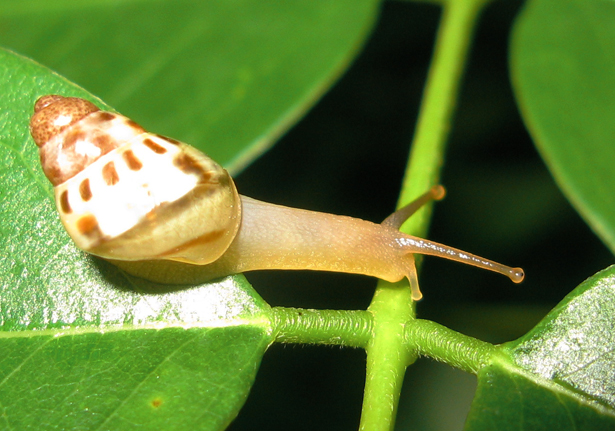
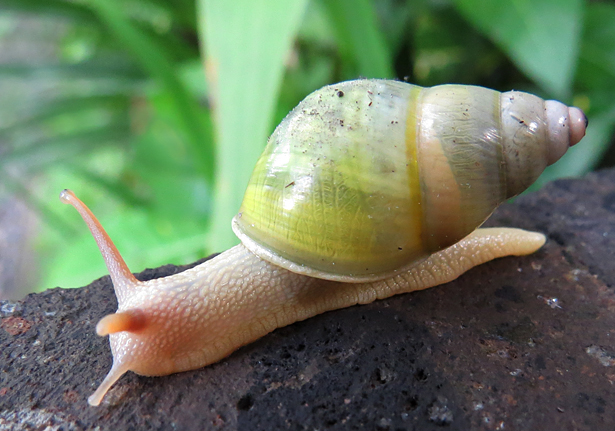
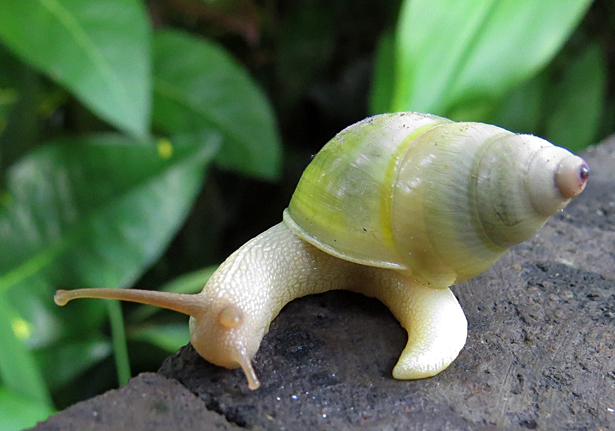
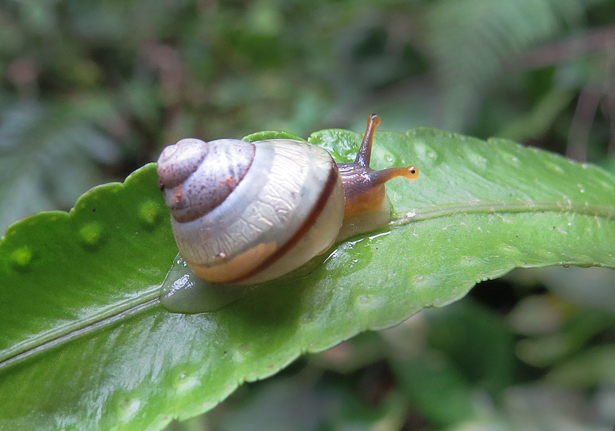
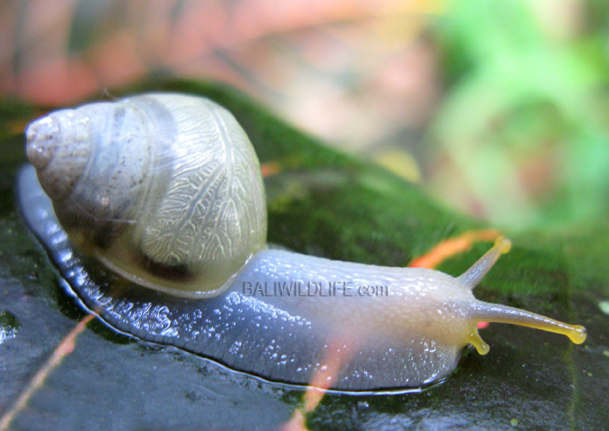
Members of Helicoidei typically possess a well-developed, spirally coiled external shell, often globular or helicoid in shape. Shells may display diverse surface sculptures such as ribs, striations, or color banding. The aperture is generally rounded to oval, and in some species may include internal teeth or thickened lips that provide structural reinforcement.
As stylommatophoran gastropods, helicoideans have two pairs of retractile tentacles, with eyes located at the tips of the upper pair. Respiration occurs through a pulmonate lung, and the mantle cavity opens externally via a pneumostome. The body is supported by a muscular foot adapted for crawling across terrestrial substrates.
Reproduction is typically simultaneous hermaphroditic, with complex reproductive anatomy. Many species exhibit elaborate courtship behaviors and internal fertilization. Eggs are deposited in moist soil or sheltered microhabitats, and development is direct, without aquatic larval stages.
Ecologically, Helicoidei species are primarily herbivores and detritivores, feeding on plant material, fungi, algae, and decaying organic matter. They play significant roles in nutrient cycling and soil ecology, while also serving as prey for a wide range of invertebrate and vertebrate predators. Some species are agriculturally important, either as crop pests or as part of managed snail production systems.
Infraorder Helicoidei represents a diverse and ecologically significant radiation of land snails, distinguished by helicoid shell morphology, pulmonate respiration, and adaptation to fully terrestrial life.