

Gossamerwings and Allies (Family Euphaeidae)
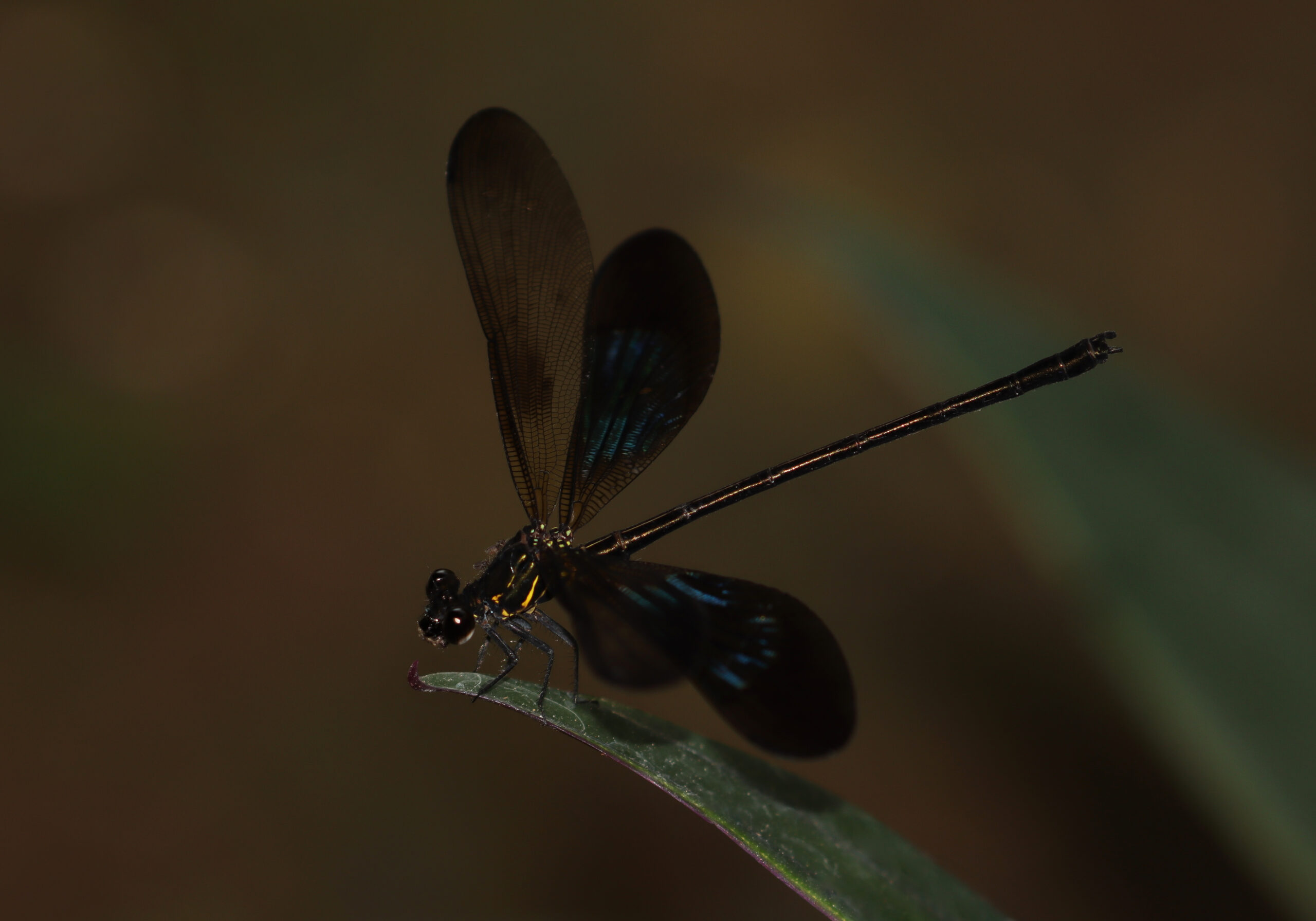
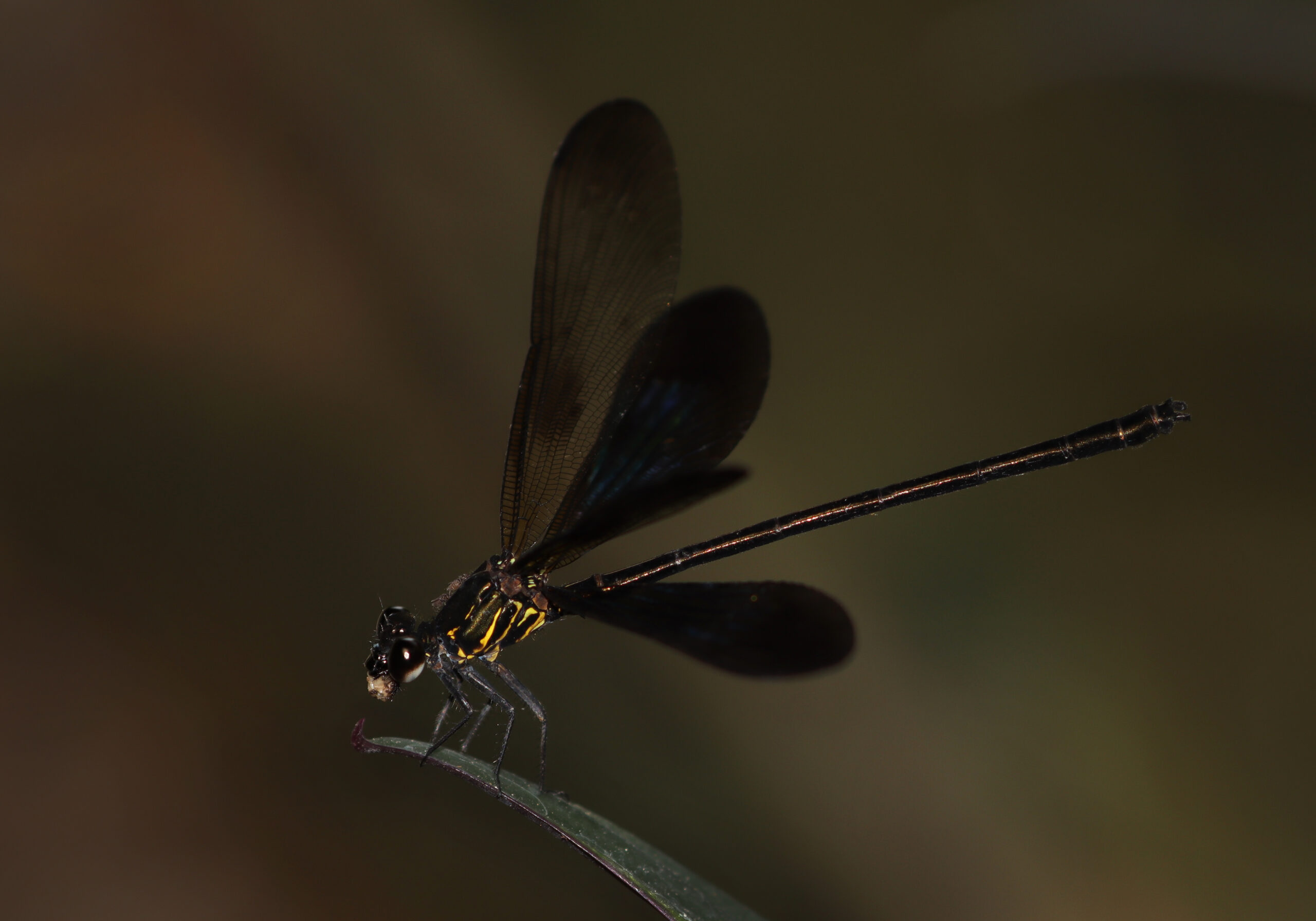
Euphaeidae is a family of damselflies within the superfamily Calopterygoidea (Suborder Zygoptera, Order Odonata), commonly known as the gossamerwings. The family comprises approximately 70 described species distributed throughout South Asia, Southeast Asia, southern China, and parts of the Indo-Pacific region. Members are closely associated with clean, flowing freshwater habitats, including forest streams, rivers, cascades, and shaded mountain brooks, where they spend their entire life cycle.
Damselflies of the family Euphaeidae are generally medium to large in size and are distinguished by their slender body, large compound eyes, and two pairs of broad membranous wings. Unlike many other damselflies, the forewings and hindwings are often slightly different in shape and width. Wing coloration varies from entirely transparent to smoky brown or black, and in many species the wings bear iridescent blue, green, purple, or bronze reflections. The body is commonly metallic green, bronze, blue, or black, with males typically exhibiting brighter coloration than females.
Adults are diurnal and are most active along shaded forest streams, where they perch on rocks, branches, or riverside vegetation. They are agile fliers capable of short, rapid flights between perches and often display territorial behavior, with males defending sections of stream against rivals. Adults feed on small flying insects, including midges, mosquitoes, flies, and other soft-bodied arthropods, capturing prey during flight.
The life cycle involves incomplete metamorphosis, consisting of egg, aquatic nymph (naiad), and adult stages. Females lay eggs on submerged vegetation, mosses, roots, or other substrates in flowing water. The aquatic nymphs inhabit the stream bed among rocks, gravel, submerged roots, and leaf litter, where they are active predators feeding on insect larvae, small crustaceans, worms, and other aquatic invertebrates. After completing several molts, the mature nymph emerges from the water and molts into the winged adult on nearby vegetation or rocks.
The family includes several well-known genera, such as Euphaea, Bayadera, Anisopleura, Schmidtiphaea, and Dysphaea. Many species are endemic to specific mountain ranges or river systems and are highly dependent on undisturbed forest streams.
Ecologically, Euphaeidae damselflies are important predators in both aquatic and terrestrial ecosystems. Aquatic nymphs help regulate populations of freshwater invertebrates, while adults contribute to the control of small flying insects. They also serve as prey for fish, amphibians, birds, spiders, and larger predatory insects. Because of their dependence on clean, well-oxygenated streams and intact riparian forests, gossamerwings are regarded as excellent indicators of freshwater ecosystem health, forest integrity, and biodiversity.