

Genus Eucriotettix
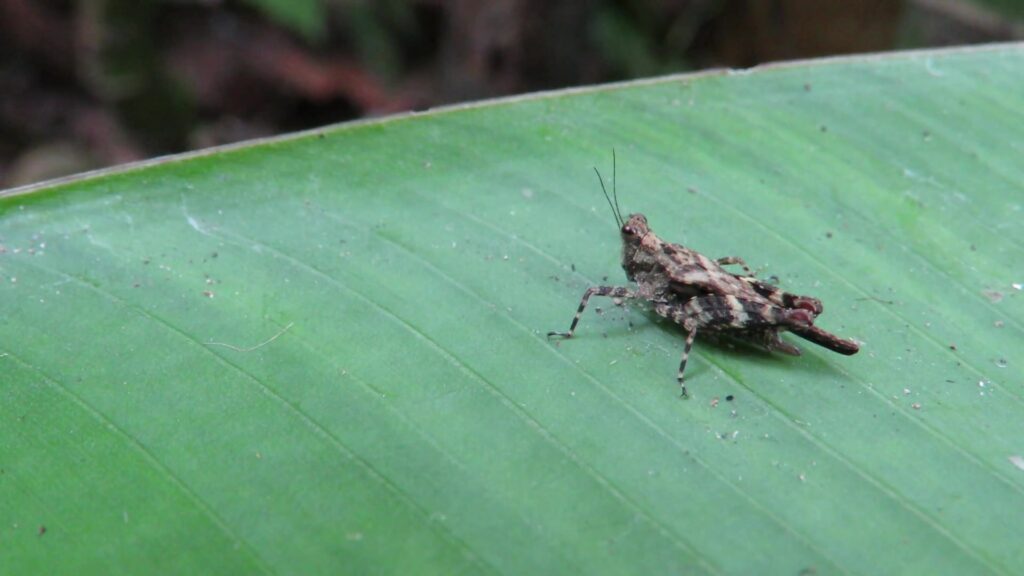
Eucriotettix is a genus of pygmy grasshoppers belonging to the family Tetrigidae within the order Orthoptera. These small insects are commonly known as groundhoppers or grouse locusts and are characterized by their compact bodies, strong hind legs adapted for jumping, and a distinctive pronotum that often extends backward over the abdomen. The genus belongs to a diverse group of grasshoppers that are primarily adapted to life close to the ground.
Members of Eucriotettix generally possess a body shape and coloration suited to camouflage in natural environments. Their colors may include shades of brown, gray, or green, often with irregular markings that help them blend into soil, leaf litter, moss, stones, and low vegetation. Like other pygmy grasshoppers, they are relatively small and can be difficult to detect in their natural habitats.
The pronotum is an important anatomical feature for identifying species within this genus. Its shape, length, surface texture, and lateral margins, together with characteristics of the head, vertex, antennae, and hind legs, help distinguish Eucriotettix from related genera of Tetrigidae. Wing development can vary among pygmy grasshoppers, with some species having relatively developed wings and others possessing reduced wings.
Species of Eucriotettix are associated with Asian pygmy-grasshopper diversity. Groundhoppers in this region occupy a variety of habitats, including forest floors, damp clearings, grassy areas, and environments with abundant mosses or leaf litter. Suitable habitats provide both concealment from predators and access to food resources. The precise distribution and habitat preferences of individual Eucriotettix species depend on their geographic range and local environmental conditions.
Like other members of Tetrigidae, Eucriotettix species are generally associated with ground-level food resources, including algae, mosses, lichens, and other small plant materials. Their feeding activities contribute to the use and turnover of organic resources in their habitats. They also form part of the food web, serving as prey for spiders, predatory insects, amphibians, reptiles, and birds.
The life cycle of Eucriotettix follows the typical pattern of grasshoppers, involving eggs, nymphs, and adults. Development occurs through incomplete metamorphosis, without a pupal stage. Young nymphs resemble smaller versions of adults and gradually develop through successive molts until they reach reproductive maturity. Their growth and reproductive activity are influenced by temperature, humidity, rainfall, and food availability.
The genus is part of the taxonomic diversity of pygmy grasshoppers, a group in which classification relies heavily on detailed morphological characteristics. Because many species are small and visually similar, accurate identification often requires close examination of anatomical features and comparison with formal species descriptions. Further research can help improve understanding of the genus’s diversity, distribution, evolutionary relationships, and ecological role.
Overall, Eucriotettix represents a genus of small, ground-dwelling grasshoppers adapted to life among soil, vegetation, and other natural surfaces. Its members share the characteristic features of pygmy grasshoppers, including camouflage, powerful jumping legs, and a prominent pronotum. Although many aspects of their biology remain insufficiently documented, they contribute to the diversity and ecological complexity of terrestrial insect communities.