

Epepeotes luscus
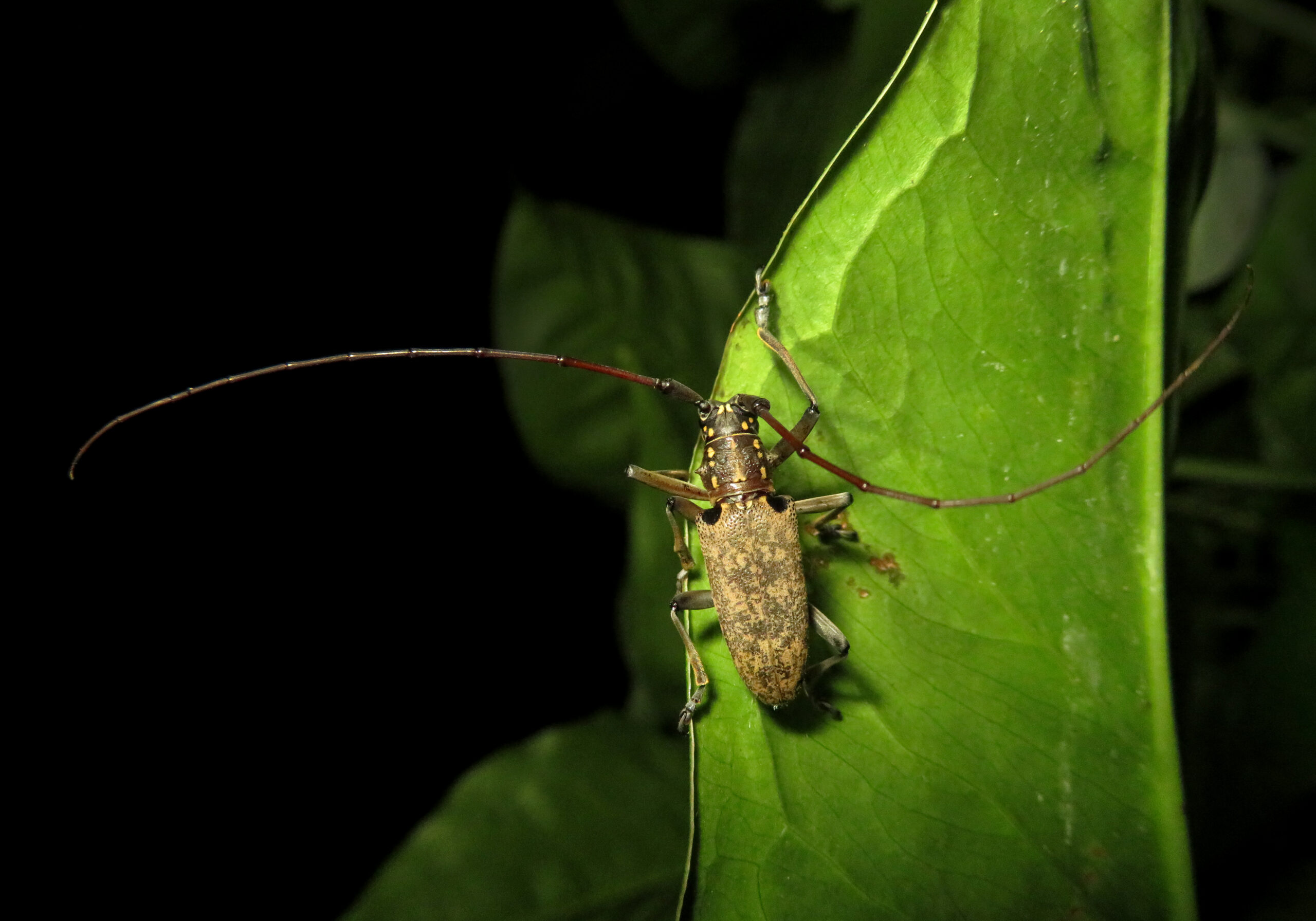
Epepeotes luscus is a species of longhorn beetle in the tribe Lamiini (Subfamily Lamiinae, Family Cerambycidae, Order Coleoptera). It is widely distributed in South and Southeast Asia, including parts of Indonesia, where it inhabits tropical and subtropical forests, plantations, and semi-natural environments.
This species is medium- to large-sized, with an elongate and cylindrical body typical of longhorn beetles. The antennae are long and segmented, often reaching or exceeding the body length, particularly in males. The body surface is covered with dense pubescence forming a mottled pattern of brown, gray, cream, and black tones. These markings provide effective camouflage against tree bark and lichen-covered trunks.
The pronotum is rounded and may bear small lateral tubercles. The elytra are elongate and slightly tapering posteriorly, often displaying irregular pale patches or bands. The overall coloration and texture make E. luscus well adapted to arboreal habitats.
Larvae are xylophagous (wood-boring) and develop within the trunks and branches of host trees, feeding on internal woody tissues. They create tunnels inside the wood, where pupation also occurs. Depending on the host plant and population density, the species may sometimes affect living trees or recently felled timber.
Adults are generally active during warm months and are frequently attracted to artificial lights at night. They may feed on bark, leaves, or sap.
The life cycle follows complete metamorphosis: egg (laid on host plant surfaces), larva (wood-boring stage), pupa (within the wood), and adult.
Epepeotes luscus is a characteristic Asian longhorn beetle species, recognizable by its long antennae, bark-mimicking coloration, and wood-boring larval stage.