

Subfamily Criotettiginae
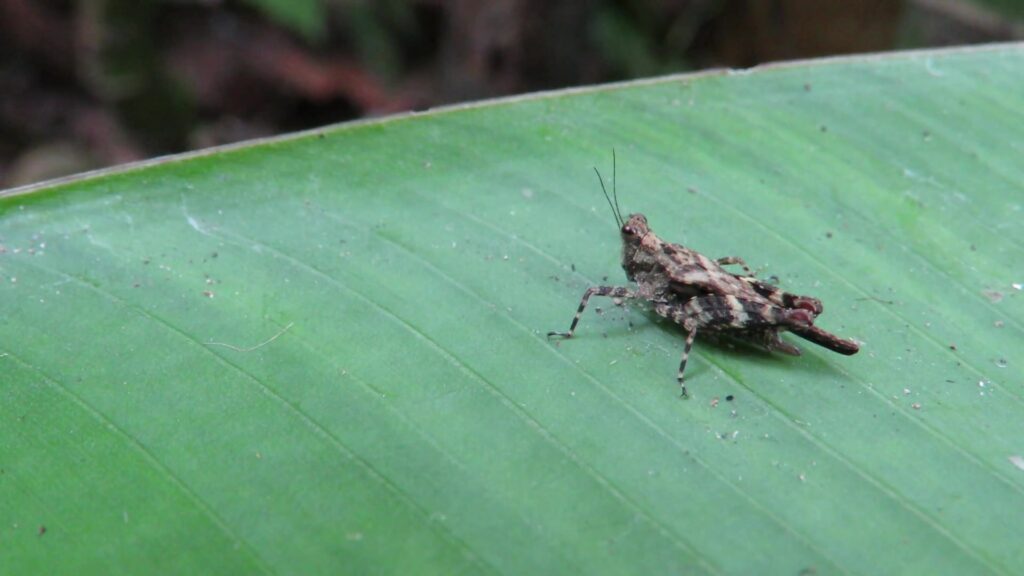
Criotettiginae is a subfamily of pygmy grasshoppers belonging to the family Tetrigidae within the insect order Orthoptera. Pygmy grasshoppers are also known as groundhoppers or grouse locusts. Members of this group are small, ground-dwelling insects characterized by their compact bodies, strong hind legs for jumping, and distinctive pronotum, the hardened dorsal plate of the thorax that often extends backward over much of the abdomen. The classification and limits of Criotettiginae may vary among taxonomic sources, reflecting ongoing research into the relationships of these small and diverse grasshoppers.
Like other tetrigid grasshoppers, members of Criotettiginae are generally adapted to life close to the ground. Their body shapes and colors often blend with soil, leaf litter, stones, mosses, and other surfaces in their habitats. Many pygmy grasshoppers display brown, gray, olive, or mottled patterns that help conceal them from predators. Their small size and cryptic appearance can make them difficult to detect even when they are abundant.
The pronotum is one of the most distinctive features of pygmy grasshoppers. It commonly forms an elongated shield that extends backward over the abdomen, although its length and shape vary between species. The hind legs are muscular and adapted for sudden leaps, allowing these insects to escape threats quickly. Their antennae are relatively short compared with those of many long-horned grasshoppers, and the wings may be fully developed, reduced, or absent, depending on the species.
Criotettiginae representatives are expected to share the general ecological characteristics of groundhoppers, although details of their biology depend on the individual species. Pygmy grasshoppers are frequently associated with moist environments, including stream margins, marshes, damp forest floors, grassy clearings, and areas covered with moss or algae. Other species occur in drier habitats where suitable ground cover and food resources are available. The precise habitat preferences of species assigned to this subfamily require confirmation from species-level records.
Their diet is generally consistent with that of other tetrigid grasshoppers. Many groundhoppers feed on algae, mosses, lichens, and small amounts of plant material growing on the ground or on damp surfaces. Their feeding can contribute to the turnover of microscopic plant growth and organic matter in their habitats. In turn, they serve as prey for spiders, predatory insects, amphibians, reptiles, and birds, forming part of the food web in ground-level ecosystems.
Reproduction follows the typical pattern of grasshoppers, with females laying eggs in suitable substrates such as soil or among plant material. The young hatch as nymphs that resemble smaller, wingless versions of adults. They develop through a series of molts before reaching maturity, a process known as incomplete metamorphosis. The timing of reproduction and the number of generations per year depend on local climate, habitat conditions, and the biology of each species.
As small and often inconspicuous insects, members of Criotettiginae may be underrepresented in biodiversity surveys. Their detection can require careful examination of leaf litter, damp ground, moss-covered surfaces, and vegetation near water. More detailed taxonomic and ecological studies are important for clarifying the subfamily’s diversity, distribution, and relationships within Tetrigidae.
Overall, Criotettiginae represents a group within the diversity of pygmy grasshoppers, insects notable for their compact form, ground-level lifestyle, and camouflage. However, because the subfamily’s taxonomic usage is not consistent across all references, its exact composition and distinguishing characteristics should be checked against a current specialist classification before assigning particular species or biological traits to it.