Bali Wildlife
Every Spices Matter


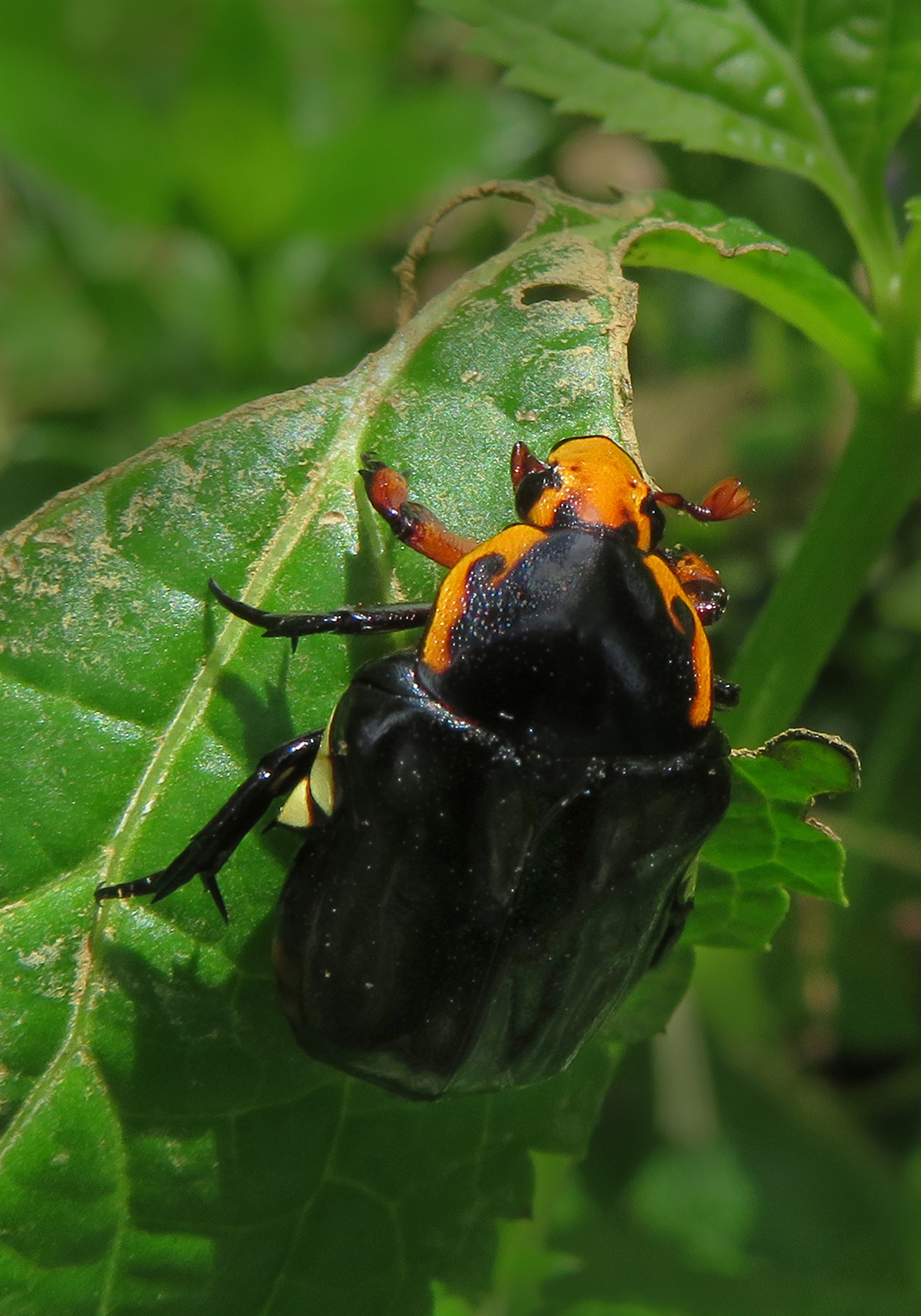
Campsiura javanica is a species of flower chafer within the subtribe Macromina (Tribe Cetoniini, Subfamily Cetoniinae, Family Scarabaeidae, Order Coleoptera). Despite the genus being largely African, C. javanica occurs in Southeast Asia, including Indonesia, particularly on the island of Java, from which its species name is derived.
This species is medium- to large-sized, with a robust, oval, and strongly convex body typical of flower chafers. The dorsal surface is generally smooth and moderately glossy. Coloration commonly ranges from dark brown to black, sometimes with subtle metallic reflections or faint lighter markings depending on the population.
Like other cetoniines, Campsiura javanica possesses the characteristic lateral elytral notch, allowing it to extend its membranous hind wings for flight without fully lifting the elytra. This adaptation enables efficient and agile daytime flight.
Adults are diurnal and are often found visiting flowers, sap flows, or ripe and fermenting fruits, where they feed on nectar, pollen, and sugary plant exudates. They may play a minor role in pollination while foraging.
Larvae are typical C-shaped scarab grubs that develop in decaying organic matter such as rotting wood, compost, or soil rich in humus. They are saprophagous and contribute to nutrient recycling within their habitats.
The life cycle includes complete metamorphosis: egg, larva, pupa, and adult, with development influenced by environmental conditions and food availability.
Campsiura javanica is a distinctive Southeast Asian flower chafer recognized for its robust form, daytime activity, and ecological association with flowers and decomposing organic substrates.