Bali Wildlife
Every Spices Matter


Camaenidae is a diverse family within the superfamily Helicoidea (Infraorder Helicoidei, Order Stylommatophora, Class Gastropoda, Phylum Mollusca). It comprises a large group of predominantly terrestrial land snails, especially abundant in tropical and subtropical regions, including Southeast Asia, Australasia, and parts of East Asia.
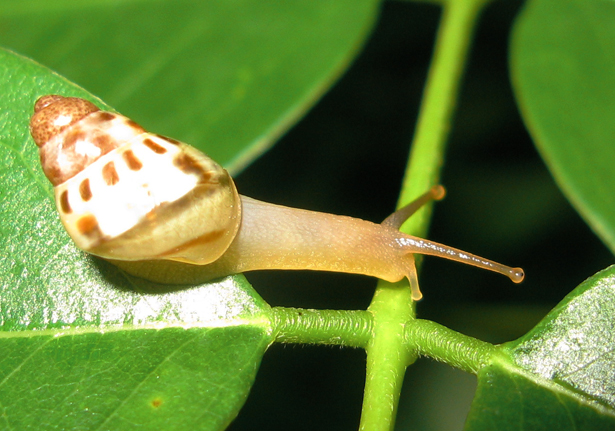
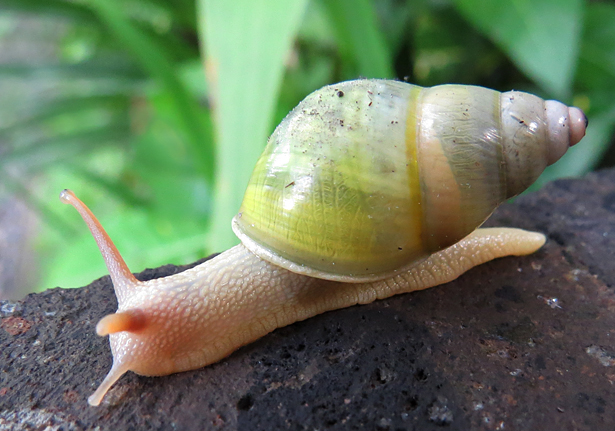
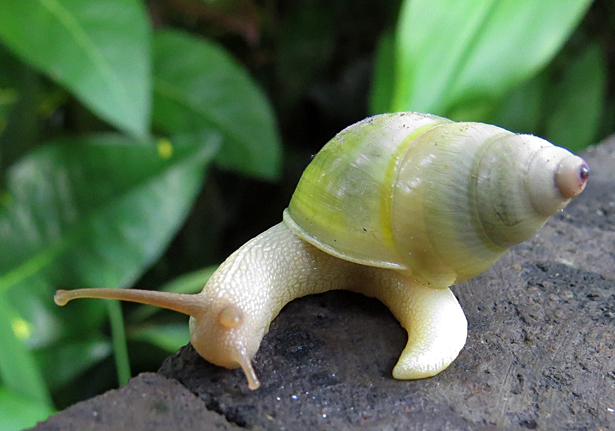
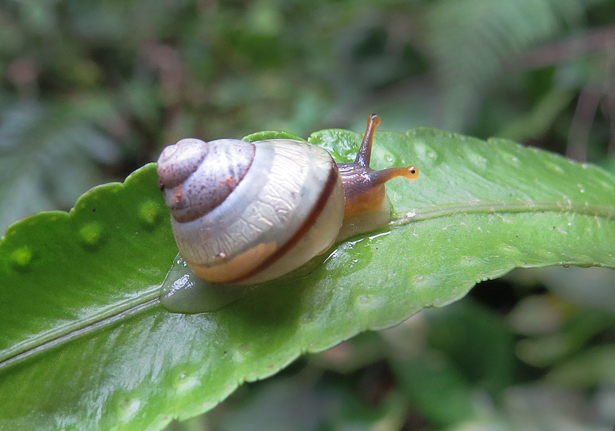
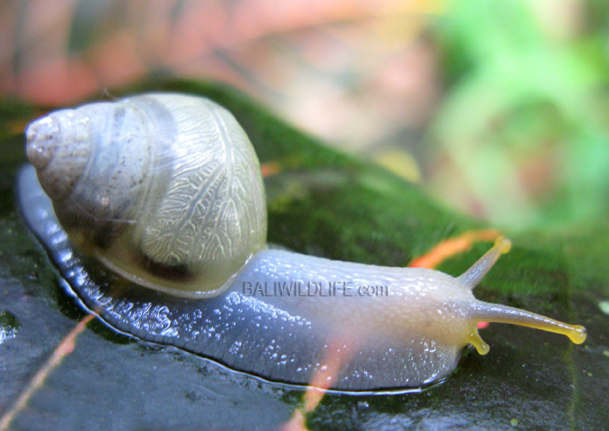
Members of Camaenidae typically possess a well-developed, spirally coiled shell, which may range from small to relatively large and robust. Shells are often globular to depressed in shape and may display a wide variety of surface sculptures, coloration patterns, and banding. In many species, the aperture is rounded and may have a thickened or reflected lip at maturity.
As stylommatophoran gastropods, camaenids have two pairs of retractile tentacles, with the eyes located at the tips of the upper pair. Respiration occurs through a pulmonate lung, and the mantle cavity opens externally via a pneumostome. The muscular foot enables locomotion across soil, vegetation, and rocky surfaces.
Most species are simultaneous hermaphrodites, with internal fertilization and direct development. Eggs are laid in moist soil, leaf litter, or sheltered crevices. Unlike some other helicoid families, the reproductive anatomy of Camaenidae is a key feature used in classification, often showing distinctive structural variations among genera.
Ecologically, Camaenidae species are primarily herbivores and detritivores, feeding on plant material, algae, fungi, and decomposing organic matter. They play important roles in nutrient cycling and forest floor ecology. Many species are restricted to specific geographic regions or limestone habitats, resulting in high levels of endemism.
Family Camaenidae represents a major component of tropical land snail diversity, distinguished by shell variability, terrestrial adaptation, and significant regional radiation, particularly in the Indo-Australian region.