Bali Wildlife
Every Spices Matter


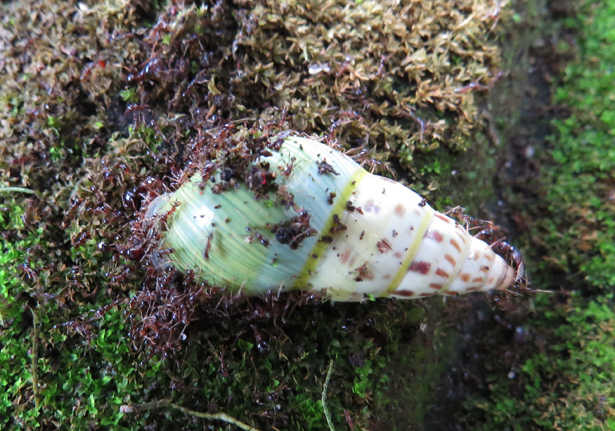
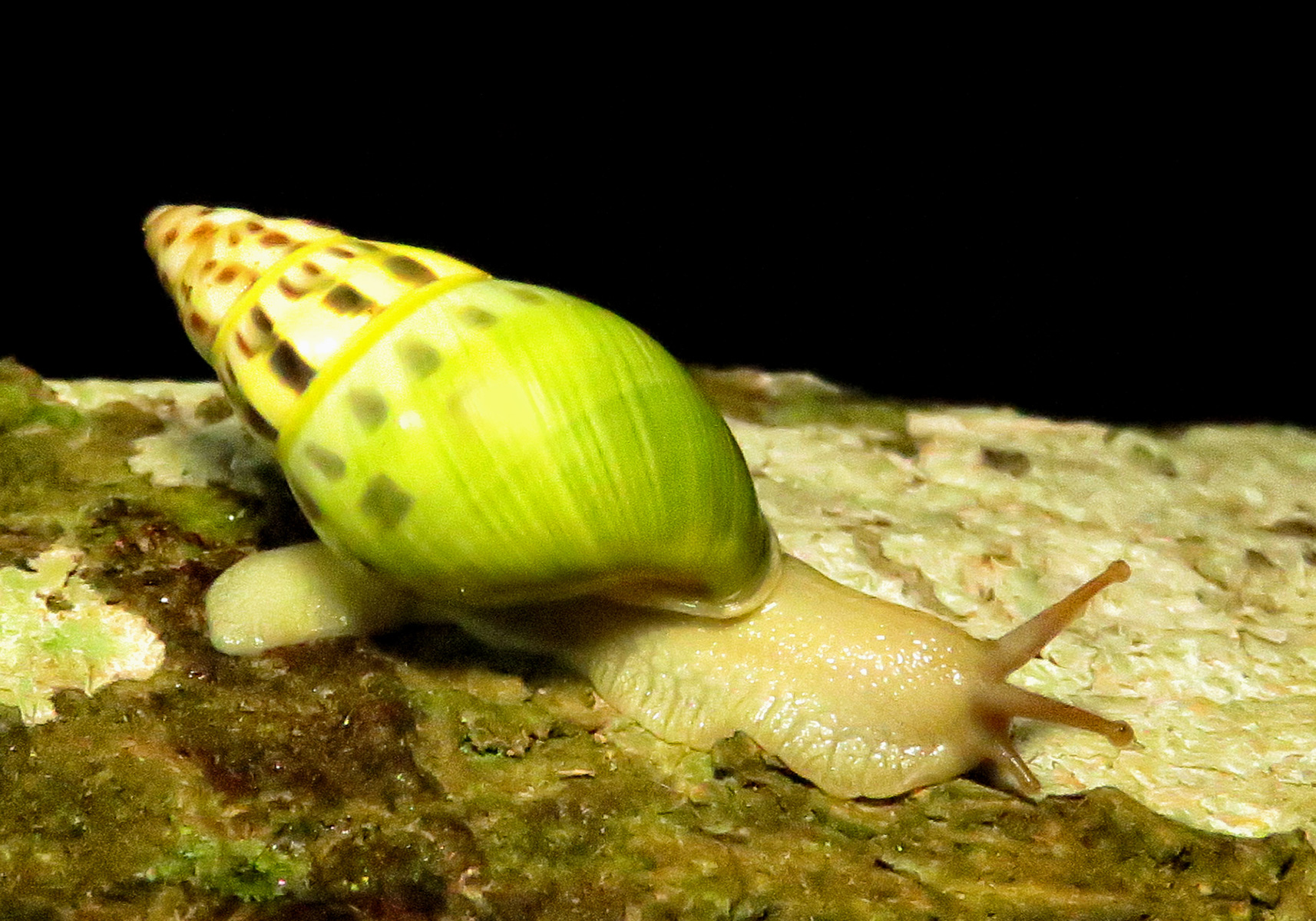
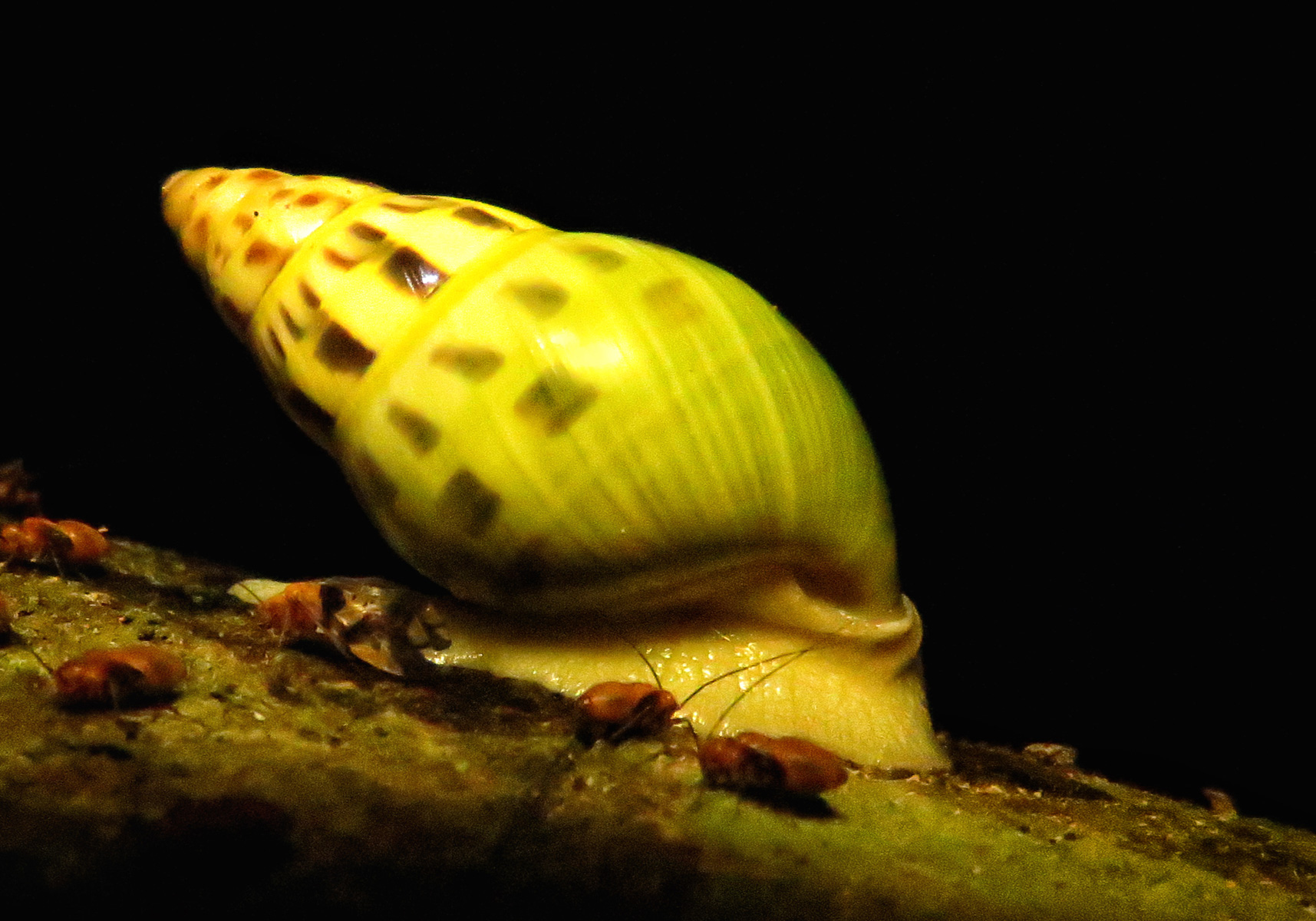
Amphidromus furcillatus is a species of tropical arboreal land snail belonging to the genus Amphidromus (Family Camaenidae, Order Stylommatophora). It is native to parts of Southeast Asia, where it inhabits humid forested environments, including lowland rainforests and limestone-associated habitats.
This species is characterized by its elongate-conical to ovate shell, relatively thin but solid, with a smooth and glossy surface. The shell typically displays attractive color patterns, often combining light yellow, cream, greenish, or brown tones with darker spiral bands or streaks. As with many members of its genus, variation in coloration can occur among populations.
The aperture is oval and comparatively large, and the peristome (lip) may be slightly thickened in mature individuals. Like other species of Amphidromus, chirality variation may occur, meaning both dextral (right-coiled) and sinistral (left-coiled) individuals can be found.
Ecologically, A. furcillatus is arboreal, commonly found on tree trunks, branches, and foliage. It feeds primarily on algae, lichens, fungi, and biofilm growing on bark surfaces. Its arboreal lifestyle helps reduce competition with ground-dwelling snails and may provide some protection from terrestrial predators.
Reproduction is hermaphroditic, involving internal fertilization and direct development. Eggs are laid in sheltered locations such as bark crevices or protected areas within the forest environment.
Amphidromus furcillatus is notable for its ornamental shell pattern and its role as part of Southeast Asia’s diverse arboreal land snail fauna.