

Asian Rat Snakes (Genus Ptyas)
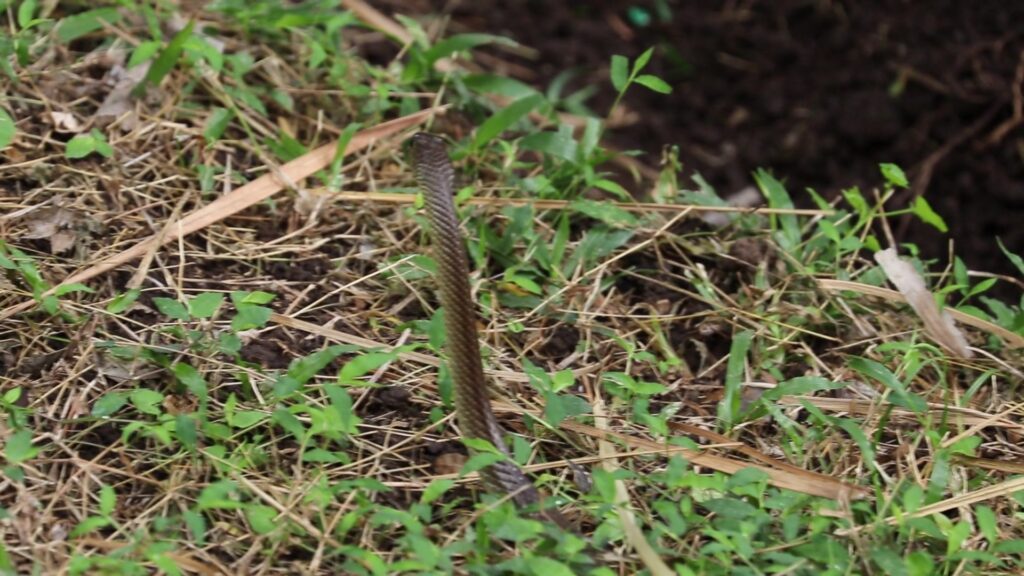
The genus Ptyas is a group of nonvenomous snakes belonging to the family Colubridae, one of the largest families of snakes. Members of this genus are commonly known as rat snakes and occur primarily across South, Southeast, and East Asia. They are generally medium-sized to large, active snakes recognized for their elongated bodies, relatively large eyes, and ability to move rapidly through terrestrial and semi-arboreal habitats. Several species are frequently encountered in agricultural landscapes, village outskirts, forest edges, and other environments where rodents and other prey are abundant.
Snakes of the genus Ptyas typically have slender to moderately robust bodies, elongated heads, and long tails. Their coloration varies among species and may include olive, brown, gray, yellowish, or greenish tones, sometimes accompanied by dark crossbars, spots, or contrasting patterns. Juveniles may exhibit markings that become less distinct as they mature. The eyes are often relatively large, reflecting their visually oriented hunting behavior, while their long, muscular bodies allow them to move quickly across the ground and climb vegetation. Although their appearance can resemble that of some venomous snakes, species identification requires attention to several characteristics rather than coloration alone.
The genus has a broad Asian distribution, extending from the Indian subcontinent through mainland Southeast Asia and parts of East Asia, with some species occurring on islands in the region. Species such as the oriental rat snake, Ptyas mucosa, have especially extensive distributions, while others occupy more restricted geographical areas. Their habitats include tropical and subtropical forests, open woodland, grassland, wetlands, plantations, cultivated fields, and human settlements. Many species tolerate considerable habitat disturbance and may become common in agricultural areas where prey populations are high.
Ptyas snakes are primarily diurnal, meaning they are most active during daylight hours, although activity patterns can vary with temperature, season, and local conditions. They often move through vegetation, along forest trails, across open ground, and around buildings in search of food. Their speed and alertness help them detect approaching threats and escape into dense vegetation, burrows, crevices, or other sheltered places. Some species climb trees and shrubs with considerable agility, enabling them to search for prey or retreat from danger. During periods of extreme heat or unfavorable weather, they may remain concealed for extended periods.
Members of Ptyas are active predators with varied diets. Depending on the species and habitat, their prey can include rodents, frogs, lizards, other snakes, birds, and eggs. The oriental rat snake is particularly associated with rodents and is frequently found in agricultural environments, where rats and mice provide a reliable food source. These snakes generally rely on rapid pursuit, sudden strikes, and powerful jaws to seize prey. Unlike constricting snakes that commonly subdue prey by tightly coiling around it, many Ptyas species depend heavily on their speed and direct physical control, although feeding techniques vary with prey type.
Despite being nonvenomous, Ptyas snakes can defend themselves vigorously when threatened. They may flee rapidly, raise the front part of the body, flatten the neck slightly, hiss, or strike repeatedly. A defensive strike can cause a painful bite, particularly because some larger species possess strong jaws and numerous small teeth. These displays are intended to discourage predators rather than indicate an intention to pursue humans. When given an opportunity, the snake will generally attempt to escape instead of maintaining a confrontation.
Reproduction in Ptyas is generally oviparous, meaning that females lay eggs rather than giving birth to live young. Mating commonly takes place during warmer periods of the year, although timing differs among species and geographical regions. Females deposit eggs in sheltered locations such as soil cavities, beneath logs, in decaying vegetation, or in other protected sites with suitable moisture and temperature conditions. The eggs develop outside the mother’s body, and the hatchlings emerge as independent young snakes. Newly hatched individuals are capable of hunting small prey and gradually expand their diet as they grow. Growth rates and age at maturity depend on species, food availability, climate, and other environmental factors.
Ecologically, Ptyas snakes play an important role in regulating populations of rodents and other small vertebrates. By consuming agricultural pests, some species provide a valuable natural service to farmers and rural communities. They also form part of the food web, serving as prey for larger snakes, raptors, and carnivorous mammals. Their presence in a landscape reflects the availability of prey and suitable shelter, while their ability to exploit disturbed habitats allows certain species to persist in areas where more specialized wildlife has declined.
The principal threats facing Ptyas populations include habitat loss, road mortality, persecution caused by mistaken identification, and accidental killing during agricultural activities. Pesticide use may also affect them indirectly by reducing prey availability or exposing them to contaminated food. Although several species are adaptable and occur over large geographical ranges, localized populations can decline where wetlands, forests, and other important habitats are degraded. Accurate identification and public awareness are therefore valuable for reducing unnecessary killing of these beneficial snakes.
The genus Ptyas represents an important group of Asian rat snakes characterized by speed, visual hunting, dietary flexibility, and adaptation to diverse environments. Their ability to consume rodents and other small animals makes them significant components of both natural ecosystems and agricultural landscapes. Although their defensive behavior can appear intimidating, these snakes generally avoid humans when possible and do not possess venom-injecting fangs. Understanding their natural history helps distinguish them from medically significant snakes and highlights their contribution to biodiversity and the ecological balance of the regions they inhabit.