

Termites (Epifamily Termitoidae)
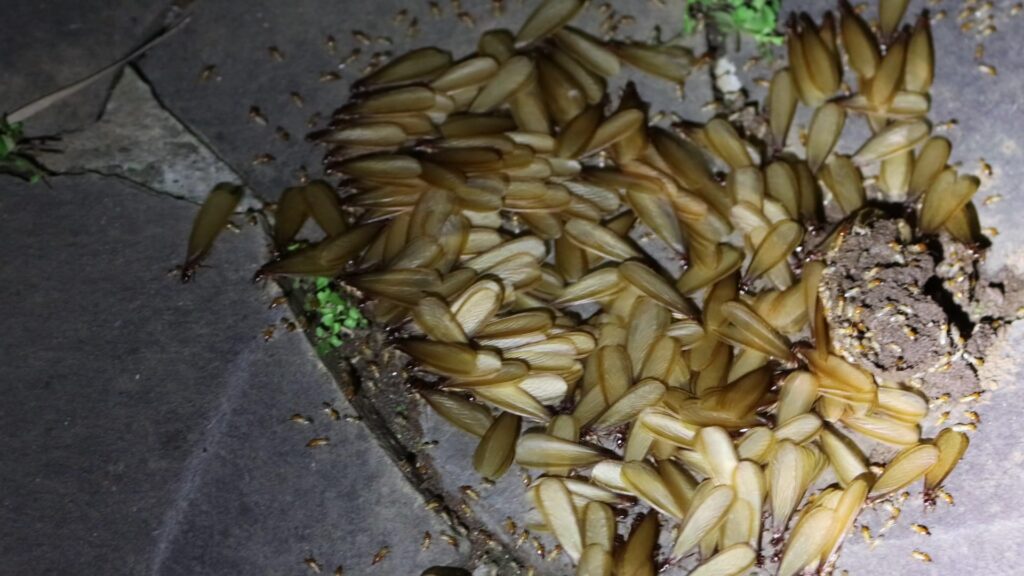
Termitoidae is a taxonomic grouping associated with termites, a diverse assemblage of eusocial insects best known for their complex colonies, cooperative brood care, and ability to digest cellulose-rich plant material. Termites are classified within the order Blattodea, making them closely related to cockroaches. In modern classifications, termites are generally treated as the infraorder or clade Isoptera within Blattodea, and the name Termitoidae may be used in particular taxonomic systems for a grouping of termite lineages. Its precise rank and circumscription depend on the classification being followed. Termites occur in a wide range of terrestrial habitats and play essential roles in decomposition, nutrient cycling, soil formation, and ecosystem functioning.
Termites are characterized by their social organization, in which individuals within a colony perform different roles. A typical colony contains reproductive individuals, workers, and soldiers, although the precise caste structure varies among groups. The reproductive caste includes the king and queen, which maintain the colony’s reproductive output. Workers perform much of the foraging, nest construction, brood care, and food distribution, while soldiers defend the colony against predators and other threats. In some termite lineages, these tasks may be performed by individuals with flexible roles rather than by sharply differentiated castes. This division of labour enables colonies to function as integrated social units.
The body of a termite consists of a head, thorax, and abdomen, with three pairs of legs and a pair of antennae composed of numerous bead-like segments. Most workers and soldiers are wingless, soft-bodied, and relatively pale, although their appearance varies considerably among families and species. Soldiers often have enlarged heads and specialized mandibles or other defensive structures. Reproductive individuals, especially newly emerged alates, typically have two pairs of membranous wings of similar size. These winged termites leave their parent colonies during dispersal flights, after which they shed their wings and may establish new colonies with suitable mates.
Termites are distributed across much of the world, with their greatest diversity and abundance occurring in tropical and subtropical regions. They inhabit rainforests, dry forests, savannas, grasslands, agricultural landscapes, and urban environments. Some species build conspicuous above-ground mounds, while others construct subterranean nests, live within dead wood, or occupy concealed galleries in living trees and wooden structures. Nest architecture varies according to species, climate, soil properties, food availability, and protection from predators. Mounds and underground tunnel systems can regulate temperature and humidity while providing secure environments for colony development.
Feeding habits among termites are diverse, but many species consume dead wood, leaf litter, grasses, roots, or other plant-derived materials rich in cellulose. Their digestive systems are adapted to extracting nutrients from these difficult-to-digest resources. Depending on the termite lineage, cellulose breakdown involves communities of microorganisms living in the hindgut or enzymes produced by the termites themselves. Some species cultivate specialized fungi within their nests, using the fungi to process plant material and improve nutrient acquisition. Other termites feed on humus, soil-associated organic matter, or lichens. These varied feeding strategies allow termites to exploit resources that many other animals cannot use efficiently.
Reproduction and colony establishment are central features of termite biology. During suitable seasonal conditions, winged reproductives emerge from mature colonies and disperse through the air. After landing, individuals pair with potential mates, shed their wings, and seek sheltered locations in which to begin a new colony. The founding pair produces the first eggs, and the initial offspring gradually assume worker or other colony roles. As the colony grows, the queen’s reproductive capacity may increase substantially, and the nest develops into a more complex structure. In mature colonies, secondary reproductives may contribute to egg production, especially when the primary reproductive individuals are lost or colony conditions favour their development.
Communication within termite colonies relies heavily on chemical signals, touch, vibrations, and other sensory cues. Pheromones help regulate reproductive activity, identify colony members, guide foraging, and coordinate defensive responses. Workers commonly exchange food and chemical information through close contact and trophallaxis, the transfer of nutrients between individuals. Soldiers may respond rapidly to alarm signals, while workers repair damaged galleries or nest walls after disturbances. These forms of communication allow large colonies to coordinate activities despite the limited sensory and cognitive capacities of individual insects.
Termites have major ecological importance because they accelerate the decomposition of dead plant material and help recycle nutrients through terrestrial ecosystems. Their tunnelling and nest-building activities can improve soil structure, alter water infiltration, redistribute organic matter, and create microhabitats used by other organisms. In some environments, termite mounds influence local vegetation and soil chemistry, producing distinctive patterns in ecosystem structure. Termites also serve as food for numerous animals, including ants, reptiles, amphibians, birds, and mammals. Their ecological effects vary by species and habitat, and their activity can be especially important in tropical regions where decomposition and nutrient cycling occur rapidly.
Despite these ecological benefits, certain termite species can cause substantial economic damage. Wood-feeding species may attack buildings, furniture, utility structures, and stored timber, while some species damage living trees or agricultural crops. Subterranean termites can enter structures through concealed soil galleries, making infestations difficult to detect until damage becomes extensive. Other species remain primarily within dead wood or natural ecosystems and rarely affect human infrastructure. Effective management therefore depends on identifying the species involved, understanding its nesting and feeding behaviour, and reducing conditions that favour infestation rather than treating all termites as equally harmful.
The classification of Termitoidae and related termite groups reflects continuing efforts to understand their evolutionary history and relationships with cockroaches. Molecular evidence has strongly supported the placement of termites within Blattodea and their close relationship to wood-feeding cockroaches, particularly those in the genus Cryptocercus. Traditional termite families are distinguished using features such as wing venation, head morphology, soldier structures, gut anatomy, and reproductive characteristics, supplemented by genetic evidence. Because higher-level termite classification has changed as evolutionary relationships have become clearer, the exact meaning of Termitoidae should be interpreted in relation to the particular taxonomic framework being used.
Overall, Termitoidae represents a termite-related taxonomic grouping associated with one of the most highly organized forms of insect social life. Termites combine specialized feeding adaptations, complex communication, cooperative reproduction, and extensive nest construction to thrive in diverse terrestrial environments. Their roles as decomposers, soil engineers, and prey organisms make them indispensable components of many ecosystems, even though some species also pose challenges to agriculture and human structures.