

Genus Haemadipsa
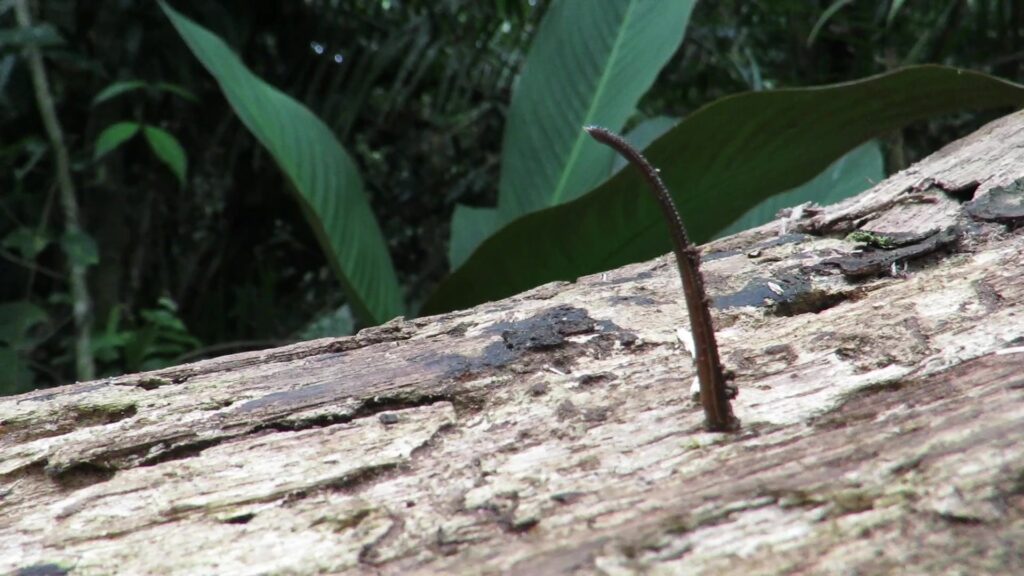
The genus Haemadipsa comprises a group of terrestrial blood-feeding leeches belonging to the family Haemadipsidae, within the class Clitellata of the phylum Annelida. These leeches are commonly known as land leeches or Asian land leeches and are particularly associated with humid tropical and subtropical environments in South and Southeast Asia. Unlike many familiar aquatic leeches, members of Haemadipsa are adapted to life on land, where they inhabit damp forests, shaded vegetation, and moist leaf litter. They are notable for their ability to locate passing animals and attach to their skin to obtain a blood meal.
Members of Haemadipsa have elongated, soft, segmented bodies that can stretch, contract, and change shape as they move. Their bodies are generally flattened to varying degrees and are divided into numerous external annulations, which correspond to the underlying segmentation. The coloration differs among species and may include shades of brown, olive, grey, black, or reddish brown, sometimes with stripes, bands, or other markings along the dorsal surface. These patterns can help distinguish species, although reliable identification often requires examination of additional morphological characteristics.
Like other leeches, Haemadipsa possesses anterior and posterior suckers. The anterior sucker surrounds the mouth and is used to attach to a host and obtain blood, while the larger posterior sucker provides anchorage during movement and feeding. The mouth contains structures adapted for piercing or cutting the host’s skin, depending on the species. Salivary secretions can contain anticoagulant and other biologically active substances that help maintain blood flow during feeding. Their bodies are highly flexible, allowing them to extend forward, attach with the anterior sucker, and draw the rear portion of the body toward the front in a looping form of locomotion.
The genus is distributed mainly across tropical and subtropical parts of Asia, including regions of the Indian subcontinent, mainland Southeast Asia, and the Malay Archipelago. Individual species occupy different geographic ranges, and their distribution is closely associated with suitable moisture and vegetation. They are particularly common in humid forests, where rainfall, shade, and dense ground cover help prevent dehydration. Some species may also occur in plantations, forest edges, gardens, and other habitats that retain sufficient moisture and support suitable vertebrate hosts.
Haemadipsa leeches are predominantly found in moist terrestrial microhabitats, including leaf litter, moss-covered surfaces, low vegetation, and the undersides of leaves. During dry conditions, they may retreat into sheltered locations where humidity remains relatively high. When the environment becomes wet, especially after rainfall, they may become more active and climb vegetation or extend their bodies into open spaces where they are more likely to encounter passing hosts. Their activity is strongly influenced by humidity, temperature, rainfall, and the availability of suitable feeding opportunities.
These leeches are blood-feeding ectoparasites that feed on a range of vertebrates. Depending on the species and habitat, potential hosts may include mammals, birds, reptiles, and amphibians, as well as humans who enter their environments. They often respond to movement, body heat, vibrations, or chemical cues associated with a potential host. When a host passes close enough, a leech may attach to its skin and feed until it has obtained sufficient blood. The feeding process can be relatively inconspicuous because the leech’s saliva helps reduce blood clotting and may lessen the immediate sensation of the bite. After feeding, the leech detaches and returns to its surroundings to digest the meal.
Locomotion and host-seeking behaviour are important adaptations in the life of Haemadipsa. The leeches move over the ground and vegetation by alternately attaching their suckers and extending or contracting their bodies. Some species adopt a characteristic posture in which the front part of the body is raised and extended, allowing them to make contact with a passing host. Their ability to climb low vegetation increases the chance of encountering animals moving through forest undergrowth. Although they are not active hunters in the conventional sense, their behaviour is well suited to detecting and exploiting the movements of vertebrates within their habitat.
Reproduction in Haemadipsa follows the general pattern found in leeches, which are hermaphroditic, possessing both male and female reproductive organs. Reproduction typically involves the exchange of sperm between individuals, followed by the production of eggs enclosed in cocoons or protective coverings. These are deposited in suitable moist terrestrial sites, where developing young are protected from drying out. The precise reproductive behaviour, breeding season, and development vary among species and are influenced by local environmental conditions. Maintaining adequate moisture is particularly important because the eggs and young are vulnerable to desiccation.
Ecologically, Haemadipsa forms part of the complex relationships between terrestrial invertebrates and vertebrate animals in tropical forests. By feeding on different hosts, these leeches participate in natural host–parasite interactions and may influence host behaviour or condition when infestations are heavy. They can also serve as food for some predators and contribute to the diversity of forest-floor invertebrate communities. Their presence and activity can reflect local environmental conditions, particularly humidity and the availability of suitable habitat, although they should not be treated as a universal indicator of forest health.
Interactions with humans are among the best-known features of the genus. In areas where land leeches are abundant, hikers, field researchers, forest workers, and other visitors may encounter them on trails and vegetation. Their bites are generally not considered medically dangerous for most healthy people, but bleeding can continue for some time because of anticoagulant substances in their saliva. The bite site may also become itchy or irritated, and scratching can increase the risk of secondary infection. Avoiding direct contact with wet vegetation, wearing protective clothing, and checking exposed skin after walking through leech-rich habitats can reduce encounters.
The genus Haemadipsa is a distinctive example of adaptation to terrestrial life among leeches. Its members combine a flexible segmented body, specialized suckers, blood-feeding adaptations, and moisture-sensitive behaviour to survive in humid environments where vertebrate hosts are readily available. Although often regarded as troublesome because of their bites, these leeches are natural components of tropical ecosystems and illustrate the diversity of feeding strategies that have evolved within the phylum Annelida.