

Malay Pythons (Genus Malayopython)
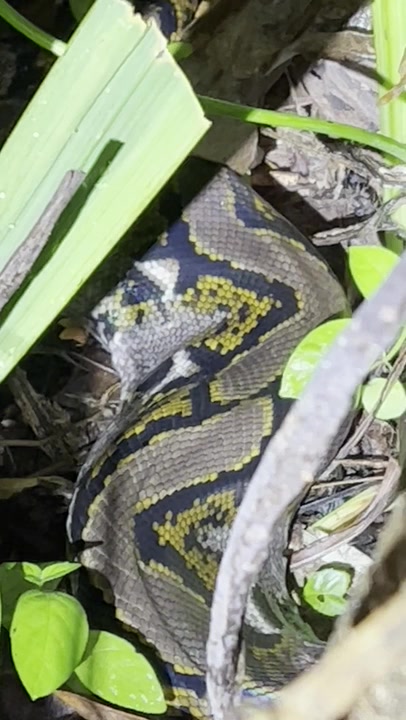
Malayopython is a genus of large to gigantic nonvenomous constricting snakes in the family Pythonidae. The genus is currently recognized as containing two species: the Reticulated Python (Malayopython reticulatus) and the Timor Python (Malayopython timoriensis). Both are native to the Indo-Australasian region, with M. reticulatus distributed widely across South and Southeast Asia and the Indonesian archipelago, while M. timoriensis has a much more restricted distribution in the Lesser Sunda Islands.
Members of Malayopython are characterized by long, powerfully muscular bodies and relatively large heads. M. reticulatus is particularly famous for its enormous size and is among the longest living snakes. Reported adults can reach extraordinary lengths, although exceptionally large individuals are uncommon. M. timoriensis is considerably smaller and more slender, reflecting its different island distribution and ecology.
The Reticulated Python (Malayopython reticulatus) has an especially distinctive coloration. Its body is covered by a complex network of dark lines and pale markings forming a reticulated or net-like pattern, often accompanied by gold, tan, brown, and black tones. This elaborate pattern provides effective camouflage among forest vegetation, leaf litter, rocks, and other irregular surfaces.
Malayopython timoriensis, commonly called the Timor Python or Lesser Sundas Python, has a more subdued pattern and coloration. It is known from the Lesser Sunda region, with confirmed records from Flores and Lembata, while reports from Timor itself have been regarded as uncertain. It is also described as partly arboreal, demonstrating that the genus is not restricted to a single mode of locomotion.
Both species possess the characteristic heat-sensitive labial pits of pythonids. These specialized sensory organs can detect infrared radiation from warm-bodied animals, helping the snakes locate prey in darkness or dense vegetation. Their forked tongues and vomeronasal organs additionally provide information about chemical cues in the environment.
The genus is predominantly carnivorous and kills prey by constriction. A Malayopython typically ambushes or approaches prey, seizes it with numerous recurved teeth, and rapidly wraps its muscular body around the victim. Prey is then swallowed whole, beginning with the head whenever possible. Their highly flexible jaws and elastic skin allow them to consume animals considerably wider than the snake’s head.
The diet varies with body size, habitat, and prey availability. Smaller individuals may consume rodents, birds, lizards, and other small vertebrates, while large M. reticulatus can take substantial mammals and birds. Reticulated pythons are also capable swimmers and frequently exploit prey associated with rivers, wetlands, plantations, and other aquatic or semi-aquatic environments.
Malayopython reticulatus occupies an exceptionally broad range of habitats, including tropical forests, swamps, mangroves, wetlands, agricultural landscapes, plantations, and areas surrounding human settlements. It is an accomplished climber and swimmer despite its enormous size. Its broad ecological tolerance has helped it persist in landscapes that have been substantially modified by people.
By contrast, M. timoriensis has a much more restricted island distribution and is associated with the Lesser Sundas. Its partly arboreal behavior suggests greater use of vegetation and elevated structures than might be expected from a large terrestrial python, although its natural history remains considerably less well documented than that of the widespread reticulated python.
Reproduction is oviparous. Females lay clutches of eggs in protected locations and, as in other pythonids, may coil around the eggs during incubation. Maternal behavior can help protect the developing clutch and regulate its thermal environment. Hatchlings emerge as independent young snakes and must begin hunting soon after hatching.
The genus has undergone considerable taxonomic revision. Malayopython reticulatus has historically been placed in Python, Morelia, and the subsequently proposed Broghammerus. Molecular and morphological work led to recognition of Malayopython as a distinct genus, with the name formally associated with the reticulated and Timor pythons in modern classifications. The Reptile Database currently recognizes both M. reticulatus and M. timoriensis in the genus.
Ecologically, Malayopython species are important large vertebrate predators. They can influence populations of mammals, birds, and other animals while themselves serving as potential prey when young. The reticulated python’s ability to occupy forests, wetlands, plantations, and human-dominated landscapes makes it an especially important predator across a broad range of Southeast Asian ecosystems.
The genus also faces conservation pressures. Large M. reticulatus are commercially exploited, particularly for their skins, while habitat conversion, persecution, and road mortality can affect populations. The more geographically restricted M. timoriensis may be particularly sensitive to changes in island habitats and requires continued assessment of its distribution and population status.
Overall, Malayopython is a remarkable genus of Indo-Australasian pythons distinguished by powerful constricting abilities, heat-sensitive prey detection, egg-laying reproduction, and striking differences in body size and geographic range between its two species. From the enormous, adaptable Reticulated Python to the more localized Timor Python, the genus represents an important lineage of large predatory snakes in tropical Asian and island ecosystems.