

Wolf Snakes and Bridal Snakes (Genus Lycodon)
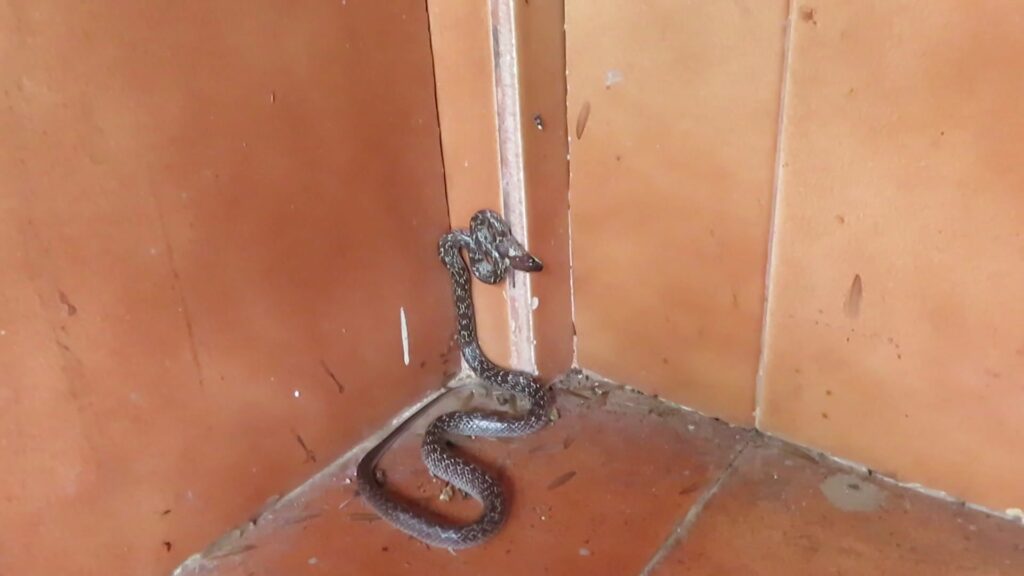
Lycodon is a genus of snakes belonging to the family Colubridae. Its members are commonly known as wolf snakes, a name derived from their enlarged, fang-like teeth in the front of the upper jaw, which resemble the teeth of wolves. These snakes are distributed widely across South Asia, Southeast Asia, and parts of East Asia, where they inhabit forests, grasslands, agricultural areas, and human-modified environments. The genus contains numerous species that vary in size, coloration, pattern, and habitat preference.
Members of Lycodon are generally small to medium-sized snakes with slender or moderately stout bodies, smooth scales, and relatively short tails. Their heads are usually distinct from the neck, and their eyes have vertically elliptical pupils, a feature associated with their predominantly nocturnal activity. Many species display dark bodies with white, cream, yellowish, or pale brown bands and crossbars. However, coloration varies considerably, and some species have irregular markings or predominantly brown and gray patterns that help them blend into their surroundings.
The genus Lycodon is widely distributed across the Indian subcontinent, mainland Southeast Asia, southern and eastern China, Japan, and numerous islands of the Indo-Malayan region. Individual species occupy a range of habitats, including tropical and subtropical forests, woodland, rocky areas, plantations, agricultural landscapes, and residential surroundings. Some species are frequently encountered near houses, where geckos and other small prey are abundant. Others are more specialized and may inhabit forest interiors, limestone formations, or mountainous environments.
Wolf snakes are predominantly nocturnal, becoming active after dusk and spending much of the daytime concealed beneath stones, fallen logs, leaf litter, bark, or within crevices. Some species are capable climbers and may search for prey on walls, tree trunks, and other elevated surfaces. Their secretive habits and dark coloration often make them difficult to observe, although certain species regularly enter buildings and gardens while hunting.
Their diet consists mainly of small reptiles, particularly geckos and skinks, although some species also consume other small vertebrates. Their enlarged teeth help them grip and restrain prey, especially slippery lizards. Wolf snakes are nonvenomous or are not considered medically significant to humans, but they may bite defensively if handled or threatened. Several banded species resemble venomous kraits, and this similarity can lead to misidentification. Careful identification is therefore important, and wild snakes should not be handled unnecessarily.
Reproduction in Lycodon is generally oviparous, meaning that females lay eggs rather than giving birth to live young. The eggs are deposited in sheltered locations that provide suitable conditions for embryonic development. The number of eggs, breeding season, and incubation period vary among species and may be influenced by regional climate and environmental conditions. Hatchlings generally resemble miniature versions of the adults, although their coloration and patterns may become more pronounced as they mature.
The genus includes numerous species with distinctive geographic ranges and appearances, such as the common wolf snake (Lycodon aulicus), the common Asian wolf snake (Lycodon capucinus), the banded wolf snake (Lycodon fasciatus), and the Malayan banded wolf snake (Lycodon subcinctus). Species identification often requires examination of body proportions, scale arrangements, head-shield characteristics, coloration, and banding patterns. Taxonomic research has shown that relationships among wolf snakes are complex, and the classification of the genus has undergone revisions as morphological and molecular evidence has accumulated.
Wolf snakes play an important ecological role by helping regulate populations of small lizards and other prey animals. In turn, they may be preyed upon by larger snakes, birds of prey, and other predators. Their ability to occupy both natural and human-modified habitats allows some species to persist in landscapes altered by people, although habitat destruction, road mortality, persecution caused by mistaken identification, and illegal collection may threaten particular populations.
Overall, Lycodon is a diverse genus of Asian snakes characterized by enlarged front teeth, predominantly nocturnal habits, varied coloration, and a strong association with small reptilian prey. Its members occupy a broad range of environments, from forests and rocky habitats to gardens and buildings. Continued research into their taxonomy, distribution, behavior, and conservation status is important for understanding the evolutionary diversity of wolf snakes and their role in Asian ecosystems.