Bali Wildlife
Every Spices Matter


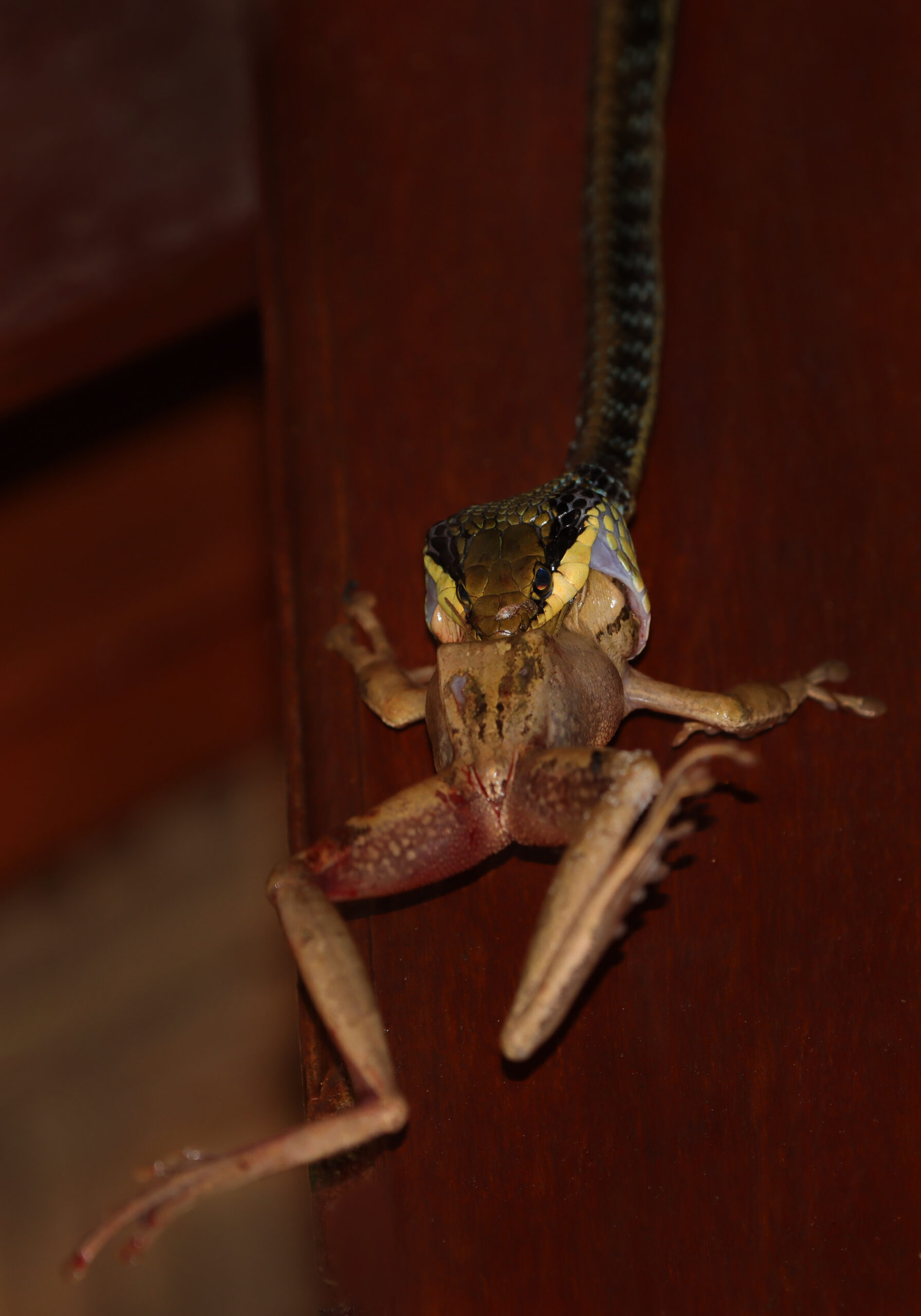
Dendrelaphis pictus is a slender arboreal snake belonging to the genus Dendrelaphis (Family Colubridae, Subfamily Ahaetuliinae, Order Squamata). Commonly known as the Painted Bronzeback, it is widely distributed throughout South and Southeast Asia, including India, Sri Lanka, southern China, Myanmar, Thailand, Cambodia, Vietnam, Malaysia, Singapore, Indonesia, and the Philippines. It inhabits forests, secondary woodlands, mangroves, plantations, parks, gardens, and other vegetated environments.
Dendrelaphis pictus is a medium-sized, highly slender snake characterized by its elongated body, long tail, and large eyes with round pupils. Adults typically reach lengths of 70–120 cm, although larger individuals may occur. The body is usually bronze, brown, olive, or grayish-green in coloration, often featuring a distinct pale stripe bordered by darker lines running along the sides of the body. The ventral surface is generally lighter in color, ranging from cream to pale yellow.
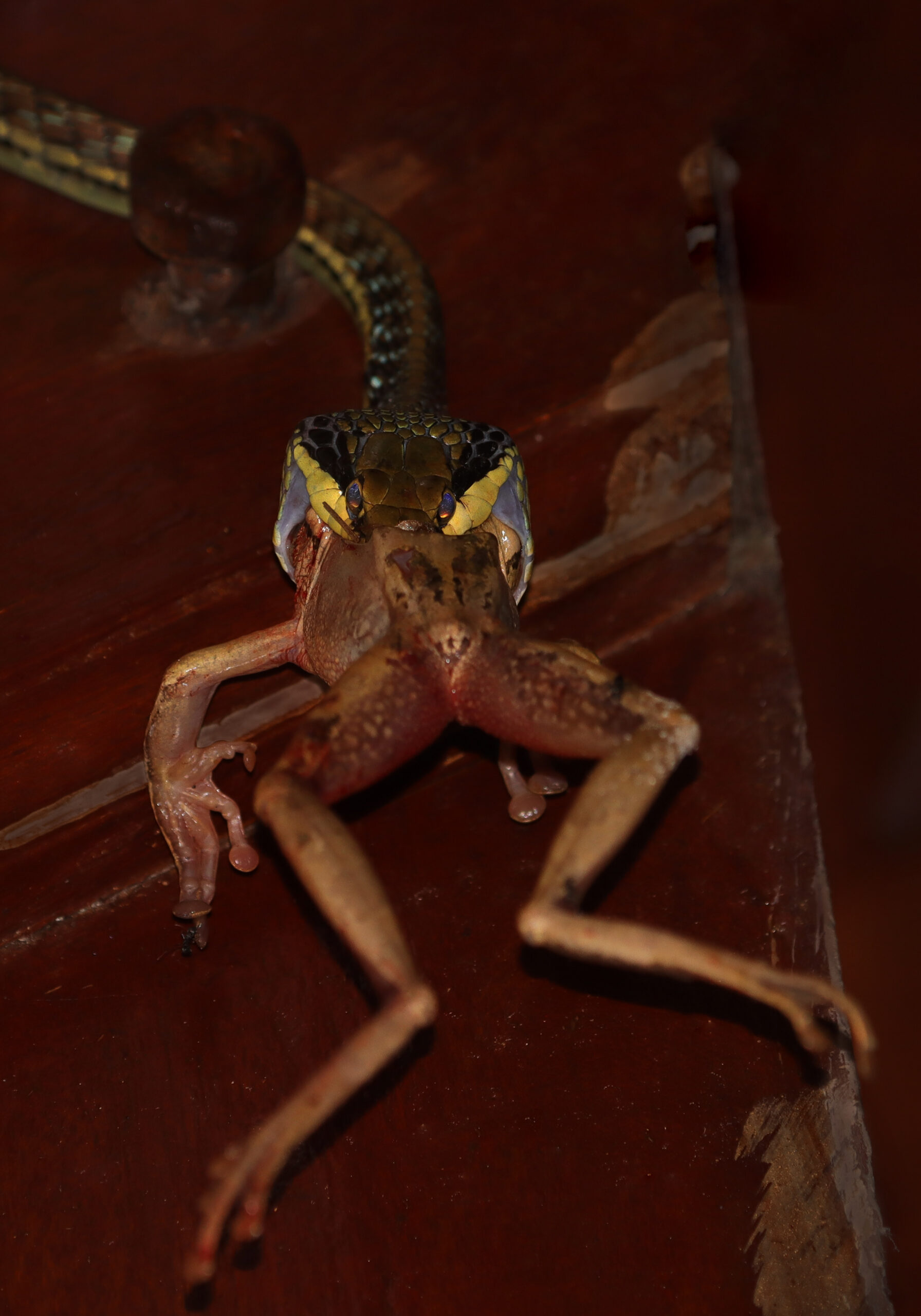
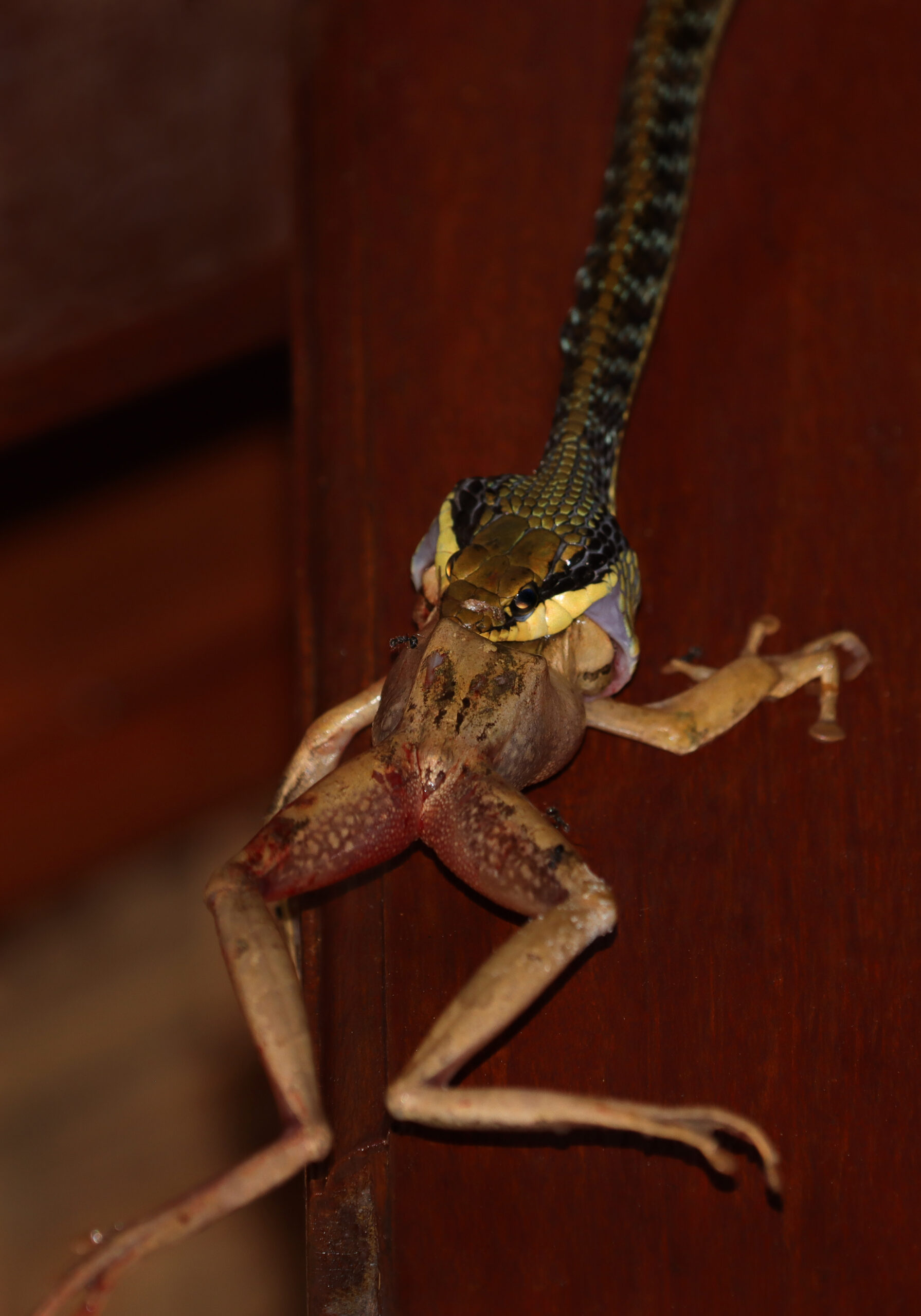
This species is strongly arboreal and spends much of its time moving through shrubs, bushes, and tree branches. It is active during the day and relies heavily on its excellent eyesight to locate prey and detect potential threats. When alarmed, it is capable of moving rapidly through vegetation and may flatten its neck and anterior body, exposing bluish or pale skin between the scales as a defensive display.
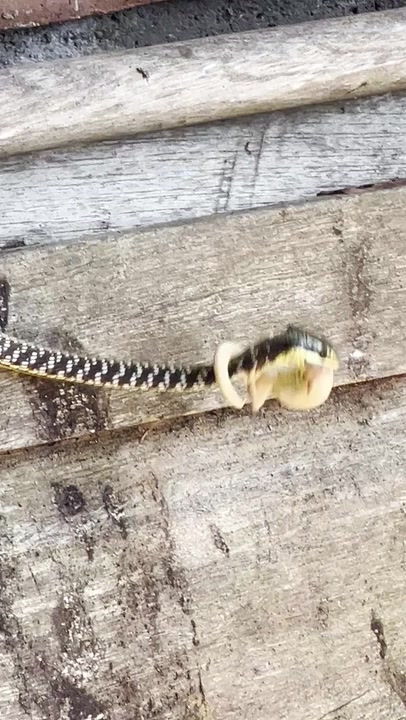
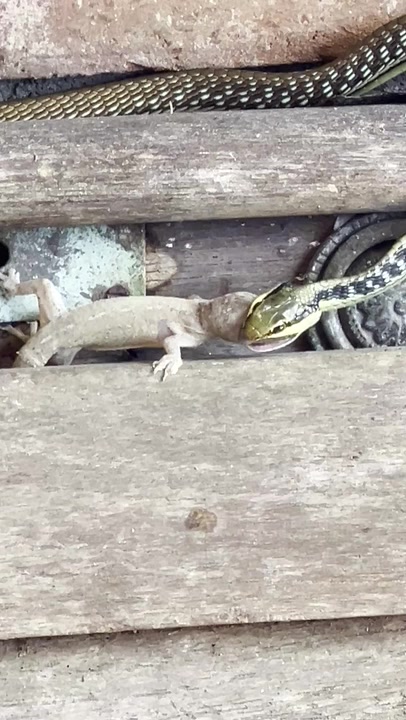
The Painted Bronzeback feeds primarily on small vertebrates, including lizards, geckos, frogs, and occasionally small birds. It is a swift and active hunter, capturing prey through speed and agility rather than constriction. The species is non-venomous and harmless to humans.
Reproduction is oviparous. Females lay small clutches of eggs in concealed locations such as leaf litter, tree cavities, or sheltered crevices. Hatchlings emerge fully independent and begin feeding on small prey shortly after hatching.
Ecologically, Dendrelaphis pictus serves as an important predator of small reptiles and amphibians, helping regulate their populations. It also forms part of the diet of larger snakes, birds of prey, and mammals. Due to its adaptability, this species is often encountered in both natural forests and human-modified habitats, making it one of the most widespread and familiar bronzeback snakes in Asia.