Bali Wildlife
Every Spices Matter


Gryllacrididae is a family of orthopteran insects within the superfamily Stenopelmatoidea (Suborder Ensifera, Order Orthoptera), commonly known as leaf-rolling crickets, raspy crickets, or camel crickets in some regions. The family comprises more than 1,000 described species distributed primarily throughout tropical and subtropical regions of Asia, Africa, Australia, and the Pacific islands, with a few species extending into temperate areas. Members inhabit tropical rainforests, temperate forests, shrublands, caves, grasslands, plantations, agricultural landscapes, parks, and gardens.
Insects of the family Gryllacrididae are generally medium to large in size and are characterized by a cylindrical body, a large rounded head, exceptionally long thread-like antennae, and powerful chewing mouthparts. The hind legs are well developed for jumping, although most species rely more on climbing and walking than long-distance leaps. Wings are well developed in many species, while others have shortened or absent wings. Their coloration is usually cryptic, consisting of shades of brown, yellow-brown, reddish-brown, olive, or green, enabling them to blend with bark, leaves, and forest litter.
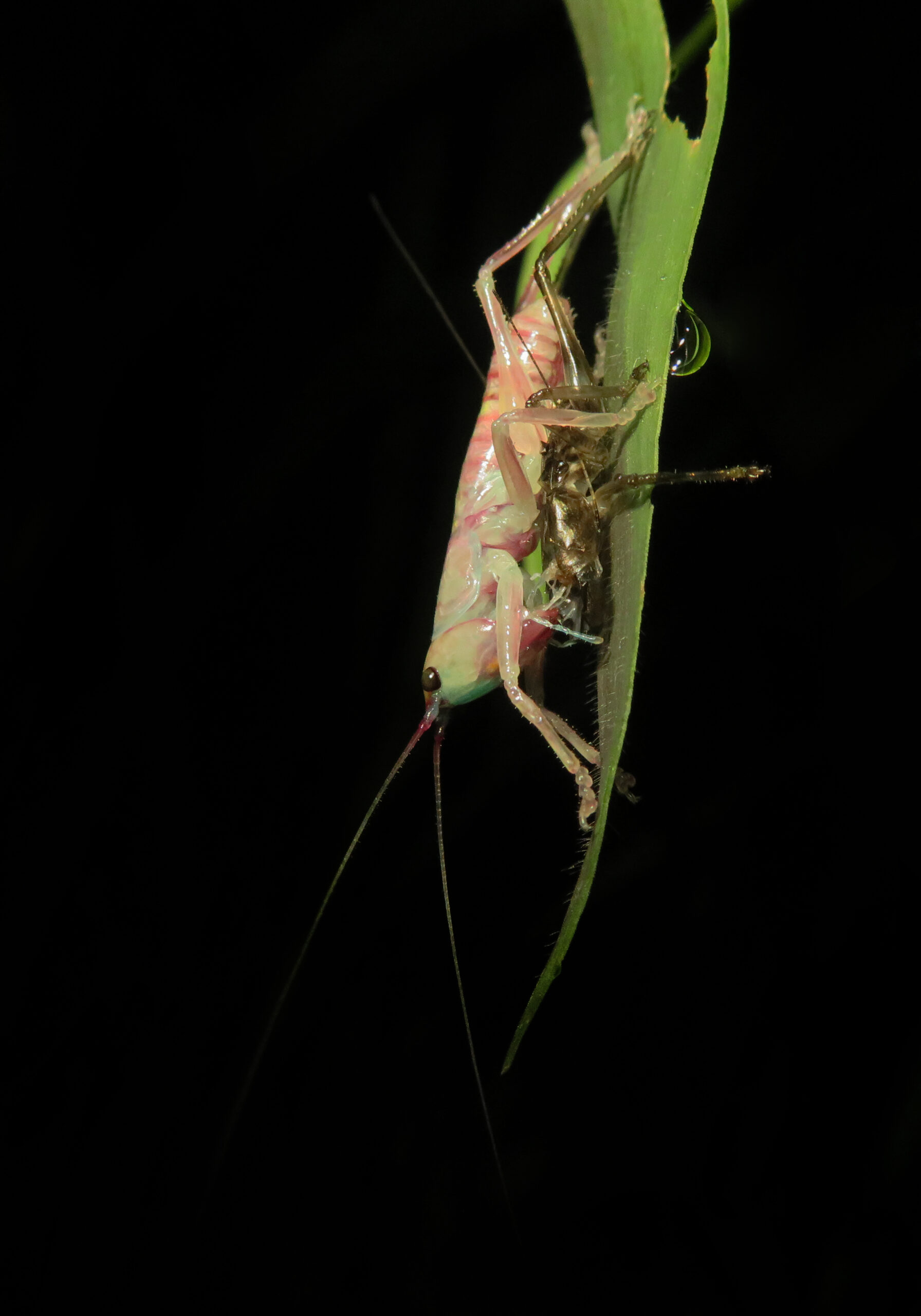
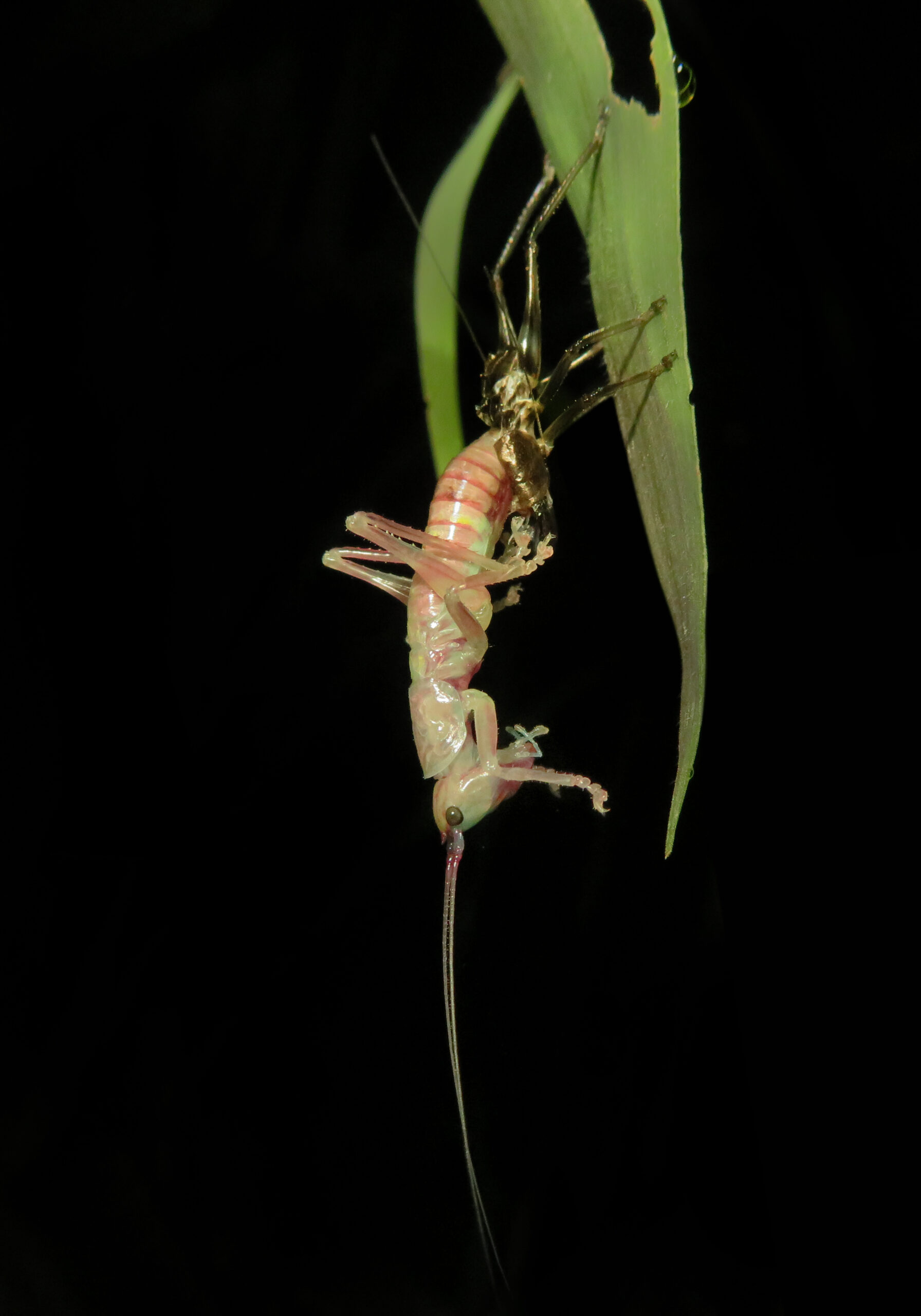
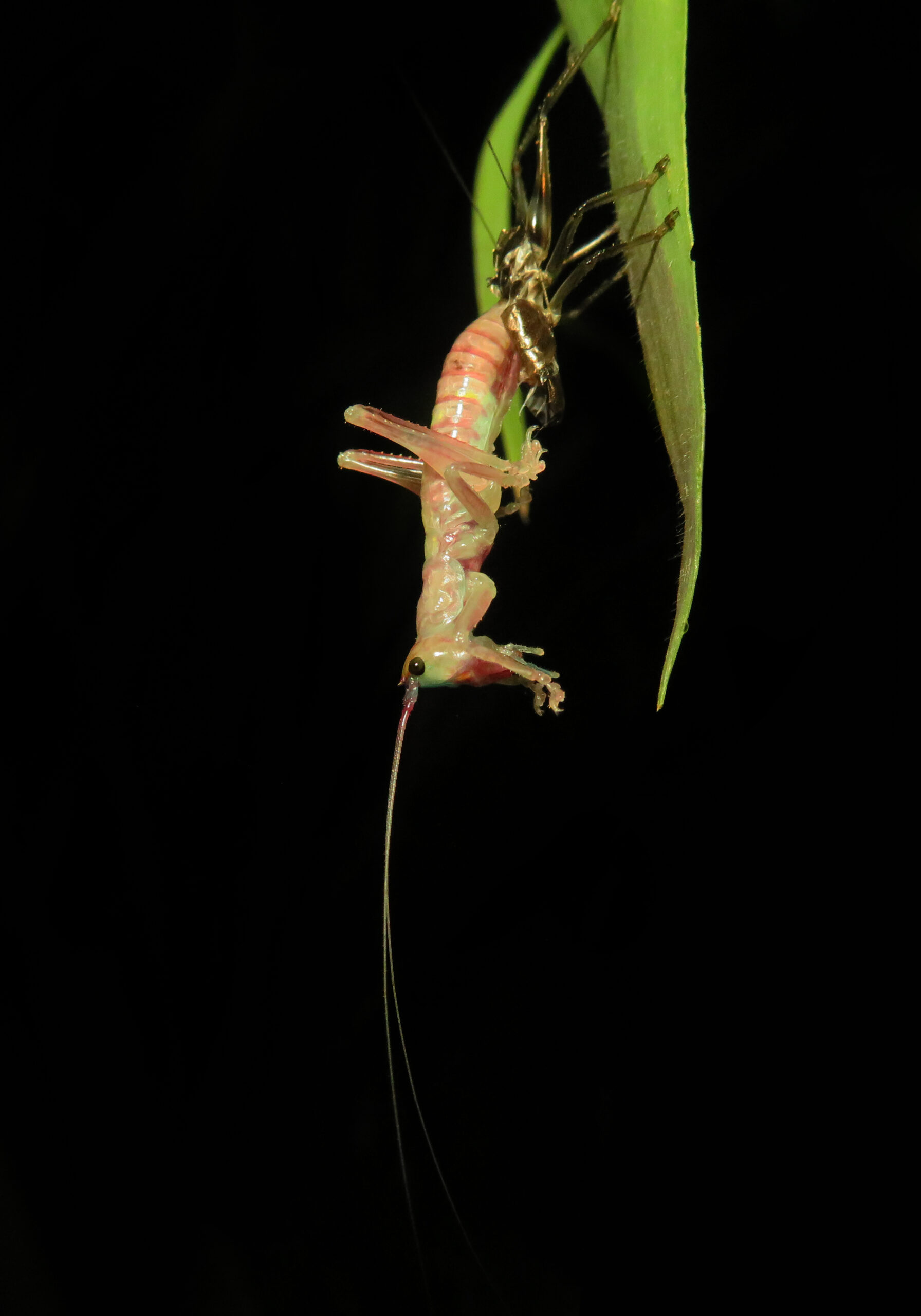
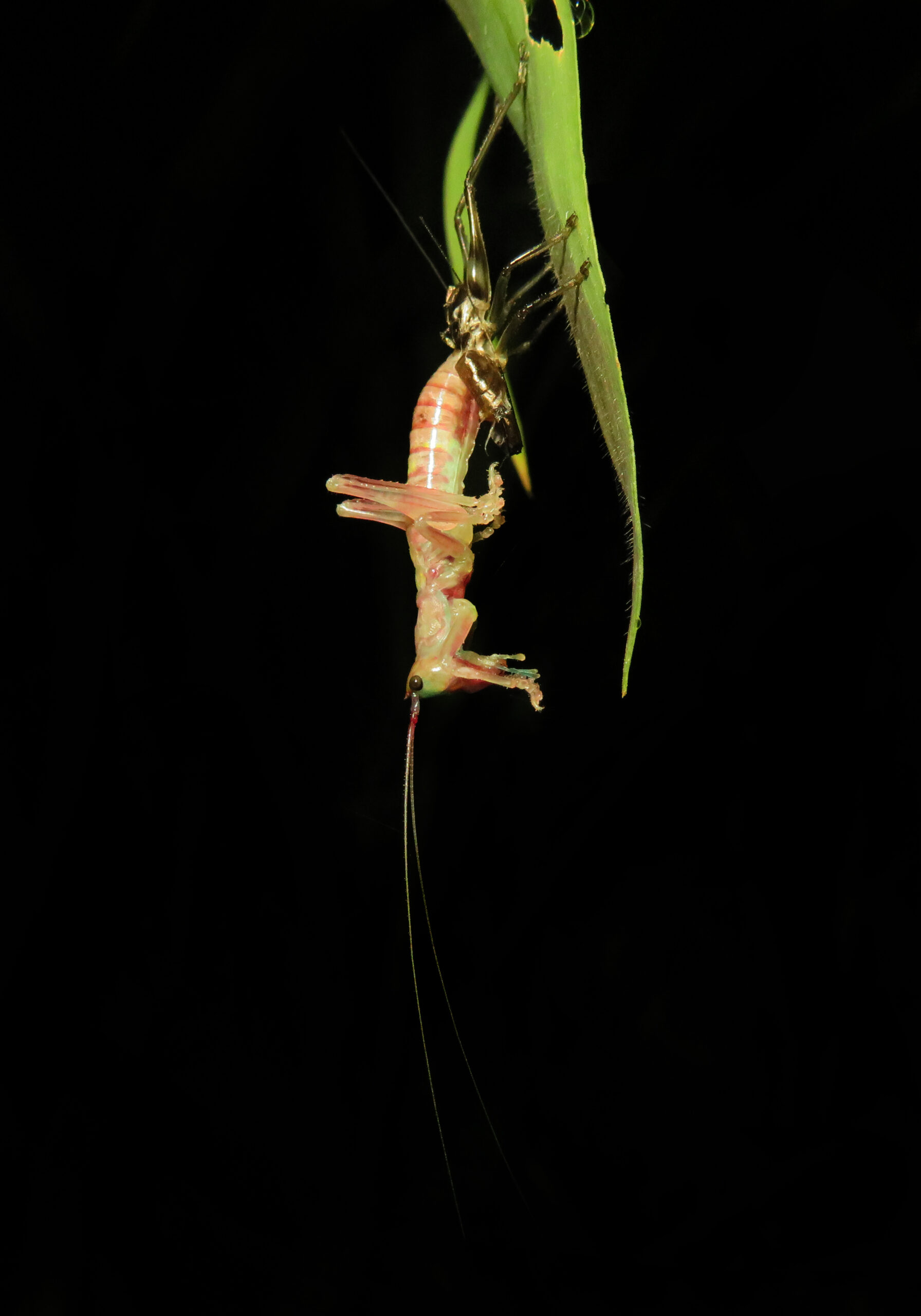
Members of Gryllacrididae are predominantly nocturnal, remaining concealed during the day in rolled leaves, silken shelters, tree crevices, under bark, or among leaf litter. A distinctive feature of the family is the production of silk from the mouthparts, which is used to construct leaf shelters by binding leaves together. These retreats provide protection from predators, desiccation, and adverse weather, and are also used for resting, molting, and egg laying.
Gryllacridids are generally omnivorous, feeding on fresh leaves, flowers, seeds, fruits, fungi, decaying organic matter, and small invertebrates. Some species are opportunistic scavengers or predators, allowing them to exploit a wide variety of food resources within their habitats.
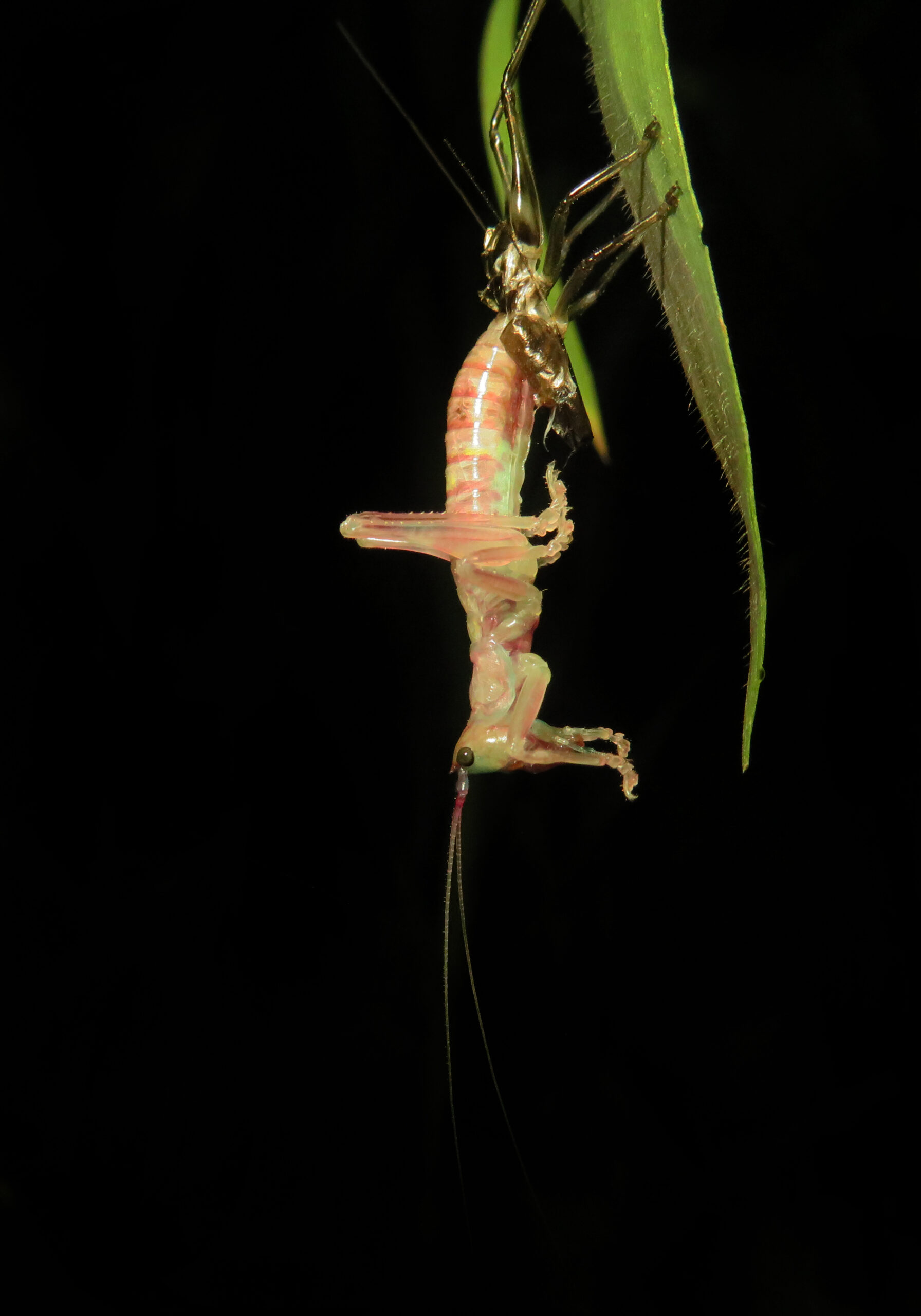
The life cycle involves incomplete metamorphosis, consisting of egg, nymph, and adult stages. Females deposit eggs within soil, decaying wood, or protected plant tissues. The wingless nymphs resemble miniature adults and undergo several molts before reaching maturity. Both nymphs and adults construct silk shelters and occupy similar habitats throughout their development.
The family includes numerous genera, such as Gryllacris, Ametrus, Hyperbaenus, Macrogryllacris, and Xanthogryllacris. Many species remain poorly studied because of their secretive nocturnal habits and preference for dense vegetation.
Ecologically, Gryllacrididae insects are important components of forest ecosystems. Their feeding activities contribute to herbivory, decomposition, and nutrient cycling, while their silk shelters create microhabitats for other small organisms. They also serve as prey for birds, reptiles, amphibians, spiders, predatory insects, and small mammals. Their dependence on intact vegetation and humid environments makes many gryllacridids valuable indicators of forest health, habitat quality, and biodiversity.