

Superfamily Pyrgomorphoidea
Pyrgomorphoidea is a superfamily of short-horned grasshoppers within the suborder Caelifera (Order Orthoptera). It is represented by a single extant family, Pyrgomorphidae, commonly known as the gaudy grasshoppers. The superfamily comprises more than 500 described species distributed primarily throughout tropical and subtropical regions of Africa, Asia, Australia, southern Europe, and the Indo-Pacific islands. Members inhabit tropical rainforests, savannas, grasslands, shrublands, open woodlands, wetlands, agricultural fields, plantations, and gardens, where they are closely associated with herbaceous vegetation.
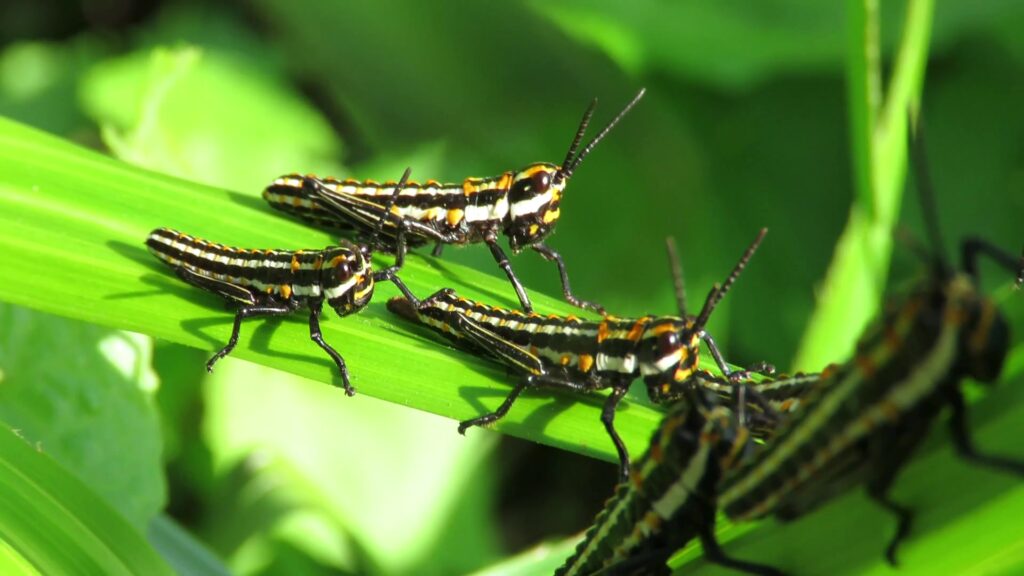
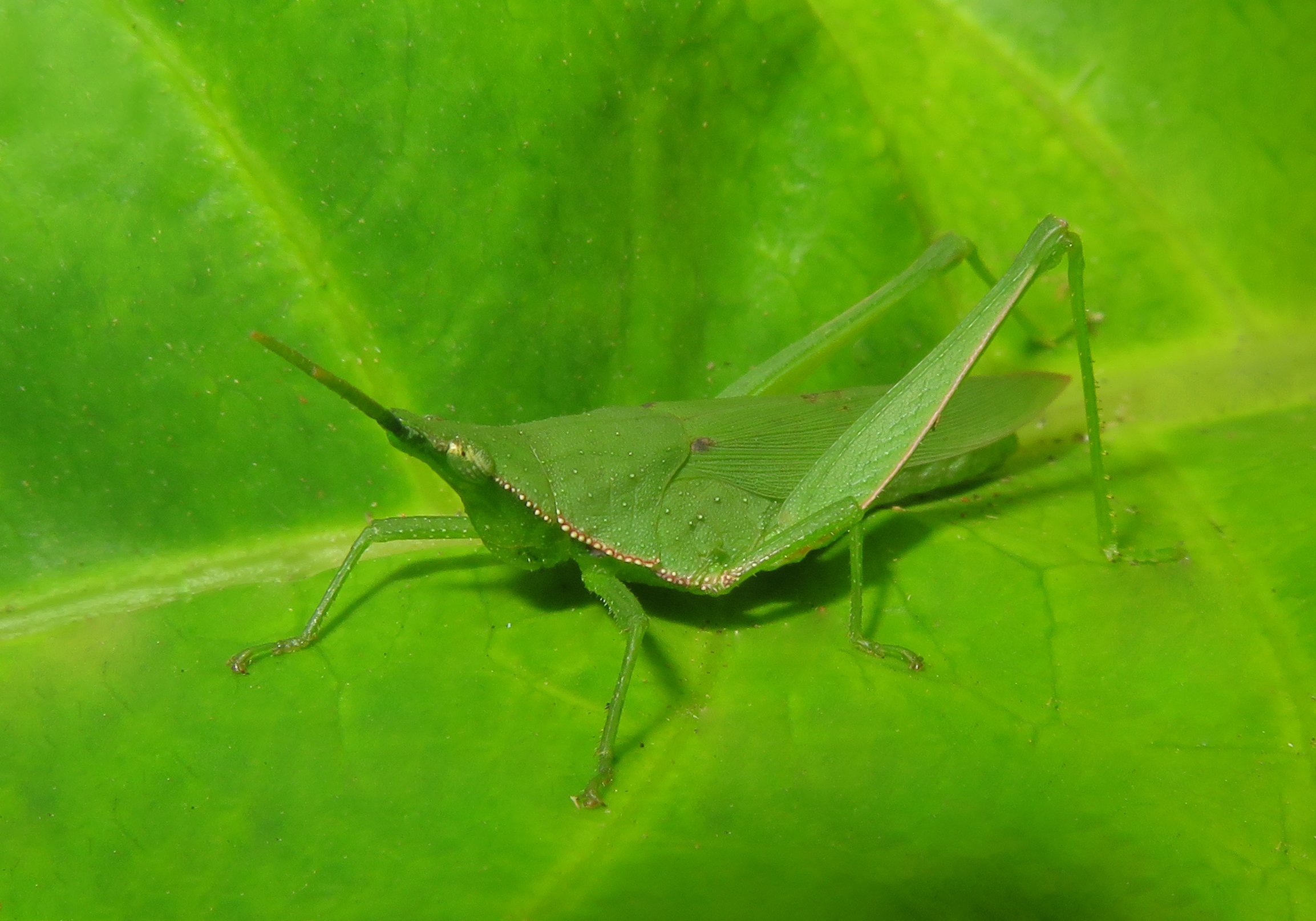
Grasshoppers of the superfamily Pyrgomorphoidea are generally small to large-sized, ranging from approximately 15–80 mm in body length. They typically possess a robust body, a short, broad head, and relatively short antennae compared with long-horned grasshoppers. The hind legs are powerful and well adapted for jumping, while the forewings (tegmina) and membranous hindwings vary from fully developed to reduced, depending on the species. Coloration is highly diverse. Many species display cryptic shades of green, brown, or olive that blend with surrounding vegetation, whereas others exhibit brilliant combinations of yellow, orange, red, blue, black, or white. These conspicuous colors often function as aposematic (warning) coloration, advertising chemical defenses acquired from toxic host plants.
Adults are primarily diurnal, spending much of the day basking, feeding, and moving among vegetation. They generally rely on camouflage or warning coloration to avoid predation and escape by making powerful jumps followed by short flights. Some brightly colored species are relatively slow-moving and depend more on their chemical defenses than on rapid escape.
Members of Pyrgomorphoidea are herbivorous, feeding on a wide variety of grasses, herbs, shrubs, and broad-leaved plants. Many species show preferences for particular plant families, while others are generalist feeders. Certain species consume plants containing toxic secondary compounds and are able to sequester these chemicals within their bodies, making them distasteful or toxic to predators.
The life cycle involves incomplete metamorphosis, consisting of egg, nymph, and adult stages. Females deposit egg pods in the soil or among plant debris. The wingless nymphs resemble miniature adults and pass through several molts before reaching maturity. Both nymphs and adults occupy similar habitats and feed on the same host plants throughout development.
The superfamily contains the family Pyrgomorphidae, which includes well-known genera such as Atractomorpha, Poekilocerus, Zonocerus, Chrotogonus, and Dictyophorus. Some species, including the Variegated Grasshopper (Zonocerus variegatus) and the Painted Grasshopper (Poekilocerus pictus), are recognized agricultural pests, while others are notable for their striking coloration and specialized host-plant associations.
Ecologically, Pyrgomorphoidea grasshoppers are important primary consumers that influence vegetation structure and nutrient cycling in terrestrial ecosystems. They serve as prey for birds, reptiles, amphibians, spiders, predatory insects, and small mammals, although chemically defended species are avoided by many predators. Their abundance, host-plant specialization, and sensitivity to habitat change make pyrgomorphoid grasshoppers valuable indicators of ecosystem health, vegetation dynamics, and biodiversity.